التحسين المستمر, نظام الإنتاج في الوقت المناسب (JIT), كانبان, التصنيع الرشيق, تحسين العمليات, كفاءة الإنتاج, ستة سيجما, رسم خريطة سلسلة القيمة, الحد من النفايات
الهدف:
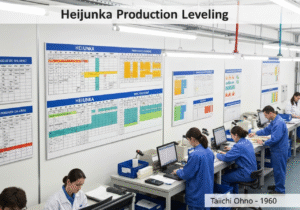
لإنشاء تدفق إنتاج أكثر اتساقًا وقابلية للتنبؤ من خلال تسوية الاختلافات في الطلبات (من حيث الحجم والتنوع) بمرور الوقت.
كيفية استخدامه:
تقنية تصنيع مرنة تهدف إلى إنتاج السلع الوسيطة بمعدل ثابت، مما يسمح بإجراء عمليات المعالجة اللاحقة بطريقة متوقعة وسلسة. وهذا يتجنب التجميع على دفعات ويخلق عبء عمل أكثر توازناً.
الايجابيات
يقلل من مخزون العمل قيد التنفيذ وأوقات التسليم؛ يحسن الاستقرار والقدرة على التنبؤ في الإنتاج؛ يتيح استخدامًا أكثر كفاءة للموارد؛ يقلل من العبء الزائد (موري) وعدم التساوي (مورا) في نظام الإنتاج.
سلبيات
يتطلب ذلك توقعات دقيقة للطلب وعمليات مستقرة؛ وقد يكون من الصعب تنفيذه، خاصة مع الطلب المتغير للغاية أو التغييرات المتكررة في المنتج؛ وقد يتطلب أحجام دفعات أصغر وعمليات تغيير أكثر تكرارًا، والتي يجب أن تكون فعالة.
الفئات:
لين سيجما, تصنيع, إدارة المشاريع
الأفضل لـ:
إنشاء نظام إنتاج مستقر وفعال من خلال تحقيق التوازن بين نوع وكمية الإنتاج على مدى فترة زمنية محددة.
Heijunka, or level scheduling, finds extensive application across various industries such as automotive, electronics, and consumer goods, where maintaining a steady flow of production is vital. In the automotive sector, for example, manufacturers often implement Heijunka to synchronize production rates across different models, ensuring that assembly lines operate smoothly regardless of demand fluctuations. This methodology is especially advantageous during the implementation phase of lean manufacturing practices, as it requires initial planning and commitment from all stakeholders, including production managers, supply chain coordinators, and quality assurance teams. Participants typically analyze historical sales data and forecast trends to design a balanced production schedule that accommodates different product variants, reducing the tendency to overproduce some items while underproducing others. Engaging cross-functional teams can enhance collaboration and communication, mitigating risks associated with stockouts or excess inventory. Heijunka also emphasizes continuous improvement practices, prompting teams to regularly evaluate workload distribution and resource utilization to identify areas for enhancement. Companies that successfully implement level scheduling often report increased flexibility, as they can swiftly adapt to market changes without significant disruptions, subsequently improving customer satisfaction and promoting long-term sustainability. With a focus on minimizing waste through consistent production output, organizations can achieve smoother workflows that contribute to enhanced operational efficiency and reduced costs, reinforcing the broader principles of lean manufacturing.
الخطوات الرئيسية لهذه المنهجية
تحليل عمليات الإنتاج الحالية لتحديد الاختلافات في الطلب والطاقة الإنتاجية.
حدد معدل الإنتاج الأمثل من خلال موازنة طلب العملاء مع الموارد المتاحة.
قسّم المنتجات إلى مجموعات ذات متطلبات معالجة متشابهة لتسهيل عملية التسوية.
قم بإنشاء جدول إنتاج يوزع عبء العمل بالتساوي على مدى فترة زمنية محددة.
قم بتطبيق نظام السحب لمواءمة الإنتاج مع الطلب الفعلي، مما يقلل من المخزون الزائد.
قم بمراجعة وتعديل جدول الإنتاج بانتظام بناءً على أنماط الطلب المتغيرة.
تدريب الموظفين على مبادئ وممارسات هيجونكا لضمان الالتزام بالجدول الزمني المحدد.
مراقبة مؤشرات الأداء الرئيسية لتقييم فعالية استراتيجية التسوية.
نصائح للمحترفين
Implement takt time calculations at each workstation to synchronize production rates with customer demand, minimizing variability in output.
Utilize visual management tools, such as Kanban boards, to monitor workflow and adjust production schedules in real time, supporting continuous improvement.
قم بإجراء جلسات منتظمة لرسم خرائط تدفق القيمة لتحديد الاختناقات وأوجه القصور، مما يسمح بإجراء تعديلات مستهدفة في استراتيجيات التسوية.