التحسين المستمر, الأتمتة الصناعية, نظام الإنتاج في الوقت المناسب (JIT), التصنيع الرشيق, الإنتاج الرشيق, تحسين العمليات, كفاءة الإنتاج, ضبط الجودة, إدارة الجودة
Objective:
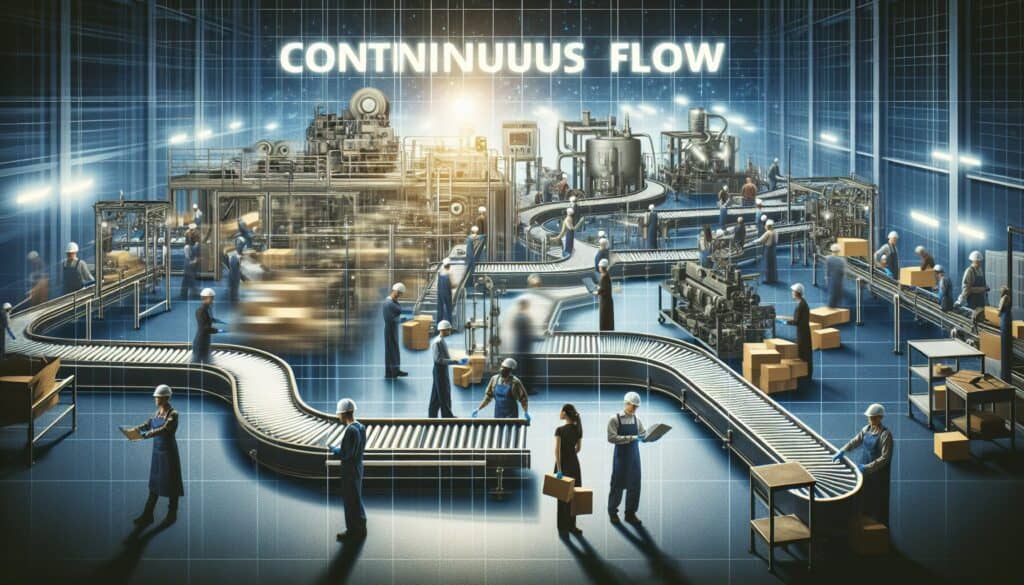
لتحقيق حالة تتدفق فيها الأعمال الجارية بسلاسة عبر نظام الإنتاج بأقل قدر من الانقطاعات والمخزون ووقت الانتظار.
How it’s used:
نهج تصنيعي تنتقل فيه المنتجات من عملية إلى أخرى دون انقطاع. غالباً ما يتضمن خطوط إنتاج مخصصة ومستوى عالٍ من الأتمتة.
الايجابيات
معدلات إنتاج عالية وكفاءة عالية؛ تقليل أوقات التسليم ومخزون العمل قيد التنفيذ؛ جودة منتج متسقة؛ انخفاض تكاليف الوحدة الواحدة بسبب وفورات الحجم.
سلبيات
انخفاض المرونة في تغيير المنتجات أو تخصيصها؛ ارتفاع الاستثمار الأولي في المعدات المتخصصة والإعداد؛ خطر حدوث توقف كبير في حالة تعطل جزء من خط الإنتاج؛ احتمال الإفراط في الإنتاج إذا لم يكن الطلب مستقرًا.
Categories:
لين سيجما, تصنيع
الأفضل لـ:
إنتاج بكميات كبيرة وتنوع منخفض حيث تعتبر الكفاءة والإنتاج المتسق أمراً بالغ الأهمية.
Continuous Flow methodology is particularly effective in industries such as automotive manufacturing, electronics, and consumer goods, where the demand for high-volume production with minimal variation is prevalent. In these settings, dedicated production lines facilitate the smooth transition of products from one stage to the next, allowing for streamlined operations that reduce downtime and enhance output. This approach is particularly suitable during the scale-up phase of a project when a company seeks to meet the demand without compromising on quality. Participants typically include process engineers, production managers, and supply chain experts who collaborate to optimize workflows and implement automation technologies like robotics and conveyor systems. One notable application of this methodology is in assembly lines for vehicles, where each component moves sequentially through stations that perform specific tasks. The efficiency gains can lead to reduced lead times and lower inventory levels, which not only decreases carrying costs but also mitigates the risk of obsolescence in fast-moving consumer goods. التصنيع الرشيق techniques are often integrated within Continuous Flow systems, enabling continuous improvement and waste reduction initiatives. As industries face increasing pressure to deliver products faster and at lower costs, Continuous Flow provides a robust framework for addressing these challenges, ensuring a consistent quality output that meets market demands.
Key steps of this methodology
تصميم خطوط إنتاج مخصصة لمنتجات محددة.
تطبيق أنظمة آلية لمعالجة المواد بشكل مستمر.
توحيد إجراءات العمل للحفاظ على اتساق العملية.
مراقبة سير الإنتاج في الوقت الفعلي لإجراء تعديلات فورية.
قم بإجراء صيانة دورية للمعدات لتقليل وقت التوقف عن العمل.
استخدم ممارسات إدارة المخزون في الوقت المناسب لتقليل المخزون الزائد.
استخدم أدوات التنبؤ المتقدمة لتخطيط الطلب.
قم بتحليل مقاييس الإنتاج باستمرار لتحديد مجالات التحسين.
دمج حلقات التغذية الراجعة لتحسين المنتج باستمرار.
تدريب الموظفين على التقنيات الجديدة وتحسين العمليات.
نصائح احترافية
قم بتطبيق تحليلات البيانات المتقدمة لمراقبة الأداء في الوقت الفعلي لكل عملية، مما يسمح بإجراء تعديلات استباقية تعمل على تحسين الإنتاجية.
استخدم مبادئ التصميم المعياري لتسهيل إعادة تكوين خطوط الإنتاج، واستيعاب التغييرات في تصميمات المنتجات أو توسيع نطاق العمليات بشكل فعال.
دمج استراتيجيات الصيانة التنبؤية من خلال أجهزة استشعار إنترنت الأشياء، مما يقلل من وقت التوقف عن العمل عن طريق معالجة أعطال المعدات المحتملة قبل حدوثها.
To read and compare several methodologies, we recommend the