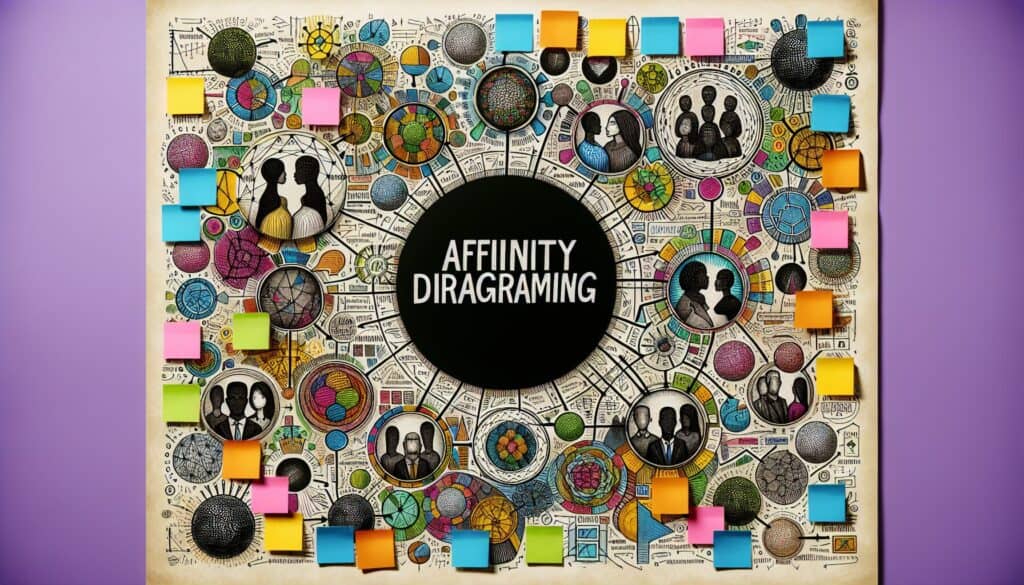
Affinity Diagramming, also known as the KJ Method, serves as a powerful tool in diverse sectors such as product development, user experience research, and strategic planning, particularly during the ideation and concept development phases of projects. This methodology is often initiated by cross-functional teams, including designers, engineers, product managers, and market researchers, who come together to gather qualitative data, which can encompass user feedback, insights from customer interviews, or brainstorming sessions. As team members silently sort ideas written on sticky notes, this organization encourages individual reflection while promoting engagement among participants, leading to a more thorough consideration of various perspectives. After the grouping process, the discussion phase allows teams to collaboratively label these clusters, which supports consensus building around key themes that may influence subsequent design choices or strategic directions. Affinity Diagramming is frequently utilized in industries such as technology, healthcare, and consumer goods, where understanding user needs and preferences is imperative to create effective solutions. Practitioners appreciate its simplicity and speed, as it can be completed within a few hours, making it adaptable for rapidly evolving project timelines while ensuring that team voices are heard equally in the development process. This method not only organizes ideas but also reveals patterns that might otherwise go unnoticed, providing a structured framework for driving innovation and aligning team objectives with user-centric insights.
Key steps of this methodology
نصائح احترافية
To read and compare several methodologies, we recommend the
> Extensive Methodologies Repository <
together with the 400+ other methodologies.
Your comments on this methodology or additional info are welcome on the comment section below ↓ , so as any engineering-related ideas or links.