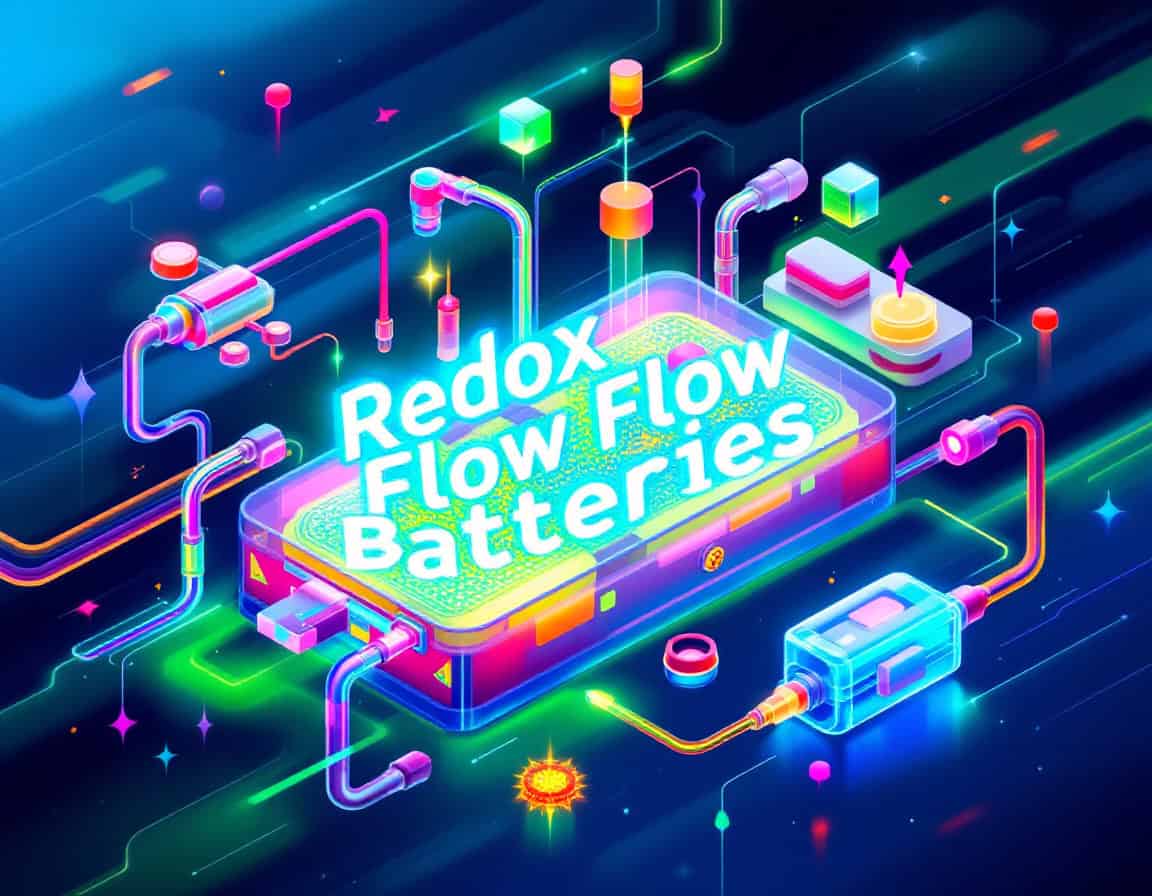

Redox flow batteries store energy in liquid electrolytes held in external tanks and pumped through an electrochemical stack. Power is set by stack size and energy by tank volume, so the two scale independently. This decoupling suits grid applications that need four to twelve hours of discharge. Vanadium chemistry is the commercial reference. Iron-chromium, zinc-bromine, all-iron and aqueous organic systems compete as alternatives.
Cost and durability drive the research. Vanadium price volatility, ion exchange membrane cost, electrolyte crossover and capacity fade from side reactions all affect the levelized cost of storage. Stack developers work on bipolar plates, carbon felt electrodes, flow field design and shunt current reduction, while chemists screen organic and hybrid redox couples. The publications and patents indexed below cover electrolyte formulations, membranes, stack and system design, rebalancing methods and battery management.
1