Product Design, Manufacturing & Innovation Resources
بيت » رابطة الكربون والفلور: مصدر استقرار PFAS

رابطة الكربون والفلور: مصدر استقرار PFAS

1940
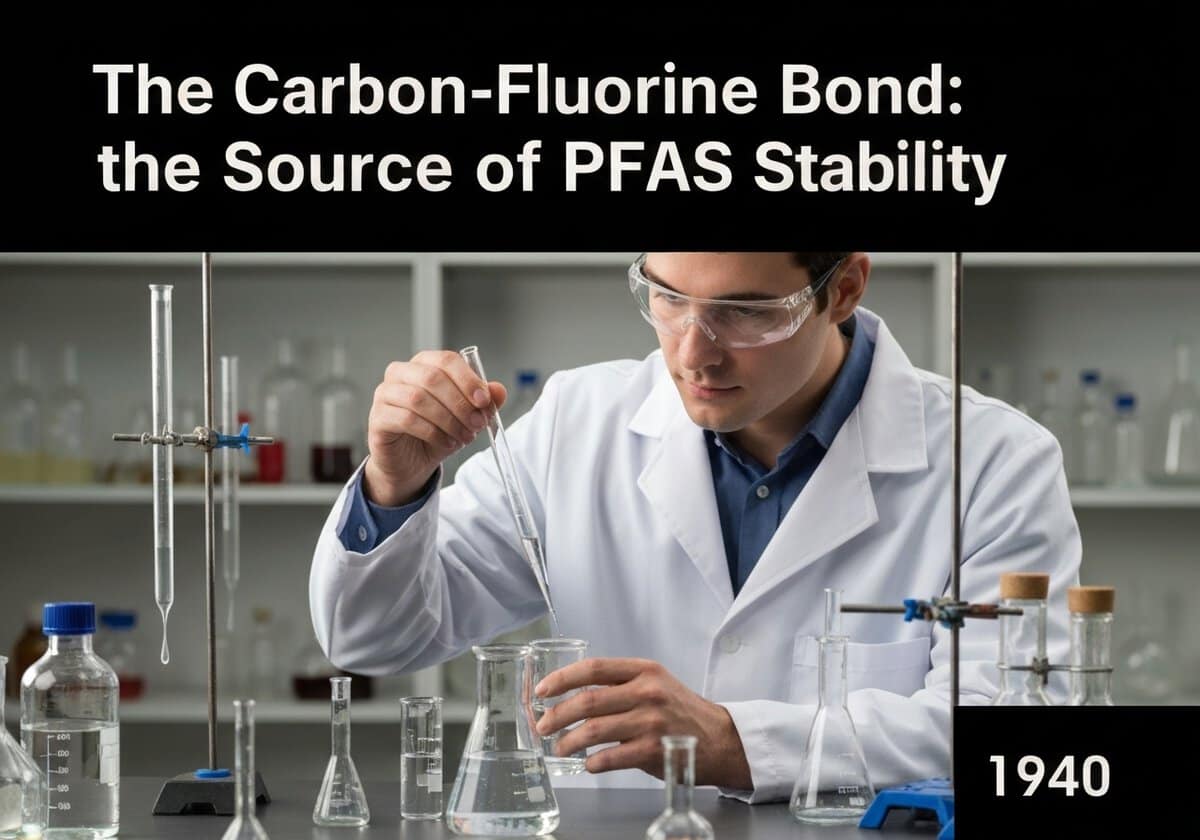
Chemist conducting experiment on PFAS in organic chemistry lab.

(صورة توضيحية فقط)

Per- and polyfluoroalkyl substances (PFAS) are characterized by a chain of carbon atoms bonded to fluorine atoms. The carbon-fluorine (C-F) bond is one of the strongest single bonds in organic chemistry, with a bond dissociation energy around 485 kJ/mol. This extreme strength makes PFAS highly resistant to chemical, thermal, and biological degradation, leading to their environmental persistence.

The exceptional stability of per- and polyfluoroalkyl substances (PFAS) is fundamentally rooted in the properties of the carbon-fluorine (C-F) bond. Fluorine is the most electronegative element, creating a highly polarized bond with carbon. This results in a short bond length (around 1.35 Å) and a very high bond dissociation energy, making it extremely difficult to break. In perfluoroalkyl substances, where all non-terminal carbons are fully saturated with fluorine atoms, this effect is amplified. The fluorine atoms create a helical sheath around the carbon backbone, sterically protecting it from chemical attack. This ‘fluorine shield’ also repels both water (hydrophobicity) and oils (oleophobicity), a rare combination that makes PFAS effective surfactants. The cumulative inductive effect of multiple fluorine atoms also strengthens adjacent C-C bonds within the chain, further contributing to the molecule’s overall inertness. This chemical robustness is why PFAS are dubbed “forever chemicals”; they do not readily break down under natural environmental conditions, leading to their widespread accumulation.

UNESCO Nomenclature: 2506
– Organic chemistry

يكتب

الخواص الكيميائية

خلل

أساسيات

الاستخدام

استخدام واسع النطاق

مقدمات

  • اكتشاف الفلور بواسطة هنري مواسان في عام 1886
  • development of quantum mechanics to explain chemical bonding (e.g., linus pauling’s work on electronegativity)
  • التخليق المبكر للمركبات العضوية الفلورية البسيطة في أواخر القرن التاسع عشر وأوائل القرن العشرين

التطبيقات

  • الطلاءات غير اللاصقة (التيفلون)
  • الأقمشة المقاومة للبقع (سكوتشغارد)
  • firefighting foams (AFFF)
  • ملابس مقاومة للماء
  • تغليف المواد الغذائية

براءات الاختراع:

NA

أفكار ابتكارية محتملة

  • مواد فعالة سطحية فلورية قابلة للتحلل الحيوي مع نقاط ضعف هندسية في العمود الفقري الكربوني
  • catalytic systems for selective c-f bond cleavage for pfas remediation
  • بدائل خالية من الفلور للطلاءات عالية الأداء
  • advanced polymers with tunable c-f bond density for الغرسات الطبية
  • أجهزة استشعار مصممة خصيصًا لاكتشاف التردد الاهتزازي لروابط cf لمراقبة البيئة
  • نماذج حسابية للتنبؤ بالمصير البيئي لـ PFAs قصيرة السلسلة الجديدة
  • مواد ذاتية الشفاء تتضمن كيمياء رابطة CF القابلة للعكس
  • مواد التشحيم للبيئات القاسية (الفضاء، أعماق البحار) القائمة على PFAs قصيرة السلسلة
  • أنظمة جديدة لتوصيل الأدوية باستخدام أغلفة مفلورة لتعزيز الاستقرار
  • أغشية لالتقاط الكربون تستفيد من نفاذية الغاز الفريدة للبوليمرات الفلورية
Related to: carbon-fluorine bond, pfas, perfluoroalkyl, stability, bond energy, organic chemistry, forever chemicals, electronegativity, persistence, organofluorine.

السياق التاريخي

رابطة الكربون والفلور: مصدر استقرار PFAS

1838
1872
1910
1940
1940
1946
1950
1800
1852
1900
1912
1940
1940
1950
1950

(إذا كان التاريخ غير معروف أو غير ذي صلة، على سبيل المثال "ميكانيكا الموائع"، يتم توفير تقدير تقريبي لظهوره الملحوظ)

أحدث الإضافات

أهم المنشورات والمقالات

أفضل الأدوات الأصلية

السنة العاشرة عيد

الصور والتنزيلات بالحجم الكامل متاحة فقط، ومجانية تمامًا، للأعضاء المسجلين.