パーフルオロアルキル物質およびポリフルオロアルキル物質(PFASPFASは、フッ素原子に結合した炭素原子の鎖によって特徴づけられます。炭素-フッ素(CF)結合は、有機化学において最も強い単結合の一つであり、結合解離エネルギーは約485 kJ/molです。この極めて強い結合力により、PFASは化学的、熱的、生物学的分解に対して非常に高い耐性を持ち、環境中で残留性が高くなっています。

(画像はイメージです)
パーフルオロアルキル物質およびポリフルオロアルキル物質(PFASPFASは、フッ素原子に結合した炭素原子の鎖によって特徴づけられます。炭素-フッ素(CF)結合は、有機化学において最も強い単結合の一つであり、結合解離エネルギーは約485 kJ/molです。この極めて強い結合力により、PFASは化学的、熱的、生物学的分解に対して非常に高い耐性を持ち、環境中で残留性が高くなっています。
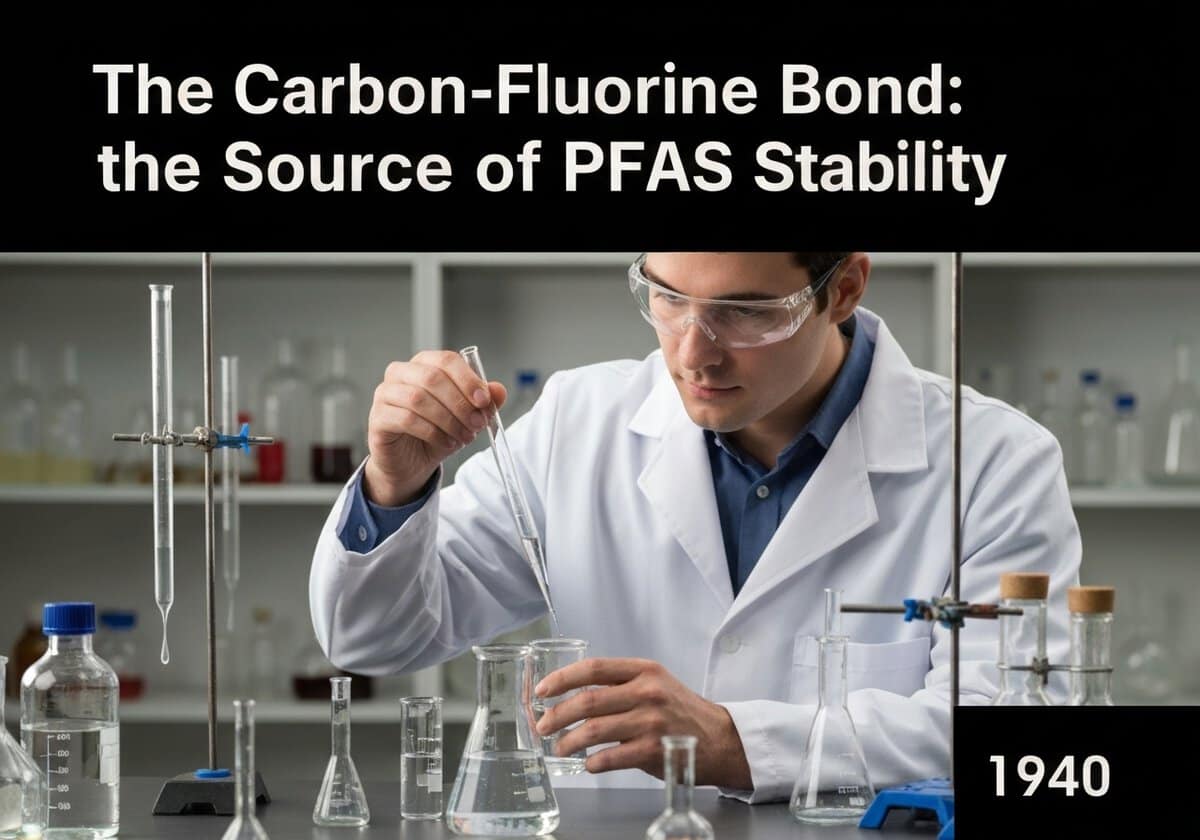
The exceptional stability of per- and polyfluoroalkyl substances (PFAS) is fundamentally rooted in the properties of the carbon-fluorine (C-F) bond. Fluorine is the most electronegative element, creating a highly polarized bond with carbon. This results in a short bond length (around 1.35 Å) and a very high bond dissociation energy, making it extremely difficult to break. In perfluoroalkyl substances, where all non-terminal carbons are fully saturated with fluorine atoms, this effect is amplified. The fluorine atoms create a helical sheath around the carbon backbone, sterically protecting it from chemical attack. This ‘fluorine shield’ also repels both water (hydrophobicity) and oils (oleophobicity), a rare combination that makes PFAS effective surfactants. The cumulative inductive effect of multiple fluorine atoms also strengthens adjacent C-C bonds within the chain, further contributing to the molecule’s overall inertness. This chemical robustness is why PFAS are dubbed “forever chemicals”; they do not readily break down under natural environmental conditions, leading to their widespread accumulation.
炭素-フッ素結合:PFASの安定性の源
(日付が不明または関連性がない場合、例えば「流体力学」などでは、その注目すべき出現時期の概算値が提示されます。)

フルサイズの画像とダウンロードは、登録会員のみが100%無料で利用できます。
> ログイン <