Product Design, Manufacturing & Innovation Resources
بيت » Static vs. Dynamic Verification (IT)

Static vs. Dynamic Verification (IT)

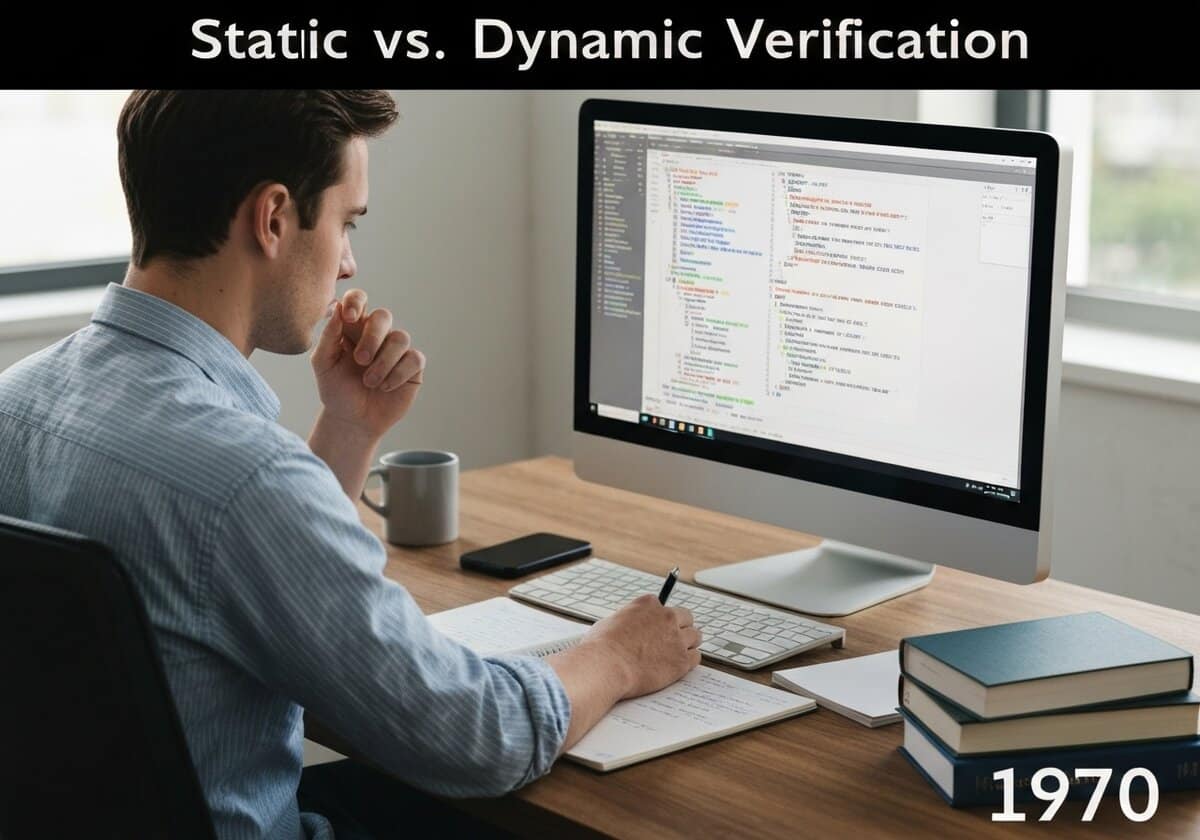
1970
Software engineer performing static verification using code analysis tools in Computer Science.

(صورة توضيحية فقط)

Verification techniques are broadly classified as static or dynamic. Static verification (or static analysis) examines the system’s code or design without executing it. Examples include code reviews, inspections, and automated static analysis tools. Dynamic verification (or testing) involves executing the system with a set of inputs and observing its behavior to find defects. Both are complementary for comprehensive quality assurance.

Static and dynamic verification are complementary approaches to finding defects. Static verification is performed early in the development cycle, often before the code is even compiled. It can analyze the entire codebase and identify issues like syntax errors, type mismatches, null pointer dereferences, and violations of coding standards. Because it doesn’t require execution, it can uncover problems in paths of the code that are difficult to reach through testing. Automated static analysis tools are now a standard part of modern development workflows, providing immediate feedback to developers within their integrated development environments (IDEs).

Dynamic verification, commonly known as testing, focuses on the runtime behavior of the software. It involves running the program with specific inputs and comparing the actual output with the expected output. This is the only way to detect certain types of errors, such as performance bottlenecks, memory leaks that occur over time, or incorrect handling of complex user interactions. Dynamic verification includes various levels of testing, from unit tests that check individual components to system tests that validate the entire application. While powerful, dynamic testing is inherently incomplete; it can only prove the presence of bugs for the tested inputs, not their absence for all possible inputs.

A comprehensive verification strategy utilizes both methods. Static analysis catches a class of errors cheaply and early, while dynamic testing validates the functional and non-functional behavior of the running system, ensuring it performs as expected under operational conditions.

UNESCO Nomenclature: 1203
– Computer Science

يكتب

نظام مجرد

خلل

Substantial

الاستخدام

استخدام واسع النطاق

مقدمات

  • المترجم theory (for parsing and semantic analysis)
  • early debugging techniques (e.g., print statements)
  • formal logic
  • code walkthrough and inspection processes

التطبيقات

  • static analysis tools in IDEs (e.g., lint, findbugs)
  • unit testing frameworks (e.g., junit, pytest)
  • code inspection and peer review processes
  • performance and load testing
  • security penetration testing

براءات الاختراع:

NA

أفكار ابتكارية محتملة

  • hybrid application security testing (hast) combining static and dynamic analysis
  • ai-driven static analysis for predicting likely bug locations
  • fuzz testing (fuzzing) as an advanced form of automated dynamic testing
  • runtime application self-protection (rasp) using dynamic analysis techniques
  • concolic testing, a hybrid technique that uses dynamic testing to guide static analysis
  • static analysis of infrastructure-as-code (iac) templates
  • dynamic analysis within sandboxed environments for malware detection
  • integration of static and dynamic analysis into a single ci/cd pipeline report
Related to: static analysis, dynamic analysis, testing, verification, software quality, code review, unit testing, lint.

السياق التاريخي

Static vs. Dynamic Verification (IT)

1960
1960
1967
1970
1970
1970
1970
1956
1960
1967
1967
1970
1970
1970
1970-01-01

(إذا كان التاريخ غير معروف أو غير ذي صلة، على سبيل المثال "ميكانيكا الموائع"، يتم توفير تقدير تقريبي لظهوره الملحوظ)

أحدث الإضافات

أهم المنشورات والمقالات

أفضل الأدوات الأصلية

السنة العاشرة عيد

الصور والتنزيلات بالحجم الكامل متاحة فقط، ومجانية تمامًا، للأعضاء المسجلين.