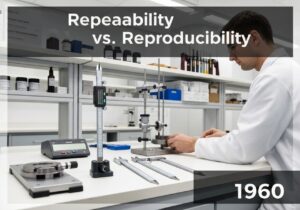
Gage R&R studies are widely implemented across various industries such as manufacturing, automotive, aerospace, and healthcare, where consistent and accurate measurements are paramount for quality control and assurance. This methodology is particularly applicable during the early stages of product development, pilot production runs, and ongoing quality monitoring. Participants typically include quality engineers, process engineers, and operators who utilize measurement systems to assess critical dimensions and performance metrics of components. By conducting experiments where multiple operators measure the same parts using a designated gage under similar conditions, organizations can determine the extent of variability that can be attributed to the measurement system itself, as well as to operator variability. In automotive manufacturing, for instance, Gage R&R assessments help to ensure that measurements of component specifications align with safety and performance standards, thereby avoiding costly defects and recalls. Data obtained from statistical analysis enables teams to pinpoint specific sources of variability, whether they stem from equipment calibration issues or operator technique differences. This knowledge informs decisions regarding training needs for personnel, adjustments in measurement procedures, or enhancements in measurement equipment, thereby leading to more reliable processes. Regular application of Gage R&R studies can reinforce a company’s commitment to maintaining high-quality manufacturing standards and facilitate continual improvement initiatives within quality management systems such as ISO 9001 or Six Sigma methodologies.