Product Design, Manufacturing & Innovation Resources

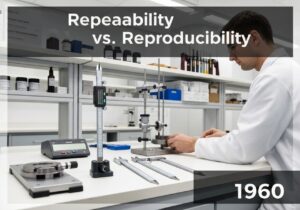
ゲージR&R(繰り返し性と再現性)

Gage R&R

ゲージR&R(繰り返し性と再現性)

客観的:

測定システムにおける変動のうち、測定装置自体に起因するもの(繰り返し性)と、装置を使用するオペレーターに起因するもの(再現性)の量を評価します。

使用方法:

長所

短所

カテゴリー:

最適な用途:

Gage R&R studies are widely implemented across various industries such as manufacturing, automotive, aerospace, and healthcare, where consistent and accurate measurements are paramount for quality control and assurance. This methodology is particularly applicable during the early stages of product development, pilot production runs, and ongoing quality monitoring. Participants typically include quality engineers, process engineers, and operators who utilize measurement systems to assess critical dimensions and performance metrics of components. By conducting experiments where multiple operators measure the same parts using a designated gage under similar conditions, organizations can determine the extent of variability that can be attributed to the measurement system itself, as well as to operator variability. In automotive manufacturing, for instance, Gage R&R assessments help to ensure that measurements of component specifications align with safety and performance standards, thereby avoiding costly defects and recalls. Data obtained from statistical analysis enables teams to pinpoint specific sources of variability, whether they stem from equipment calibration issues or operator technique differences. This knowledge informs decisions regarding training needs for personnel, adjustments in measurement procedures, or enhancements in measurement equipment, thereby leading to more reliable processes. Regular application of Gage R&R studies can reinforce a company’s commitment to maintaining high-quality manufacturing standards and facilitate continual improvement initiatives within quality management systems such as ISO 9001 or Six Sigma methodologies.

この方法論の主なステップ

  1. 測定項目を選択し、それらが母集団内のばらつきを適切に反映していることを確認してください。
  2. 測定手順の一貫性を保つため、作業員に測定手順に関する研修を実施する。
  3. 複数の作業員に、同じゲージを使って同じ部品を複数回測定させる。
  4. バイアスを最小限に抑えるため、測定順序をランダム化する。
  5. 測定データから変動成分を計算する。
  6. 分散分析(ANOVA)などの統計的手法、または同等の手法を用いてデータを分析する。
  7. プロセス全体の変動のうち、測定システムに起因する変動の割合を求めなさい。
  8. 測定システムが意図された用途に適しているかどうかを評価し、文書化する。
  9. システムを改善するために、測定誤差の原因を特定し分析する。

プロのヒント

  • ゲージR&R研究中は、管理図を使用して、時間の経過に伴う変動とオペレーターのパフォーマンスを監視および視覚化します。
  • ゲージR&R調査を実施する前に、オペレーター向けのトレーニングセッションを組み込むことで、測定技術と解釈の一貫性を確保してください。
  • 統計的評価において、因子間の相互作用を含めた多次元分析を実施し、測定値のばらつきの微妙な原因を特定してください。

複数の方法論を読み比べて、 私たちは、

> 包括的な方法論リポジトリ  <
400以上の他の手法と併せて。

この方法論に関するご意見や追加情報は、 以下のコメント欄 ↓、エンジニアリング関連のアイデアやリンクも同様です。

歴史的背景

1957
1957
1959-11
1960
1960
1960
1960
1950
1957
1958
1960
1960
1960
1960
1960

(日付が不明または関連性がない場合、例えば「流体力学」などでは、その注目すべき出現時期の概算値が提示されます。)

フルサイズの画像とダウンロードは、登録会員のみが100%無料で利用できます。