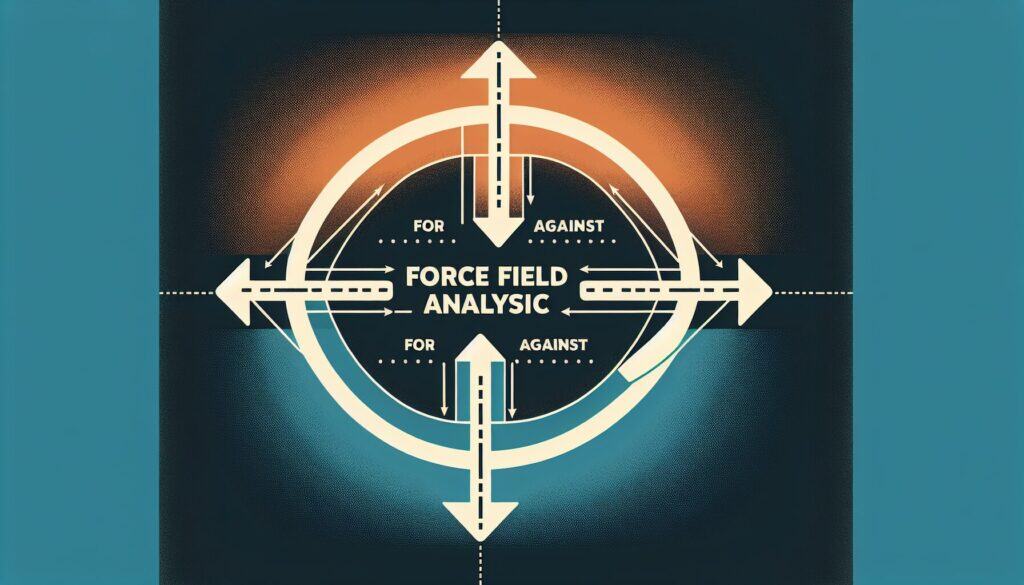
Force Field Analysis is widely applied across various sectors such as healthcare, education, manufacturing, and software development during the planning and implementation phases of projects that involve change initiatives. This methodology is typically initiated by project managers, change agents, or team leaders who seek to drive significant modifications, like the introduction of new technologies or reforms in organizational policies. It is valuable during the early stages of projects when understanding stakeholder perceptions is essential for success or when conducting impact assessments related to potential changes. Participants in these discussions often include cross-functional teams comprising engineers, designers, business analysts, and end-users, ensuring diverse perspectives are represented. By quantifying driving and restraining forces, teams can visualize the balance of power influencing the change process, which aids in facilitating open dialogue for consensus-building. For example, in an engineering context, Force Field Analysis may be employed during the design phase of a new product to weigh the benefits of cutting-edge materials against potential production challenges, enabling more informed decision-making. Furthermore, it supports strategic planning by allowing organizations to formulate actionable steps to bolster supportive factors while mitigating resistance, thus increasing the likelihood of successful implementation within a structured change management framework.