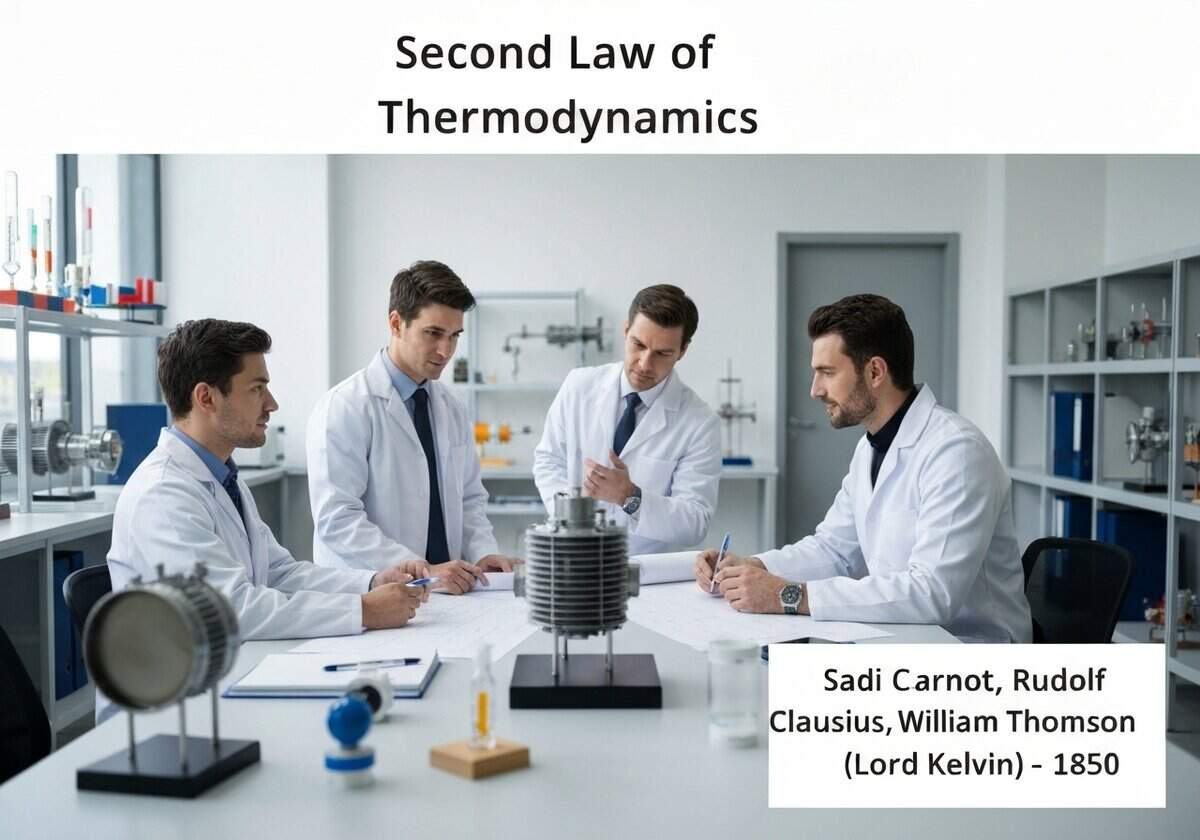
The law’s novelty was the introduction of irreversibility into fundamental physics. While the First Law deals with energy conservation, the Second Law deals with energy quality and its inevitable degradation to less useful forms (waste heat). Ludwig Boltzmann later provided a statistical interpretation, defining entropy ([latex]S[/latex]) as a measure of the number of possible microscopic arrangements (microstates) that correspond to a system’s observed macroscopic state. The formula [latex]S = k_B \ln W[/latex] connects entropy to statistical probability, explaining that systems tend to evolve towards their most probable (highest entropy) state.