Product Design, Manufacturing & Innovation Resources
家 » 光化学烟雾

光化学烟雾

1950
Urban street scene depicting photochemical smog effects in 1950, highlighting atmospheric chemistry.

(图片仅供参考)

Photochemical smog is formed through a complex series of reactions involving sunlight, nitrogen oxides (NOx), and volatile organic compounds (VOCs). The process is initiated when sunlight splits nitrogen dioxide ([latex]NO_2[/latex]) into nitric oxide (NO) and an oxygen atom (O). This free oxygen atom then combines with molecular oxygen ([latex]O_2[/latex]) to form ground-level ozone ([latex]O_3[/latex]), a primary component of smog.
光化学烟雾的形成是一个由太阳辐射驱动的循环过程。该循环始于早高峰时段,此时车辆排放大量氮氧化物(NOx)和挥发性有机化合物(VOCs)。阳光 紫外线 (UV) radiation provides the energy for the initial key reaction: the photolysis of nitrogen dioxide ([latex]NO_2 \\xrightarrow{h\nu} NO + O[/latex]). The highly reactive atomic oxygen (O) then quickly combines with diatomic oxygen ([latex]O_2[/latex]) to form ozone ([latex]O_3[/latex]): [latex]O + O_2 \\rightarrow O_3[/latex]. Normally, this ozone would be destroyed by reacting with the nitric oxide (NO) produced in the first step, reforming [latex]NO_2[/latex] and [latex]O_2[/latex] in a null cycle. However, the presence of VOCs disrupts this balance.

VOCs react with hydroxyl radicals (OH) in the atmosphere to form peroxy radicals ([latex]RO_2[/latex]). These peroxy radicals are highly effective at oxidizing NO to [latex]NO_2[/latex] without consuming an ozone molecule: [latex]RO_2 + NO \\rightarrow RO + NO_2[/latex]. This reaction rapidly regenerates [latex]NO_2[/latex], which can then be photolyzed again to produce more ozone, while also preventing NO from depleting the existing ozone. This leads to a net accumulation of ozone throughout the day, with concentrations typically peaking in the afternoon. The complex mixture also includes other harmful secondary pollutants like peroxyacetyl nitrate (PAN), aldehydes, and nitric acid, creating the characteristic hazy, irritant-laden air known as smog.

UNESCO Nomenclature: 2501
– Atmospheric sciences

类型

化学过程

中断

重大的

用法

广泛使用

前体

  • 克里斯蒂安·弗里德里希·舍恩拜因发现臭氧
  • 了解化学动力学和反应机制
  • 内燃机的发展和汽车的广泛使用
  • 识别挥发性有机化合物和氮氧化物作为污染物
  • arie jan haagen-smit’s research linking ozone to plant damage in los angeles

应用程序

  • 低挥发性有机化合物涂料、溶剂和消费品的配制
  • 车辆排放标准(例如,欧元标准、美国环保署标准)
  • 预测高臭氧天数的空气质量预测模型
  • 加油站的蒸汽回收系统
  • 开发低氮氧化物和挥发性有机化合物排放的替代燃料汽车

专利:

NA

潜在创新理念

  • 光催化建筑材料,可分解其表面的氮氧化物和挥发性有机化合物
  • 优化交通流量以最大限度地减少排放热点的城市规划算法
  • 无人机 swarms that release ozone-neutralizing agents during high-smog events
  • 个人可穿戴传感器,可提供高臭氧和挥发性有机化合物暴露的实时警报
  • 具有增强吸收挥发性有机化合物和氮氧化物能力的转基因植物
  • solar-powered urban air purifiers using advanced filtration and catalytic conversion
  • 人工智能系统通过卫星图像识别和报告工业挥发性有机化合物泄漏
  • 使用超临界二氧化碳作为溶剂开发无VOC制造工艺
  • 建筑物智能通风系统,可在雾霾高峰期自动关闭进气口
  • 利用藻类捕获和代谢烟雾成分的生物反应器
Related to: photochemical smog, ground-level ozone, nitrogen oxides, volatile organic compounds, VOC, NOX, sunlight, atmospheric chemistry, secondary pollutant, peroxyacetyl nitrate.

历史背景

光化学烟雾

1912
1940
1940
1950
1950
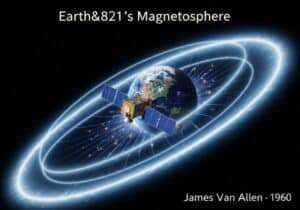
1960
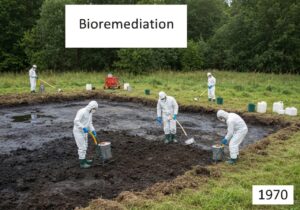
1970
1910
1940
1940
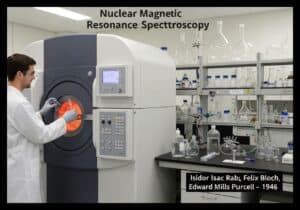
1946
1950
1960
1970
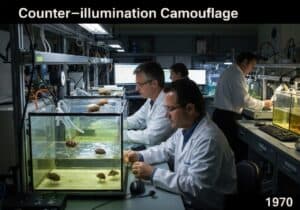
1970

(如果日期未知或不相关,例如“流体力学”,则提供其显著出现的近似估计)

第十年 周年纪念日

只有注册会员才能免费获取完整尺寸的图片和下载内容。

> 登录 <