2022년 전 세계적으로 350만 건의 특허가 출원되었습니다. 이는 지적 재산권이 글로벌 혁신에 얼마나 중요한지를 보여줍니다. 특허 특허와 저작권의 차이점을 이해하는 것은 발명품과 예술 작품을 보호하는 데 필수적입니다. 특허는 주로 기술 발전에 초점을 맞추는 반면, 저작권은 예술 작품을 보호합니다.
창작자와 발명가들이 이러한 법칙들을 이해하게 되면, 자신의 작품을 보호할 수 있게 됩니다. 이러한 보호는 더 많은 창의성과 기회를 창출합니다.
특허와 저작권은 모두 지적 재산권의 범주에 속하지만, 목적은 다릅니다. 미국에서는 전체 보호 대상의 약 90%가 특허입니다. 특허는 아이디어를 자산으로 전환하는 데 도움이 되는 권리를 부여합니다. 반면, 저작권법은 저작자와 창작자를 보호합니다. 저작권자는 자신의 저작물을 복제하고 공개적으로 공유하는 것에 대한 통제권을 갖게 됩니다.
특허와 저작권의 차이점을 설명하는 것은 학계에만 필요한 것이 아닙니다. 혁신을 촉진하고 지적 재산권을 최대한 활용하고자 하는 모든 사람에게 매우 중요합니다.
핵심 요약
- 지적재산권은 발명품과 창작물을 법적으로 보호하고 수익을 창출하는 데 핵심적인 요소입니다.
- 특허는 기술 혁신과 그 산업적 활용에 중요한 배타적 권리를 제공합니다.
- 저작권은 독창적인 예술 및 문학 작품의 복제와 공유를 통제할 수 있도록 해줍니다.
- 상표법은 기업이 연방 등록을 통해 브랜드를 보호하고 소비자 신뢰를 유지하는 데 도움을 줍니다.
- 특허, 저작권, 상표의 차이점을 아는 것은 사업 전략과 창작의 자유에 큰 영향을 미칠 수 있습니다.
- 이러한 권리에 대한 법적 보호 기간은 권리의 지속 기간과 집행 방식에 영향을 미칩니다.
지적 재산권의 기본 원리 이해하기
지적재산권(IP)은 다양한 분야에서 혁신과 창의성을 촉진하는 핵심 영역입니다. 지적재산권의 기본 원리를 이해하면 독창적인 제품과 창의적인 활동을 보호할 수 있습니다. 이를 통해 독점권을 확보하고 경쟁 우위를 유지할 수 있습니다.
지적 재산권(IP)의 정의
지적 재산권은 산업, 과학, 문학 및 예술 분야의 창작물을 보호합니다. 이는 창작자에게 자신의 작품을 합법적으로 관리하고 사용할 수 있는 권리를 부여합니다. 이러한 권리는 신제품과 혁신적인 공정을 포함합니다.
지적재산권의 4대 기둥: 저작권, 특허, 상표, 영업비밀
- 저작권저작권법은 문학, 음악, 미술과 같은 독창적인 작품의 창작자를 보호합니다. 이를 통해 창작자는 복제, 배포 및 전시를 통제할 수 있습니다.
- 특허발명가에게 최대 20년간 자신의 발명품에 대한 권리를 부여합니다. 여기에는 기계, 공정 또는 화학 조성물이 포함됩니다.
- 등록 상표상표는 고유한 표시를 통해 상품 또는 서비스의 출처를 식별하는 데 사용됩니다. 이름, 로고 및 기호는 보호를 위해 등록할 수 있습니다.
- 영업비밀: 제조법과 공정 등 기업 정보를 기밀로 유지합니다. 이는 경쟁 우위를 제공합니다.
다양한 지적재산권을 구분하는 것이 중요한 이유
적절한 법적 보호를 위해서는 다양한 지적 재산권의 개념을 이해하는 것이 중요합니다. 예를 들어, 저작권은 창작물의 아이디어 표현을 보호하고, 특허는 새롭고 유용한 기술적 발명을 보호합니다. 이러한 차이점을 아는 것은 혁신 잠재력을 극대화하는 데 필수적입니다.
이러한 지식은 법률 준수를 보장하고 자산의 오용을 방지합니다. 완벽한 지적 재산권 보호는 청렴성과 혁신의 문화를 조성합니다.
저작권 보호란 무엇인가요?
저작권법을 살펴보면 저작권 보호가 어떻게 독창적인 창작물을 안전하게 지키는지 알 수 있습니다. 저작권은 책, 노래, 연극과 같은 작품의 고유한 특징과 독창성을 보호해 줍니다. 이는 창작자들이 자신의 독창적인 작품을 유지하는 데 매우 중요합니다.
창작물における 독창성의 개념
저작권법에서 보호를 받으려면 독창성이 핵심입니다. 작품은 창작자의 고유한 기술과 판단력을 보여줘야 합니다. 기존 작품을 단순히 복제하는 것만으로는 충분하지 않습니다. 저작권은 특허와 달리 아이디어 자체가 아니라 아이디어를 표현하는 방식을 보호합니다.
저작권법의 범위와 한계
저작권법의 적용 범위는 광범위합니다. 책, 희곡, 음악, 미술 작품 등 다양한 저작물을 포괄합니다. 저작자는 자신의 저작물 사용을 통제하고 그에 대한 보상을 받을 수 있습니다. 저작권법은 저작자의 경제적 이익을 증진하기 위해 만들어졌습니다. 하지만 공정 이용과 같은 제한도 존재하는데, 이는 허가 없이도 저작권이 있는 자료를 일부 사용할 수 있도록 허용하는 것입니다.
이러한 세부 사항을 이해하면 저작권 규정을 더 잘 이해하고 활용할 수 있습니다.
미국 저작권청 등록을 통해 얻는 혜택
저작권은 저작물이 창작되어 유형의 형태로 고정되는 순간부터 발생합니다. 하지만 미국 저작권청에 등록하면 이러한 보호가 더욱 강화됩니다. 등록은 법적 조치를 취하거나 저작권 관련 문제를 처리하는 데 필수적이며, 권리 보유와 권리 행사 능력 사이의 연결고리를 강화합니다.
| 측면 | 세부 사항 |
|---|---|
| 등록 필수 | 자발적이지만 소송 진행을 위해서는 필수적입니다. |
| 창조 시 보호 | 작품의 생성 및 확정 시 자동 권리 |
| 저작권 보호 기간 | 창작자 사후 70년, 고용 계약에 의한 저작물의 경우 최대 95년 또는 120년까지 보호됩니다. |
| 법정 손해배상 | 등록하시면 이용 가능합니다. |
| 법률의 적용 범위 | 문학, 연극, 음악 및 미술 작품 |
저작권 등록은 매우 중요합니다. 이는 창작자의 인격권과 법적 권리를 보장하며, 창작물의 독창성을 보호하는 데 도움이 됩니다.
Navigating Through Patent Law
The world of patent law boosts innovation and tech progress. It gives inventors exclusive rights to their work. Knowing the types of patents and how to get them from the U.S. Patent and Trademark Office is key for inventors.
Three main patents exist in the U.S: utility, design, and plant patents. Utility patents are the most common, covering new processes and machines. Design patents protect how an item looks. Plant patents are for new types of plants that don’t reproduce by seeds.
The America Invents Act changed the U.S. patent system. Now, it’s about who files first, not who invents first. This makes filing quickly with the U.S. Patent and Trademark Office very important.
| Type of Patent | Protection Offered | Duration |
|---|---|---|
| Utility Patent | Functional aspects of inventions | 20 years |
| Design Patent | Aesthetic appearance of objects | 15 years |
| Plant Patent | New varieties of plants | 20 years |
Getting a patent is hard and often requires a lawyer. A good patent attorney is essential. They make sure your invention is protected right, following the rules of the U.S. Patent and Trademark Office.
Patent laws don’t just help inventors keep their exclusive rights. They also promote non-stop innovation and economic growth.
The Domain of Trademarks and Service Marks
Trademarks and service marks are very important in the business world. They help identify a brand and show a business’s 평판 and the quality it offers. They make a brand stand out from others, building customer loyalty and trust.
Identifying the Source of Goods and Services
Trademarks and service marks are key in showing where a product or service comes from. This helps consumers choose based on brand names. This choice is affected by how well they recognize and trust a brand.
Legal Advantages of Registering a Trademark with the USPTO
There are many benefits to registering a trademark with the USPTO. It offers nationwide protection, very important for keeping a brand safe in the U.S. This federal status helps prevent others from using your mark and makes legal actions easier if needed. Also, USPTO registration proves you own the mark, which is good for your legal defense.
| Tool/Resource | 기능성 | 관련성 |
|---|---|---|
| USPTO Trademark Search System | Searches for potential conflicting marks since 1984 | Essential for pre-application research |
| Trademark Electronic Application System (TEAS) | Being replaced by Trademark Center for filing | Central for modern online trademark registration |
| TSDR (Trademark Status & Document Retrieval) | Allows public view of trademark filings and statuses | Important for ongoing monitoring of trademark status |
| Trademark Official Gazette (TMOG) | Weekly publication of preliminary approved trademarks | Crucial for final opposition phase before registration |
Using trademarks and service marks well can really help a brand stand out. This not only makes the brand unique but also keeps it safe legally. By working with the USPTO, companies can grow and protect their brands in the market.
The Overlap of Copyright and Trademark Law
Understanding the similarities and distinctions between copyright and trademark laws is key. These laws are vital for protecting intellectual property. They help in keeping a business reputation and safeguarding original expressions. When logos get covered by both copyrights and trademarks, it shows how they overlap.
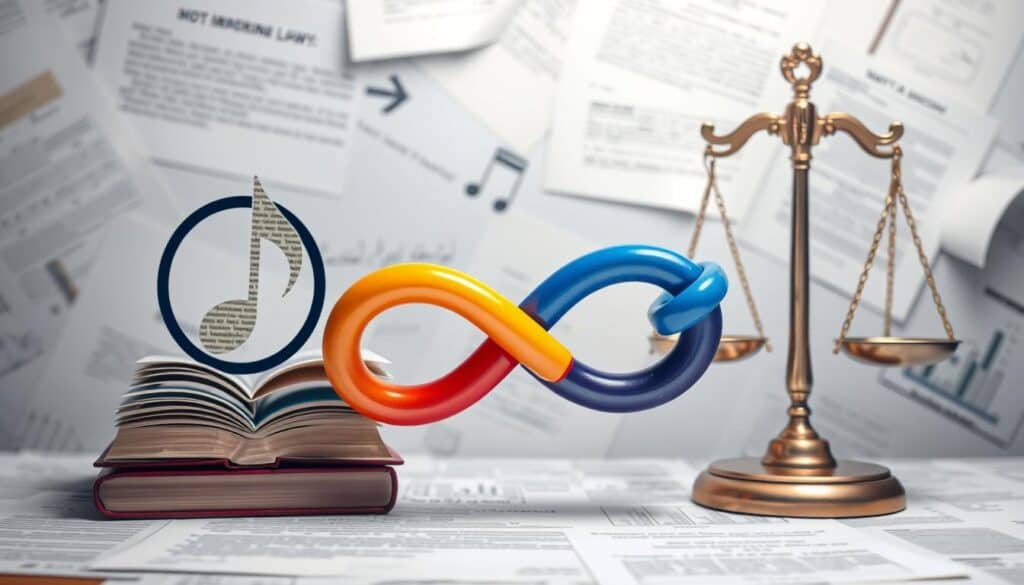
Copyrights and trademarks often come together in characters and designs. A character might be trademarked for brand association but also copyrighted as art. This double protection blocks illegal use. It keeps the creator’s rights and economic interests safe.
Business reputation improves with smart use of trademarks and copyrights. A unique 심벌 마크, covered by both, boosts a brand’s identity. It also builds consumer trust.
The interaction between these laws helps both the commercial side and rights management within businesses. Organizations need to carefully manage these overlappings. Legal knowledge is a must for exploiting full benefits while following intellectual property laws.
This table shows crucial details about copyright and trademark applications. It explains their overlaps and potential legal issues:
| 측면 | 저작권 | 등록 상표 |
|---|---|---|
| Protection Focus | Original artistic and literary works | Branding elements like logos, names |
| 예 | Artwork, music, photography | Business logos, taglines |
| Legal Documentation | Registration offers legal proof | Registration prevents brand identity theft |
| Overlap Example | Graphic designs in logos | Logos with artistic graphics |
This explanation helps in understanding how copyright and trademark laws shield creative and business works. Companies and individuals should get expert legal advice. This way, they can avoid problems and fully benefit from both protections.
Patent Protection: Incentives for Innovation and Commercialization
Patent protection is crucial for sparking innovation. It also helps bring new tech to market. Inventors get a monopoly for a limited time from the U.S. Patent and Trademark Office. This ensures creative work in many fields is rewarded.
Understanding how to apply for a patent is important. It turns new ideas into products that can be sold.
The Role of the U.S. Patent and Trademark Office in Patents
The U.S. Patent and Trademark Office (USPTO) leads in protecting patents. It supports the growth of new ideas across the country. The agency checks patent applications carefully.
It looks for novelty and uniqueness in every invention. This way, only inventions that truly deserve patents get them. This maintains a high innovation standard.

Understanding the Patent Application Process
Applying for a patent might seem tough. But knowing the steps can help avoid hurdles. Here are the main stages:
- Preparation: starts with documenting the invention and checking if it can be patented.
- Filing: you must submit detailed documents and descriptions to the USPTO. Being precise here is very important.
- Examination: the USPTO checks if your application meets the legal requirements.
- Issuance: if everything is in order, a patent is granted. This gives the inventor rights to sell their invention for a certain time.
Getting from an idea to a sellable product shows the importance of patents. They encourage innovation and help bring it to the market. With the right approach to the patent process, inventors can make their ideas into real, protected technologies. These technologies can lead to new advancements in their fields.
Comparing Patents and Copyrights
Understanding the difference between patents and copyrights is key in the world of intellectual property. It’s important for protection and for making the most out of new ideas and inventions.
The Functional and Expressive Dichotomy
In the realm of intellectual property, functional inventions are linked to patents. These include things like machines and methods that do a certain 직업. On the other hand, expressive works like art and music fall under copyright. Knowing the difference matters a lot because it affects how you can use and protect your work.
Protection Duration: How Long Do These IP Rights Last?
The time that patents and copyrights last varies a lot. Patents, for gadgets or processes, last for 20 years. This lets inventors be the only ones to use their invention for a while. Copyrights, though, protect writers and artists’ work for their lifetime plus 70 years. This supports long-term creativity.
Think about a tech company making a new device. A patent would protect the special way it works. A copyright would protect how the 사용자 인터페이스 looks and works. Having both types of protection is very important for success.
So, knowing about functional inventions and expressive works is crucial. It helps with planning and following the law when creating something new.
Trade Secrets: Guarding Against Unauthorized Disclosure
In the world of intellectual property, trade secrets are very special. They protect important business details that give companies a competitive edge. Unlike patents, trade secrets keep their valuable information a secret to remain exclusive. This secret info can be anything from recipes to unique processes that keep a company ahead due to their secrecy.
To stop unauthorized disclosure, companies need to be very careful. They use strong IT security and contracts like NDAs to keep secrets safe. The real value of a trade secret comes from how hard a company works to keep it away from competitors.
| 측면 | 특허 | 영업비밀 |
|---|---|---|
| Disclosure Requirements | Required publicly | None, maintains secrecy |
| 수명 | 20 years for utility patents, 15 years for design | Indefinite, as long as it remains secret |
| Protection Mechanism | Intellectual property rights granted by law | Efforts of the holder to prevent unauthorized disclosure |
| Enforcement | Legal action against infringement | Legal action against breach of confidentiality |
| 경제적 가치 | Derived from novelty and inventiveness | Derived from not being known and not easily ascertainable |
Keeping trade secrets safe means always staying ahead. Companies must update their security and closely watch who can see the secrets. This helps keep the secrets truly secret and their commercial value high.
The Interplay Between Copyrights, Patents, Trade Secrets, and Trademarks
Understanding how IP protections work together is key for handling intellectual property rights. It is important to know the roles of copyrights, patents, trade secrets, and trademarks. They help protect various parts of creativity and innovation.
A Chart of Differences: Protection, Requirements, and Rights
| Type of IP | Protection | Legal Requirements | Rights Granted |
|---|---|---|---|
| 등록 상표 | Protects brand names, logos, and other identifiers from being used by others | Must be distinctive and used in commerce | Exclusive right to use the mark to identify goods or services |
| 특허 | Covers inventions and grants the holder the right to exclude others from making, using, selling, or importing the invention | Invention must be novel, non-obvious, and useful | Exclusive exploitation rights for up to 20 years for utility patents |
| 저작권 | Protects original works of authorship including literature, music, and art | Originality and some form of expression | Control over reproduction, derivative works, distribution, and public display |
| 영업비밀 | Protects confidential business information that gives a competitive edge | Information must be secret, have commercial value, and be subject to reasonable steps to keep it secret | Indefinite protection as long as secrecy is maintained |
Understanding Which IP Protection Fits Your Needs
Choosing the right IP protection requires knowing your needs and goals. Each type of intellectual property has distinct benefits. They protect different kinds of creativity and innovation.
For example, patents are critical for inventors who need exclusive rights. Copyrights give artists and authors the confidence to share their work. Trademarks protect and build consumer trust in brands. Meanwhile, trade secrets offer protection for valuable, confidential business info.
Using IP protections strategically boosts your competitive edge and encourages innovation. By understanding the legal requirements of each IP type, you can get full protection. This way, you can make the most of your intellectual property.
How to Leverage IP Rights for Business and Creative Advantage
Using IP rights well is key to gaining a business edge and boosting innovation. Knowing how to handle patents, copyrights, and trademarks lets businesses improve their place in the market. This also protects their creative efforts.
IP-focused industries push economic growth and keep the competition lively worldwide. Patents let companies like Apple Inc. and Google Inc. exclusively use their new ideas. This raises their value and attracts investors. Copyrights let creators earn from their work for their lifetime and after, which is vital in publishing and entertainment.
Trademarks make brands like Louis Vuitton stand out and keep customer loyalty. They fight fake products to keep their good name and consumer trust. Handling IP rights well boosts business tactics. It helps protect unique tech and makes brands stand out in busy markets.
| IP Right | Role in Business | Impact on Valuation | 도전 과제 |
|---|---|---|---|
| 특허 | Encourages innovation by providing exclusive rights | Significant contributor to company valuations and technological leadership | Patent trolls and the rise of litigation costs |
| Copyrights | Protects creative works, allowing for controlled distribution and monetization | Increases company valuation through exclusive content rights | Digital piracy significantly impacts revenue streams |
| Trademarks | Builds brand identity and consumer trust | Enhances market positioning and competitive advantage | Counterfeits and domain name disputes |
To beat issues like digital piracy, groups like the Global Innovation Policy Center suggest strong online enforcement. This not only guards intellectual property but also keeps innovation alive online. Besides, matching innovation with solid IP laws aids creators and innovators. It pushes industry standards up and boosts the economy.
결론
The world of intellectual property is complex but well-structured. It’s made to protect new ideas and creative works. Knowing the difference between patents and copyrights is very important. It helps keep innovation safe and allows it to grow.
Utility patents protect the way inventions work for up to 20 years. Design patents protect the look of products for 15 years. This stops others from making copies too soon. So, inventors can enjoy the benefits of their hard work without worry.
Copyright law protects creative works longer. It lasts for the author’s life plus 70 years, or up to 120 years for companies. This gives a solid chance for authors and companies to make money from their creations. Plant patents also show how broad protection can be. This emphasizes how much the United States values all types of intellectual property.
Looking ahead, it’s clear we need to stay alert and informed about IP. Technology moves fast, and markets are growing worldwide. We need strong legal rules to keep inventions and creative works safe. It’s crucial for everyone to keep up with these changes. This way, we can continue respecting and growing intellectual property rights. It helps keep the United States ahead in innovation and creativity around the world.
추가 자료
- Patent licensing and commercialization: approaches to licensing patents and strategies for commercializing patented technologies.
- Technology transfer: processes and strategies for transferring patented technologies between organizations or from research institutions to industry.
- Licensing agreements: exploring the legal frameworks and strategies for licensing copyrighted material, allowing others to use it under specific conditions.
- Fair use doctrine: analyzing the principles that allow limited use of copyrighted material without permission, such as for commentary, criticism, or education.
- Digital Rights Management (DRM): implementing technological measures to control the use, distribution, and duplication of copyrighted digital content.
- Creative commons licensing: utilizing a set of licenses that enable creators to communicate which rights they reserve and which they waive for the benefit of recipients or other creators.
- Open access publishing: investigating the movement towards making scholarly research freely available to the public, often involving alternative copyright considerations.
- Public domain: identifying works that are not protected by copyright and are free for public use, and understanding how works enter the public domain.
- Moral rights: examining the rights of creators to protect the personal and reputational value of their work, which may exist alongside economic rights.
- Copyright law and international treaties: Studying the global framework for copyright protection, including treaties like the Berne Convention and the TRIPS Agreement.
자주 묻는 질문
특허와 저작권의 주요 차이점은 무엇인가요?
특허는 기계나 화학 물질과 같은 새로운 발명품에 대한 것입니다. 특허는 혁신과 발전에 도움이 됩니다. 저작권은 책, 음악, 미술과 같은 창작물을 보호합니다. 저작권은 창작자의 권리에 중점을 둡니다.
지적 재산권(IP)이란 무엇인가요?
지적재산권은 여러분의 아이디어와 창작물에 관한 것입니다. 여기에는 발명품, 예술 작품, 디자인 등이 포함됩니다. 지적재산권은 창작자에게 자신의 작품에 대한 특별한 권리를 부여합니다.
지적재산권의 다양한 유형을 이해하는 것이 왜 중요할까요?
지적 재산권에 대한 지식은 창작자들이 자신의 작품을 보호하는 데 도움이 됩니다. 이를 통해 창작자들은 합법적인 방법으로 권리를 방어하고, 자신의 창작물로 최대한의 수익을 창출할 수 있습니다.
저작권 보호 대상이 되는 창작물의 독창성은 어떤 요소로 구성되는가?
독창성이란 작가가 어느 정도 창의력을 발휘하여 작품을 만들었다는 것을 의미합니다. 완전히 새로운 작품일 필요는 없지만, 표절은 아니어야 합니다.
미국 저작권청에 저작물을 등록하면 어떤 이점이 있나요?
저작권 등록을 하면 공개적인 저작권 기록이 남게 됩니다. 이는 법정에서 금전적 손해 배상을 받는 등 큰 법적 이점을 가져다 줄 수 있습니다. 하지만 저작권 침해가 발생하기 전이나 출판 후 3개월 이내에 등록해야 합니다.
특허권자는 어떤 권리를 가지고 있습니까?
특허권자는 다른 사람이 자신의 발명품을 20년 동안 사용하는 것을 막을 수 있습니다. 즉, 특허권자는 그 발명품만으로 돈을 벌 수 있다는 뜻입니다.
상표와 서비스표를 등록하는 것이 왜 중요할까요?
상표를 등록하면 법적인 혜택을 누릴 수 있습니다. 미국 내 어디에서든 해당 상표에 대한 소유권을 갖게 되며, 법정 소송이나 다른 국가에서의 등록에도 도움이 됩니다.
저작권법은 상표법과 어떻게 겹치나요?
때때로 저작권법과 상표법이 동일한 사안을 다루는 경우가 있습니다. 예를 들어 로고의 디자인이 저작권으로 보호받으면서 동시에 상표로도 사용되는 경우입니다.
미국 특허상표청(USPTO)은 특허에서 어떤 역할을 하나요?
미국 특허청(USPTO)은 특허가 법적으로 문제가 없는지 검토합니다. 또한 발명품을 보호하기 위해 특허를 부여하고 모든 특허 기록을 관리합니다.
저작권과 특허권 보호 기간은 얼마나 되나요?
저작권은 저작자의 생존 기간에 70년을 더한 기간 동안 지속됩니다. 특허는 출원일로부터 20년간 유효하며, 이때 수수료를 납부해야 합니다.
특허나 저작권 대신 영업비밀을 활용해야 하는 경우는 언제일까요?
정보를 영원히 비밀로 유지하고 싶을 때는 영업 비밀을 활용하세요. 영업 비밀은 가치가 있고 비밀로 유지되는 한 보호됩니다.
서로 다른 지적재산권법 간의 상호작용을 이해하는 것이 지적재산권 보호에 어떤 영향을 미칠 수 있을까요?
지적재산권법이 어떻게 상호 작용하는지 이해하면 창작물을 더 잘 보호하고 관리할 수 있습니다. 즉, 자신의 권리를 더욱 효과적으로 활용할 수 있다는 뜻입니다.
지적재산권을 활용하는 것이 어떻게 사업 경쟁 우위를 확보하는 데 도움이 될 수 있을까요?
지적재산권은 창작물에 대한 통제권을 부여하고 사업을 보호합니다. 또한 제품의 가치를 높여주고, 새로운 수익을 창출하며 브랜드를 구축하는 데 도움을 줍니다.
지적재산권 보호 관련 외부 링크
(링크 위에 마우스를 올려놓으면 콘텐츠에 대한 설명을 볼 수 있습니다.)
사용된 용어집
Digital Rights Management (DRM): 저작권이 있는 디지털 콘텐츠를 무단 사용, 복제 및 배포로부터 보호하고, 창작자와 배포자가 지적 재산권을 유지할 수 있도록 하는 일련의 접근 제어 기술입니다.
Fair Use Doctrine: 저작권자의 허가 없이 저작권이 있는 자료를 제한적으로 사용할 수 있도록 허용하는 법적 원칙으로, 일반적으로 비판, 논평, 뉴스 보도, 교육, 학술 연구 등의 목적으로 사용되며, 저작권자와 공공의 이익 사이의 균형을 맞추는 역할을 합니다.
Non-Disclosure Agreement (NDA): 당사자 간의 비밀 유지 관계를 설정하고 특정 정보를 제3자에게 공개하는 것을 금지하는 법적 계약입니다. 일반적으로 비즈니스 협상이나 협업 과정에서 공유되는 민감한 정보를 보호하는 데 사용됩니다.
Public Domain: 저작권 제한이 없는 법적 지위로, 누구나 허가나 대가 없이 사용, 수정, 배포할 수 있습니다. 이러한 지위는 저작권 만료, 창작자의 명시적 헌정, 또는 저작권 등록 자격 미달 등의 경우에 발생할 수 있습니다.
Software Defined Radio (SDR): 무선 통신(SEM)은 튜닝, 필터링, 변조와 같은 기존 물리적 하드웨어의 기능을 컴퓨터 소프트웨어로 처리하는 통신 시스템입니다. 이 기술을 통해 단일 장치는 코드 업데이트만으로 거의 모든 유형의 무선 신호를 수신하거나 송신할 수 있도록 즉시 재구성할 수 있습니다.
Unique Selling Point (USP): a distinctive feature or benefit that sets a product or service apart from competitors, aimed at attracting customers by addressing specific needs or preferences.
United States Patent & Trademark Office (USPTO): 미국 내 특허 부여 및 상표 등록을 담당하는 연방 기관으로, 혁신을 촉진하고 지적 재산권을 보호합니다. 특허 출원을 심사하고, 특허를 발급하며, 등록 상표 데이터베이스를 관리합니다.
User Interface (UI): a system that enables interaction between users and software applications, encompassing visual elements, controls, and overall layout to facilitate user tasks and enhance experience.