2022年には、世界中で350万件の特許が付与されました。これは、知的財産がグローバルなイノベーションにとってどれほど重要であるかを示しています。 特許 特許と著作権の違いは、発明と芸術作品を保護する上で不可欠です。特許は主に技術革新に焦点を当てており、著作権は芸術作品を保護します。
クリエイターや発明家がこれらの法律を理解することで、自らの作品を保護することができる。この保護は、さらなる創造性と機会の創出につながる。
特許と著作権はどちらも知的財産権に属するものの、その目的は異なります。米国では、発行される保護の約90%が特許です。特許は、アイデアを資産に変えるのに役立つ権利を与えます。一方、著作権法は著作者や創作者を保護します。著作権法は、著作者や創作者が自身の作品を複製したり、公に共有したりする権利を保障します。
特許と著作権の違いを説明することは、学者だけのものではありません。イノベーションを促進し、知的努力を最大限に活かしたいと考える人々にとって、それは非常に重要なことです。
主なポイント
- 知的財産権は、発明や創作物から法的保護を受け、収益を得るための鍵となる。
- 特許は、技術革新とその産業利用にとって重要な独占的権利を提供する。
- 著作権は、オリジナルの芸術作品や文学作品の複製と共有を管理する権利を保障するものです。
- 商標法は、連邦登録を通じて企業が自社ブランドを保護し、消費者の信頼を維持するのに役立ちます。
- 特許、著作権、商標の違いを理解することは、ビジネス戦略や創造性の自由度に大きな影響を与える可能性がある。
- これらの権利に対する法的保護の条件は、その権利がどれくらいの期間存続するか、またどのように執行されるかに影響を与える。
知的財産権の基礎を理解する
知的財産(IP)は、様々な分野におけるイノベーションと創造性を促進する上で重要な領域です。IPの基本を理解することで、独自の製品や創造的な取り組みを保護することができます。これにより、独占的な権利と競争優位性を確保できます。
知的財産(IP)の定義
知的財産権は、産業、科学、文学、芸術分野における創作物を保護するものです。創作者は、自らの作品を合法的に管理・利用する権利を有します。これらの権利は、新製品や革新的なプロセスにも適用されます。
知的財産の四つの柱:著作権、特許、商標、営業秘密
- 著作権文学、音楽、美術などのオリジナル作品の創作者を保護する。創作者は、作品の複製、配布、展示を管理する権利を持つ。
- 特許発明者に対し、発明に関する権利を最長20年間付与する。これには、機械、製造工程、化学組成物などが含まれる。
- 商標商品やサービスの出所を固有の記号で識別する。名称、ロゴ、シンボルは登録して保護することができる。
- 企業秘密:企業秘密(数式やプロセスを含む)を厳重に管理します。競争上の優位性をもたらします。
異なる知的財産権を区別することが重要な理由
適切な法的保護を受けるためには、さまざまな知的財産権を理解することが不可欠です。例えば、著作権は創作物のアイデア表現を保護します。特許は、新規性があり有用な技術的発明を保護します。これらの違いを理解することは、イノベーションの可能性を最大限に引き出すために非常に重要です。
この知識は法令遵守を保証し、資産の不正使用を防ぎます。知的財産権を完全に保護することで、誠実さと革新性を重視する企業文化が醸成されます。
著作権保護とは何ですか?
著作権法を詳しく見ていくと、著作権保護がいかに独創的な創作物を守っているかが分かります。著作権は、書籍、楽曲、演劇などの作品の独自性やオリジナリティを確実に守る役割を果たします。これは、創作者が自身の独自の貢献を維持するために不可欠です。
創作作品における独創性の概念
著作権法において、保護を受けるための鍵は独創性です。作品は、創作者自身の技能と判断力を示すものでなければなりません。既存の作品を単にコピーするだけでは不十分です。著作権は、特許とは異なり、アイデアそのものではなく、アイデアの表現方法を保護するものです。
著作権法の範囲と限界
著作権法の適用範囲は広く、書籍、演劇、音楽、美術作品など多岐にわたります。著作者は自身の作品の利用を管理し、報酬を受け取ることができます。著作権法は、著作者の経済的自立を促すことを目的としています。しかし、著作権で保護された素材の一部を許可なく利用できる「フェアユース」のような制限も存在します。
これらの詳細を理解することは、著作権規則をより適切に理解するのに役立ちます。
米国著作権局への登録によるメリット
著作権は、作品が制作され、有形物として固定された時点で発生します。しかし、米国著作権局に登録することで、この保護はさらに強化されます。登録は、法的措置を講じたり、著作権に関する問題に対処したりする上で不可欠です。登録によって、権利を持つことと、その権利を行使できることとの結びつきが強固になります。
| 側面 | 詳細 |
|---|---|
| 登録の必要性 | 任意だが、訴訟には必須 |
| 作成時の保護 | 作品の作成と固定と同時に自動的に権利が付与されます。 |
| 著作権の保護期間 | 著作者の死後70年、雇用作品の場合は最長95年または120年 |
| 法定損害賠償 | 登録後利用可能 |
| 法律の適用範囲 | 文学作品、演劇作品、音楽作品、美術作品 |
著作権登録は非常に重要です。著作権登録は、創作者の道徳的権利と法的権利を裏付けるものであり、創作物の独創性を保護するのに役立ちます。
Navigating Through Patent Law
The world of patent law boosts innovation and tech progress. It gives inventors exclusive rights to their work. Knowing the types of patents and how to get them from the U.S. Patent and Trademark Office is key for inventors.
Three main patents exist in the U.S: utility, design, and plant patents. Utility patents are the most common, covering new processes and machines. Design patents protect how an item looks. Plant patents are for new types of plants that don’t reproduce by seeds.
The America Invents Act changed the U.S. patent system. Now, it’s about who files first, not who invents first. This makes filing quickly with the U.S. Patent and Trademark Office very important.
| Type of Patent | Protection Offered | Duration |
|---|---|---|
| Utility Patent | Functional aspects of inventions | 20 years |
| Design Patent | Aesthetic appearance of objects | 15 years |
| Plant Patent | New varieties of plants | 20 years |
Getting a patent is hard and often requires a lawyer. A good patent attorney is essential. They make sure your invention is protected right, following the rules of the U.S. Patent and Trademark Office.
Patent laws don’t just help inventors keep their exclusive rights. They also promote non-stop innovation and economic growth.
The Domain of Trademarks and Service Marks
Trademarks and service marks are very important in the business world. They help identify a brand and show a business’s 評判 and the quality it offers. They make a brand stand out from others, building customer loyalty and trust.
Identifying the Source of Goods and Services
Trademarks and service marks are key in showing where a product or service comes from. This helps consumers choose based on brand names. This choice is affected by how well they recognize and trust a brand.
Legal Advantages of Registering a Trademark with the USPTO
There are many benefits to registering a trademark with the USPTO. It offers nationwide protection, very important for keeping a brand safe in the U.S. This federal status helps prevent others from using your mark and makes legal actions easier if needed. Also, USPTO registration proves you own the mark, which is good for your legal defense.
| Tool/Resource | 機能性 | 関連性 |
|---|---|---|
| USPTO Trademark Search System | Searches for potential conflicting marks since 1984 | Essential for pre-application research |
| Trademark Electronic Application System (TEAS) | Being replaced by Trademark Center for filing | Central for modern online trademark registration |
| TSDR (Trademark Status & Document Retrieval) | Allows public view of trademark filings and statuses | Important for ongoing monitoring of trademark status |
| Trademark Official Gazette (TMOG) | Weekly publication of preliminary approved trademarks | Crucial for final opposition phase before registration |
Using trademarks and service marks well can really help a brand stand out. This not only makes the brand unique but also keeps it safe legally. By working with the USPTO, companies can grow and protect their brands in the market.
The Overlap of Copyright and Trademark Law
Understanding the similarities and distinctions between copyright and trademark laws is key. These laws are vital for protecting intellectual property. They help in keeping a business reputation and safeguarding original expressions. When logos get covered by both copyrights and trademarks, it shows how they overlap.
Copyrights and trademarks often come together in characters and designs. A character might be trademarked for brand association but also copyrighted as art. This double protection blocks illegal use. It keeps the creator’s rights and economic interests safe.
Business reputation improves with smart use of trademarks and copyrights. A unique ロゴ, covered by both, boosts a brand’s identity. It also builds consumer trust.
The interaction between these laws helps both the commercial side and rights management within businesses. Organizations need to carefully manage these overlappings. Legal knowledge is a must for exploiting full benefits while following intellectual property laws.
This table shows crucial details about copyright and trademark applications. It explains their overlaps and potential legal issues:
| 側面 | 著作権 | 商標 |
|---|---|---|
| Protection Focus | Original artistic and literary works | Branding elements like logos, names |
| 例 | Artwork, music, photography | Business logos, taglines |
| Legal Documentation | Registration offers legal proof | Registration prevents brand identity theft |
| Overlap Example | Graphic designs in logos | Logos with artistic graphics |
This explanation helps in understanding how copyright and trademark laws shield creative and business works. Companies and individuals should get expert legal advice. This way, they can avoid problems and fully benefit from both protections.
Patent Protection: Incentives for Innovation and Commercialization
Patent protection is crucial for sparking innovation. It also helps bring new tech to market. Inventors get a monopoly for a limited time from the U.S. Patent and Trademark Office. This ensures creative work in many fields is rewarded.
Understanding how to apply for a patent is important. It turns new ideas into products that can be sold.
The Role of the U.S. Patent and Trademark Office in Patents
The U.S. Patent and Trademark Office (USPTO) leads in protecting patents. It supports the growth of new ideas across the country. The agency checks patent applications carefully.
It looks for novelty and uniqueness in every invention. This way, only inventions that truly deserve patents get them. This maintains a high innovation standard.

Understanding the Patent Application Process
Applying for a patent might seem tough. But knowing the steps can help avoid hurdles. Here are the main stages:
- Preparation: starts with documenting the invention and checking if it can be patented.
- Filing: you must submit detailed documents and descriptions to the USPTO. Being precise here is very important.
- Examination: the USPTO checks if your application meets the legal requirements.
- Issuance: if everything is in order, a patent is granted. This gives the inventor rights to sell their invention for a certain time.
Getting from an idea to a sellable product shows the importance of patents. They encourage innovation and help bring it to the market. With the right approach to the patent process, inventors can make their ideas into real, protected technologies. These technologies can lead to new advancements in their fields.
Comparing Patents and Copyrights
Understanding the difference between patents and copyrights is key in the world of intellectual property. It’s important for protection and for making the most out of new ideas and inventions.
The Functional and Expressive Dichotomy
In the realm of intellectual property, functional inventions are linked to patents. These include things like machines and methods that do a certain 仕事. On the other hand, expressive works like art and music fall under copyright. Knowing the difference matters a lot because it affects how you can use and protect your work.
Protection Duration: How Long Do These IP Rights Last?
The time that patents and copyrights last varies a lot. Patents, for gadgets or processes, last for 20 years. This lets inventors be the only ones to use their invention for a while. Copyrights, though, protect writers and artists’ work for their lifetime plus 70 years. This supports long-term creativity.
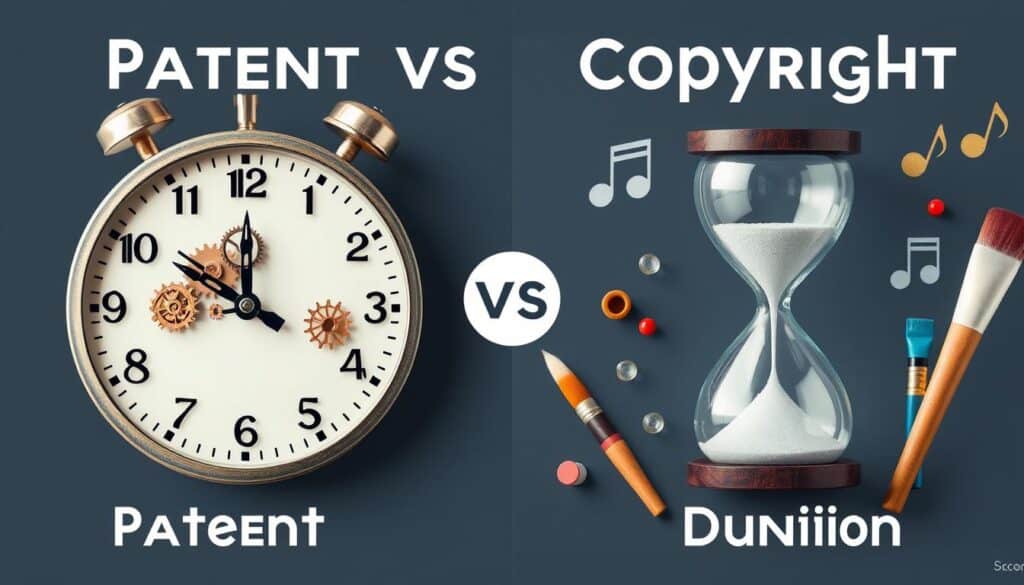
Think about a tech company making a new device. A patent would protect the special way it works. A copyright would protect how the ユーザーインターフェース looks and works. Having both types of protection is very important for success.
So, knowing about functional inventions and expressive works is crucial. It helps with planning and following the law when creating something new.
Trade Secrets: Guarding Against Unauthorized Disclosure
In the world of intellectual property, trade secrets are very special. They protect important business details that give companies a competitive edge. Unlike patents, trade secrets keep their valuable information a secret to remain exclusive. This secret info can be anything from recipes to unique processes that keep a company ahead due to their secrecy.
To stop unauthorized disclosure, companies need to be very careful. They use strong IT security and contracts like NDAs to keep secrets safe. The real value of a trade secret comes from how hard a company works to keep it away from competitors.
| 側面 | 特許 | 企業秘密 |
|---|---|---|
| Disclosure Requirements | Required publicly | None, maintains secrecy |
| 寿命 | 20 years for utility patents, 15 years for design | Indefinite, as long as it remains secret |
| Protection Mechanism | Intellectual property rights granted by law | Efforts of the holder to prevent unauthorized disclosure |
| Enforcement | Legal action against infringement | Legal action against breach of confidentiality |
| 経済的価値 | Derived from novelty and inventiveness | Derived from not being known and not easily ascertainable |
Keeping trade secrets safe means always staying ahead. Companies must update their security and closely watch who can see the secrets. This helps keep the secrets truly secret and their commercial value high.
The Interplay Between Copyrights, Patents, Trade Secrets, and Trademarks
Understanding how IP protections work together is key for handling intellectual property rights. It is important to know the roles of copyrights, patents, trade secrets, and trademarks. They help protect various parts of creativity and innovation.
A Chart of Differences: Protection, Requirements, and Rights
| Type of IP | Protection | Legal Requirements | Rights Granted |
|---|---|---|---|
| 商標 | Protects brand names, logos, and other identifiers from being used by others | Must be distinctive and used in commerce | Exclusive right to use the mark to identify goods or services |
| 特許 | Covers inventions and grants the holder the right to exclude others from making, using, selling, or importing the invention | Invention must be novel, non-obvious, and useful | Exclusive exploitation rights for up to 20 years for utility patents |
| 著作権 | Protects original works of authorship including literature, music, and art | Originality and some form of expression | Control over reproduction, derivative works, distribution, and public display |
| 企業秘密 | Protects confidential business information that gives a competitive edge | Information must be secret, have commercial value, and be subject to reasonable steps to keep it secret | Indefinite protection as long as secrecy is maintained |
Understanding Which IP Protection Fits Your Needs
Choosing the right IP protection requires knowing your needs and goals. Each type of intellectual property has distinct benefits. They protect different kinds of creativity and innovation.
For example, patents are critical for inventors who need exclusive rights. Copyrights give artists and authors the confidence to share their work. Trademarks protect and build consumer trust in brands. Meanwhile, trade secrets offer protection for valuable, confidential business info.
Using IP protections strategically boosts your competitive edge and encourages innovation. By understanding the legal requirements of each IP type, you can get full protection. This way, you can make the most of your intellectual property.
How to Leverage IP Rights for Business and Creative Advantage
Using IP rights well is key to gaining a business edge and boosting innovation. Knowing how to handle patents, copyrights, and trademarks lets businesses improve their place in the market. This also protects their creative efforts.
IP-focused industries push economic growth and keep the competition lively worldwide. Patents let companies like Apple Inc. and Google Inc. exclusively use their new ideas. This raises their value and attracts investors. Copyrights let creators earn from their work for their lifetime and after, which is vital in publishing and entertainment.
Trademarks make brands like Louis Vuitton stand out and keep customer loyalty. They fight fake products to keep their good name and consumer trust. Handling IP rights well boosts business tactics. It helps protect unique tech and makes brands stand out in busy markets.
| IP Right | Role in Business | Impact on Valuation | 課題 |
|---|---|---|---|
| 特許 | Encourages innovation by providing exclusive rights | Significant contributor to company valuations and technological leadership | Patent trolls and the rise of litigation costs |
| Copyrights | Protects creative works, allowing for controlled distribution and monetization | Increases company valuation through exclusive content rights | Digital piracy significantly impacts revenue streams |
| Trademarks | Builds brand identity and consumer trust | Enhances market positioning and competitive advantage | Counterfeits and domain name disputes |
To beat issues like digital piracy, groups like the Global Innovation Policy Center suggest strong online enforcement. This not only guards intellectual property but also keeps innovation alive online. Besides, matching innovation with solid IP laws aids creators and innovators. It pushes industry standards up and boosts the economy.
結論
The world of intellectual property is complex but well-structured. It’s made to protect new ideas and creative works. Knowing the difference between patents and copyrights is very important. It helps keep innovation safe and allows it to grow.
Utility patents protect the way inventions work for up to 20 years. Design patents protect the look of products for 15 years. This stops others from making copies too soon. So, inventors can enjoy the benefits of their hard work without worry.
Copyright law protects creative works longer. It lasts for the author’s life plus 70 years, or up to 120 years for companies. This gives a solid chance for authors and companies to make money from their creations. Plant patents also show how broad protection can be. This emphasizes how much the United States values all types of intellectual property.
Looking ahead, it’s clear we need to stay alert and informed about IP. Technology moves fast, and markets are growing worldwide. We need strong legal rules to keep inventions and creative works safe. It’s crucial for everyone to keep up with these changes. This way, we can continue respecting and growing intellectual property rights. It helps keep the United States ahead in innovation and creativity around the world.
補足資料
- Patent licensing and commercialization: approaches to licensing patents and strategies for commercializing patented technologies.
- Technology transfer: processes and strategies for transferring patented technologies between organizations or from research institutions to industry.
- Licensing agreements: exploring the legal frameworks and strategies for licensing copyrighted material, allowing others to use it under specific conditions.
- Fair use doctrine: analyzing the principles that allow limited use of copyrighted material without permission, such as for commentary, criticism, or education.
- Digital Rights Management (DRM): implementing technological measures to control the use, distribution, and duplication of copyrighted digital content.
- Creative commons licensing: utilizing a set of licenses that enable creators to communicate which rights they reserve and which they waive for the benefit of recipients or other creators.
- Open access publishing: investigating the movement towards making scholarly research freely available to the public, often involving alternative copyright considerations.
- Public domain: identifying works that are not protected by copyright and are free for public use, and understanding how works enter the public domain.
- Moral rights: examining the rights of creators to protect the personal and reputational value of their work, which may exist alongside economic rights.
- Copyright law and international treaties: Studying the global framework for copyright protection, including treaties like the Berne Convention and the TRIPS Agreement.
よくある質問
特許と著作権の主な違いは何ですか?
特許は、機械や化学物質などの新しい発明を対象としています。特許はイノベーションと進歩を促進します。著作権は、書籍、音楽、美術作品などの創作物を保護します。著作権は創作者の権利に焦点を当てています。
知的財産(IP)とは何ですか?
知的財産とは、あなたの頭の中にあるアイデアや創作物に関するものです。これには、発明、芸術作品、デザインなどが含まれます。知的財産は、創作者にその作品に対する特別な権利を与えます。
知的財産権の種類を理解することが重要なのはなぜですか?
知的財産権について理解することは、クリエイターが自身の作品を守る上で役立ちます。法的手段を用いて権利を擁護できるだけでなく、作品から最大限の収益を得ることも可能になります。
著作権保護の対象となる創作物において、独創性とは何によって構成されるのか?
独創性とは、作者が独自の創造性を発揮して作品を制作したことを意味します。完全に新しいものである必要はなく、単に模倣されたものでなければ良いのです。
米国著作権局に作品を登録するメリットは何ですか?
著作権登録をすることで、公的な著作権記録が残ります。これは、裁判での損害賠償請求など、大きな法的メリットにつながる可能性があります。ただし、著作権侵害が発生する前、または出版後3ヶ月以内に登録する必要があります。
特許権者にはどのような権利がありますか?
特許権者は、他者が自身の発明を使用することを20年間阻止できる。つまり、特許権者だけがその発明から収益を得ることができるのだ。
商標やサービスマークを登録することが重要なのはなぜですか?
商標登録をすることで、法的メリットが得られます。米国全土でその商標を所有できるだけでなく、裁判手続きや他国での登録にも役立ちます。
著作権と商標法はどのように重なり合うのでしょうか?
著作権法と商標法が同じものを扱う場合もあります。例えば、ロゴのデザインが著作権で保護されていると同時に商標としても使用されている場合などです。
特許における米国特許商標庁(USPTO)の役割は何ですか?
米国特許商標庁(USPTO)は、特許が法的に問題ないかどうかを審査します。発明を保護するために特許を付与し、すべての特許記録を管理します。
著作権と特許の保護期間はどれくらいですか?
著作権は著作者の死後70年間有効です。特許権は、出願料を支払った日から20年間有効です。
特許や著作権の代わりに営業秘密を用いるべきなのはどのような場合か?
情報を永久に秘密にしておきたい場合は、営業秘密を利用してください。営業秘密は、価値があり秘密である限り保護されます。
異なる知的財産法間の相互作用を理解することは、知的財産の保護にどのような影響を与えるのでしょうか?
知的財産法がどのように連携して機能するかを理解することは、創作物をより適切に保護・管理するのに役立ちます。つまり、権利をより効果的に行使できるということです。
知的財産権を活用することで、ビジネスにおいてどのように競争優位性を得ることができるのでしょうか?
知的財産権は、あなたの創作物に対する支配権を与え、ビジネスを保護します。製品の価値を高め、新たな利益を生み出し、ブランド構築にも役立ちます。
知的財産保護に関する外部リンク
(リンクにカーソルを合わせると、コンテンツの説明が表示されます)
用語集
Digital Rights Management (DRM): 著作権で保護されたデジタルコンテンツを不正使用、複製、配布から保護するために用いられる一連のアクセス制御技術であり、制作者と配信者が知的財産権を確実に管理できるようにするものである。
Fair Use Doctrine: 著作権者の許可なく著作物を限定的に使用することを認める法的原則であり、通常は批評、論評、報道、教育、学術研究などの目的で使用され、著作権者と一般市民の利益のバランスを取るものである。
Non-Disclosure Agreement (NDA): 当事者間の秘密保持関係を確立し、特定の情報を第三者に開示することを禁止する法的契約。ビジネス交渉や共同作業中に共有される機密情報を保護するためによく用いられる。
Public Domain: 著作権の制限を受けないことを示す法的地位であり、許可や対価なしに誰でも作品を使用、改変、配布できる状態を指します。この地位は、著作権の有効期限切れ、著作者による明示的な献呈、または著作権の取得資格の欠如によって生じます。
Software Defined Radio (SDR): これは、従来物理的なハードウェアによって行われていたチューニング、フィルタリング、変調などの機能を、コンピュータソフトウェアによって処理する通信システムです。この技術により、単一のデバイスをコードを更新するだけで、ほぼあらゆる種類の無線信号を受信または送信するように瞬時に再構成できます。
Unique Selling Point (USP): a distinctive feature or benefit that sets a product or service apart from competitors, aimed at attracting customers by addressing specific needs or preferences.
United States Patent & Trademark Office (USPTO): 米国における特許の付与および商標登録、イノベーションの促進、知的財産権の保護を担う連邦機関。出願の審査、特許の発行、登録商標のデータベースの管理を行う。
User Interface (UI): a system that enables interaction between users and software applications, encompassing visual elements, controls, and overall layout to facilitate user tasks and enhance experience.