有没有想过为什么李氏出版商要写“链接在第一条评论中” ?继续阅读。.
过去三年,LinkedIn 一直在精心打造一个看似机遇的陷阱。对于那些依靠自然流量积累受众的发布商来说,该平台如今遵循着一个简单的原则:你的内容提升了 LinkedIn 的用户留存率,而 LinkedIn 的算法则决定你是否能获得任何回报。最新的深度评分更新明确地证实了这一点——包含外部链接的帖子会损失大约 60% 的分发量,“在第一个评论中添加链接”的变通方法已被悄然移除,公司页面的触达人数也比个人资料少五倍,这是有意为之。这一切并非偶然。这是该平台精心设计的架构,旨在将它并未创造的注意力变现。
对于成熟的出版商来说,这种做法的代价尤其高昂,因为它具有复合陷阱的性质:你发布的每一个旋转木马都会训练你的受众在不访问你的网站的情况下消费你的编辑工作。你获得的每一个时事通讯订阅者都属于 LinkedIn 的服务器,而不是你的。从 LinkedIn 的衡量标准来看,每一篇让读者在平台上不断滚动的高绩效文章都是成功的,而从你的衡量标准来看则是失败的。.
该平台不会对不良内容进行惩罚,而是对完全按照出版商意图运行的内容进行惩罚。.
了解这一区别并不是完全放弃 LinkedIn 的理由。它是我们精确使用 LinkedIn 的一个理由:利用 "时事通讯 "功能建立订阅者群,并将其迁移到其他地方,而不是其他。.
重要说明和免责声明:
- 这些意见和评论可能只适用于出版商。直销、影响者 营销, 工作 那里的报价可能大相径庭。.
- LinkedIn 的算法并不公开,而且很可能会随着时间的推移而演变。.
- 其中许多内容可能也适用于其他在线平台。.
因此,请将这些内容仅作为有根据的猜测,并根据自己的经验和观察进行更新。.
补充读物(英国人的幽默):

1.外部链接会使你的影响力减少 ~60%任何包含指向您网站链接的帖子--或 LinkedIn 以外的任何地方--都会通过算法降低其潜在受众的优先级,大约为 40%。LinkedIn 的整个商业模式都依赖于将用户留在平台上。您网站上的每一次点击都是 LinkedIn 会话的损失。算法会将您的链接视为退出标志,并立即自动对您进行惩罚。. 关键--影响每个职位 部分修复: 在第一条评论中发布链接,而不是在正文中 - 将处罚减至 ~5-10% |
2.在第一条评论中添加链接 “的变通方法现在也受到了惩罚多年来,出版商一直使用这样的技巧:发布干净的内容,然后在第一条评论中添加 URL。2026 年初,LinkedIn 开始崩溃并掩埋作者的第一条评论,这意味着你的受众往往根本看不到你的行动号召。这个保护了出版商 3 年多的漏洞已基本关闭。. 关键--杀死主要的变通办法 部分修复: 发布时不带链接,等待 20-30 分钟,然后编辑帖子添加链接 - 减少算法足迹 现在你知道为什么了吧“链接在第一条评论中” ? |
3. Company pages reach 561% less than personal profilesIf you post as your site (a page), the algorithm actively suppresses it. LinkedIn’s own data shows personal profiles reach 5.6× further than company pages because the platform treats page posts as ads by default. As a publisher — not a person — you are at a structural disadvantage from the first post. Critical for publishers specifically Fix: post from your personal profile as the editor/author, not the brand page |
4. LinkedIn Newsletters deliver subscribers — but not to your siteThe newsletter feature sends push notifications directly to subscribers, which sounds great. But those readers consume your content on LinkedIn, not on your site. You are building LinkedIn’s retention, not yours. Your subscriber list lives on LinkedIn’s servers — you cannot export it, own it, or migrate it. If LinkedIn changes the feature or shuts it down, your list disappears with it. High — audience you don’t own Mitigation: include a subtle “subscribe to our newsletter at [site]” CTA inside every edition Behavioral traps — the platform rewards the wrong content for publishers |
5. The algorithm rewards “Zero-Click” content — the opposite of what you needLinkedIn’s 2026 Depth Score rewards posts where users stay and read on LinkedIn. The highest-performing format is a carousel PDF that delivers the full article value natively. This trains your audience to consume your content on LinkedIn and never feel the need to click through to your site. You become a LinkedIn creator, not a publisher with a destination site. High — structural conflict of interest Tension: give enough value to get reach, but leave enough out to create a click — a very hard balance |
6. Dwell time penalizes articles that tease to external contentThe new Depth Score measures how long users 从事 with your LinkedIn post. If you write a teaser that makes someone click away immediately, the algorithm registers a “click bounce” and treats it as low-quality content — even if the click was exactly what you wanted. Your most successful traffic-driving posts can actively hurt your LinkedIn reach score. High — penalizes your core goal No clean fix — this is a direct conflict between LinkedIn’s goals and publishers |
7. Topic authority traps you in a narrow content laneLinkedIn’s algorithm builds a “topic DNA” for your profile and distributes your content to people interested in that narrow topic. For a broad innovation publisher covering AI, sustainability, biotech, geopolitics, and startups, this means the algorithm will only amplify whichever sub-topic you’ve posted most about — suppressing your other content. Being a generalist publisher is structurally penalized. High — hurts multi-topic sites Mitigation: pick one sub-topic as your LinkedIn “lane” and use it consistently Commercial traps — LinkedIn monetizing your effort |
8. Organic reach is being deliberately throttled to push paid promotionOrganic reach on LinkedIn dropped ~50% year-over-year in 2025–2026. This is not accidental algorithm refinement — it is the standard playbook used by every major platform (Facebook, Instagram, Twitter …) to force publishers into paying for reach they previously got for free. LinkedIn is now actively 销售 “Sponsored Newsletters” and “Boost” features. Your organic audience is being held ransom. High — long-term trajectory is against you Context: newsletters still bypass the feed algorithm and deliver directly — use them, not regular posts, for reach |
9. Your content trains LinkedIn’s AI, not yoursEvery article you publish natively, every newsletter edition, every engagement signal becomes LinkedIn training data. LinkedIn’s own AI features (writing assistants, content suggestions, search) are built partly on publisher content. You are contributing your 10 years of editorial expertise to improve a competitor platform’s AI product, for free, while they retain the audience relationship. Medium — strategic risk, not immediate Mitigation: always publish originals on your site first, then adapt (never publish LinkedIn-exclusive content) |
Summary
Treat LinkedIn as a funnel to your email list, not a funnel to your site.
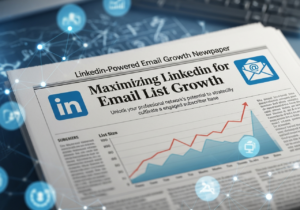
The core tension is this: LinkedIn and you want exactly opposite things. You want users to leave LinkedIn and land on your site. LinkedIn wants users to stay on LinkedIn so it can serve them ads and sell premium subscriptions. Every time someone clicks a link and leaves LinkedIn, that’s a lost session — and the algorithm learned this years ago.
The platform is essentially running the exact same playbook Facebook ran against publishers between 2014 and 2018 — organic reach has plummeted by nearly 50% year-over-year Linkboost, and the solution LinkedIn is selling is paid promotion. The trajectory is clear and it only goes one direction.
What to actually do with LinkedIn given all this: the one genuine exception is the Newsletter feature. Newsletters bypass the feed algorithm entirely — every edition is delivered directly to subscribers via push notification and email. That means no reach penalty, no dwell-time scoring, no link suppression. Use LinkedIn specifically to grow a newsletter subscriber base, then treat those subscribers as a list you’re trying to migrate to your own email list over time — because a growing email subscriber list represents something no algorithm change can take away: a direct, consented communication channel.
Never publish LinkedIn-exclusive content. Always publish on your site first, adapt secondly. And never measure LinkedIn success by site traffic — measure it by email list growth.