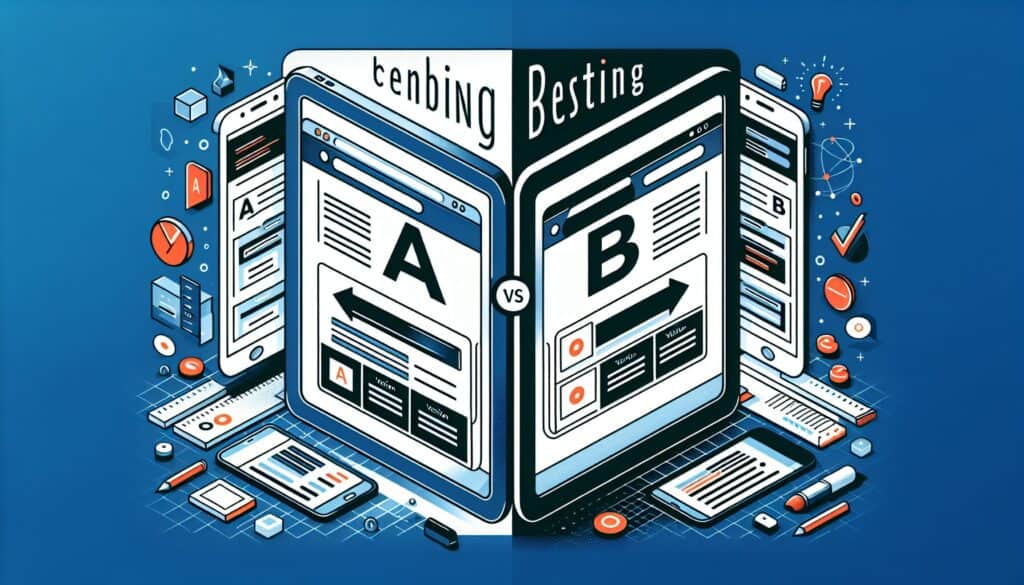
A/B testing finds extensive application across various sectors, particularly in digital marketing, e-commerce, and software development, where businesses seek to enhance user experiences and drive higher conversion rates. In web design, this methodology is often employed during the early stages of 사용자 인터페이스 (UI) development, enabling designers and developers to understand user preferences in real time. Marketers frequently harness A/B testing in email campaigns to fine-tune subject lines, content, or call-to-action buttons, allowing them to identify which elements resonate most with their audience. Its utility extends to mobile application development, where it helps to evaluate different layouts or feature functionalities before launch. Participants in A/B testing typically include product managers, UX designers, data analysts, and developers, all of whom collaborate to design experiments, set performance metrics, and analyze results. Successful implementations rely on pre-defined hypotheses and well-structured test groups to ensure statistical validity. As businesses accumulate more data through iterative testing, they can implement informed decisions that lead to better customer satisfaction, higher retention rates, and increased revenue, establishing a robust feedback loop that continually refines product offerings based on empirical evidence rather than guesswork. Additionally, A/B testing can be adapted to various project contexts, whether launching new products, optimizing existing features, or exploring marketing strategies, providing companies with the flexibility to evolve in alignment with user needs and preferences while mitigating risks associated with major changes.
이 방법론의 주요 단계
가설을 정의하고 측정할 핵심 성과 지표(KPI)를 식별하십시오.
테스트를 위해 명확한 차이점을 가진 버전 A(대조군)와 버전 B(변형군)를 개발합니다.
무작위 할당 방식을 사용하여 사용자를 각 버전에 무작위로 배정합니다.
사용자 상호작용 및 관련 지표를 모니터링할 수 있도록 추적 메커니즘을 활성화하십시오.
통계적 유효성을 확보하기 위해 미리 정해진 기간 동안 실험을 진행하십시오.
통계 분석 방법을 적용하여 두 버전의 성능 지표를 비교합니다.
결과가 통계적으로 유의미한 차이를 나타내는지 판단하십시오.
분석 결과를 바탕으로 정보에 입각한 결정을 내려 반복적인 개선을 이루십시오.
프로 팁
행동 및 인구 통계학적 특성을 기반으로 사용자를 세분화하여 타겟팅된 A/B 테스트를 수행하고, 결과의 관련성과 정확도를 향상시킵니다.
다변량 테스트와 A/B 테스트를 병행하여 여러 변수 간의 상호작용을 파악하고 심층적인 인사이트를 얻으세요.
사용자 이동 경로와 이탈 지점을 기록하는 강력한 추적 시스템을 구현하여 테스트 결과를 종합적으로 분석할 수 있도록 합니다.