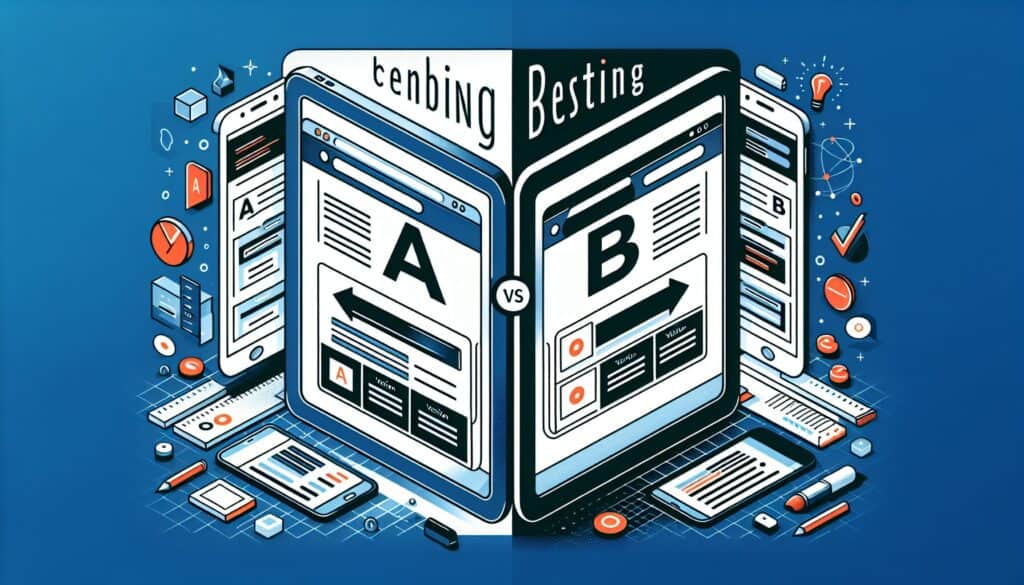
A/B testing finds extensive application across various sectors, particularly in digital marketing, e-commerce, and software development, where businesses seek to enhance user experiences and drive higher conversion rates. In web design, this methodology is often employed during the early stages of
واجهة المستخدم (UI) development, enabling designers and developers to understand user preferences in real time. Marketers frequently harness A/B testing in email campaigns to fine-tune subject lines, content, or call-to-action buttons, allowing them to identify which elements resonate most with their audience. Its utility extends to mobile application development, where it helps to evaluate different layouts or feature functionalities before launch. Participants in A/B testing typically include product managers, UX designers, data analysts, and developers, all of whom collaborate to design experiments, set performance metrics, and analyze results. Successful implementations rely on pre-defined hypotheses and well-structured test groups to ensure statistical validity. As businesses accumulate more data through iterative testing, they can implement informed decisions that lead to better customer satisfaction, higher retention rates, and increased revenue, establishing a robust feedback loop that continually refines product offerings based on empirical evidence rather than guesswork. Additionally, A/B testing can be adapted to various project contexts, whether launching new products, optimizing existing features, or exploring marketing strategies, providing companies with the flexibility to evolve in alignment with user needs and preferences while mitigating risks associated with major changes.
لقراءة عدة منهجيات ومقارنتها, نوصي باستخدام
> مستودع المنهجيات الشامل <
مع أكثر من 400 منهجية أخرى.
نرحب بتعليقاتكم على هذه المنهجية أو المعلومات الإضافية على قسم التعليقات أدناه ↓، وكذلك أي أفكار أو روابط متعلقة بالهندسة.