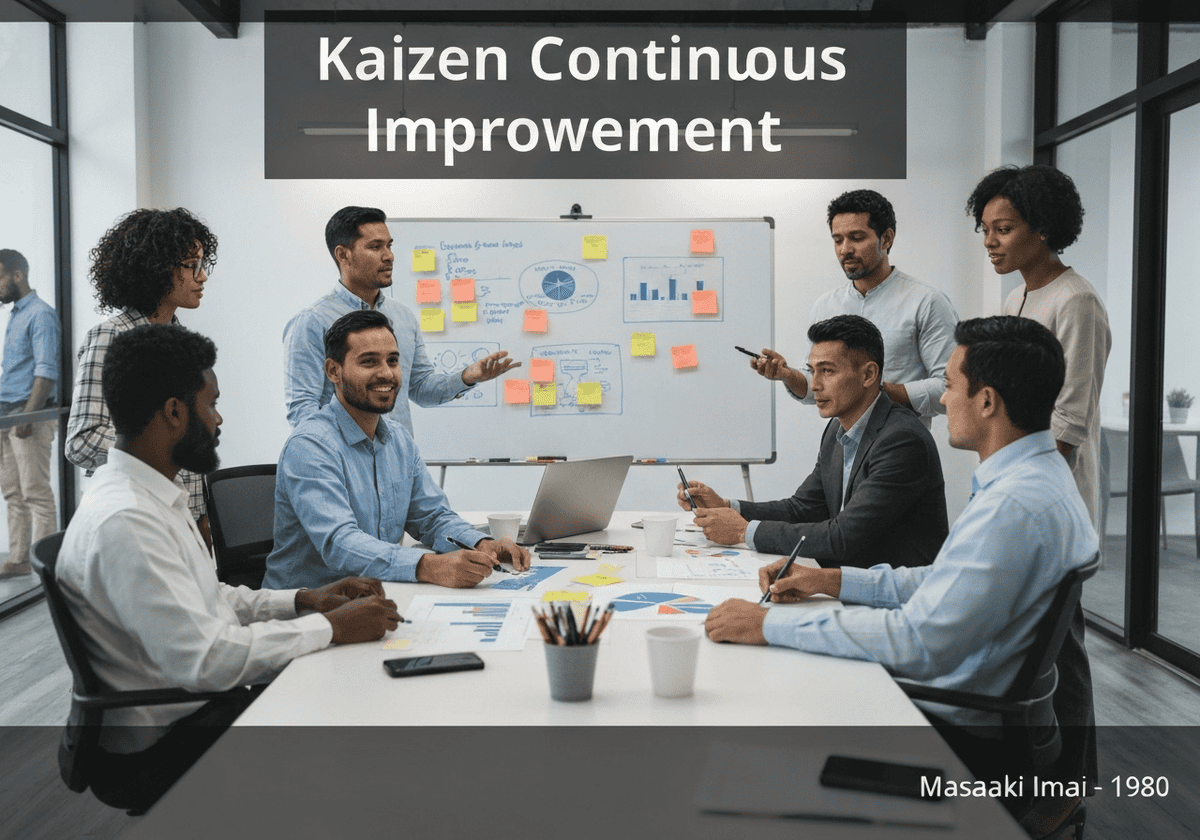
카이젠 린(Lean)은 '더 나은 변화' 또는 '지속적인 개선'을 의미하는 일본어 용어입니다. 이는 린 경영의 핵심 철학입니다. 조작 카이젠은 프로세스를 개선하고 낭비를 제거하기 위해 작지만 지속적인 긍정적인 변화를 만들어내는 데 중점을 둡니다. 최고 경영진부터 생산 라인 작업자에 이르기까지 모든 직원이 참여하여 모든 구성원이 개선 사항을 제안하고 실행할 수 있도록 권한을 부여하는 문화를 조성합니다.

(설명을 위한 생성된 이미지입니다)
카이젠 린(Lean)은 '더 나은 변화' 또는 '지속적인 개선'을 의미하는 일본어 용어입니다. 이는 린 경영의 핵심 철학입니다. 조작 카이젠은 프로세스를 개선하고 낭비를 제거하기 위해 작지만 지속적인 긍정적인 변화를 만들어내는 데 중점을 둡니다. 최고 경영진부터 생산 라인 작업자에 이르기까지 모든 직원이 참여하여 모든 구성원이 개선 사항을 제안하고 실행할 수 있도록 권한을 부여하는 문화를 조성합니다.

The Kaizen philosophy is built on the belief that large-scale, revolutionary changes are not always necessary for progress. Instead, a multitude of small, incremental improvements made consistently over time can lead to significant long-term results. This approach is often contrasted with the Western business practice of “innovation,” which typically seeks radical, top-down changes. Kaizen is a bottom-up approach. It encourages a mindset of constant vigilance for opportunities to improve, no matter how small. A common tool used in Kaizen is the PDCA (Plan-Do-Check-Act) cycle, a four-step model for carrying out change. ‘Plan’ involves identifying an opportunity and planning a change. ‘Do’ means implementing the change on a small scale. ‘Check’ involves analyzing the results to see if the change was effective. ‘Act’ means implementing the change on a broader scale if successful, or starting the cycle again with a different plan if not. This iterative process ensures that improvements are data-driven and sustainable. The power of Kaizen lies in its ability to create a deeply engaged workforce that takes ownership of their processes and actively contributes to the company’s success.
현재 하루 4만 건이 넘는 봇 트래픽을 차단하기 위해 이 콘텐츠는 커뮤니티 회원만 이용할 수 있습니다.
> 로그인 < 또는 >등록 < 이 콘텐츠를 비롯한 모든 제한된 콘텐츠와 도구는 (100% 무료로) 이용할 수 있습니다.
카이젠 지속적 개선
(날짜를 알 수 없거나 관련이 없는 경우, 예를 들어 "유체역학"의 경우, 주목할 만한 등장 시기를 대략적으로 추정하여 제공합니다.)

고화질 이미지 및 다운로드는 등록된 회원에게만 100% 무료로 제공됩니다.
> 로그인 <