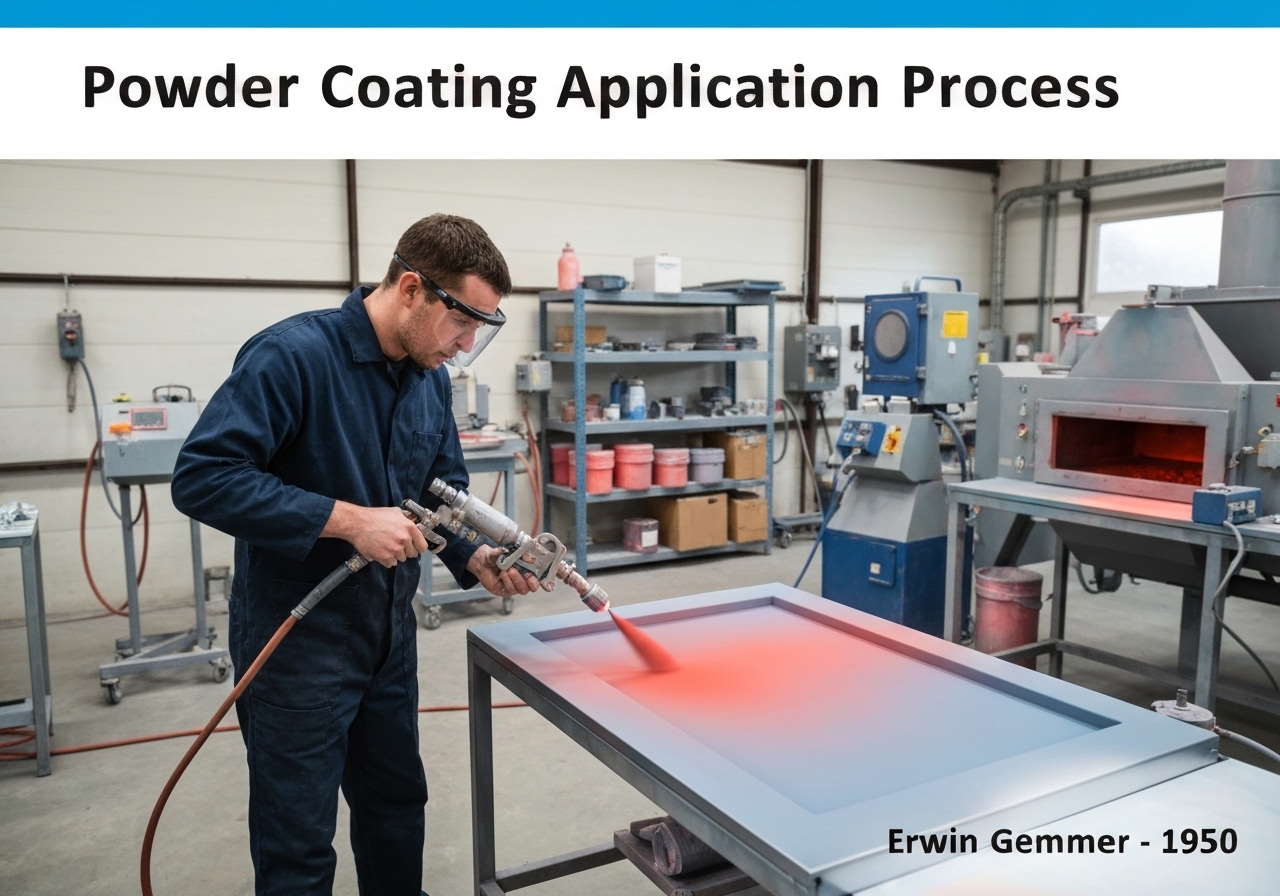
분체 도장은 열가소성 또는 열경화성 고분자 분말을 표면에 (일반적으로 정전기적으로) 도포한 후 열을 가해 경화시키는 건식 마감 공정입니다. 분말 입자는 대전되어 접지된 기판에 잘 달라붙습니다. 가열하면 분말이 녹아 흐르면서 연속적이고 내구성이 뛰어난 고품질 마감재를 형성하며, 이는 기존 페인트보다 우수한 경우가 많습니다.
(설명을 위한 생성된 이미지입니다)
분체 도장은 열가소성 또는 열경화성 고분자 분말을 표면에 (일반적으로 정전기적으로) 도포한 후 열을 가해 경화시키는 건식 마감 공정입니다. 분말 입자는 대전되어 접지된 기판에 잘 달라붙습니다. 가열하면 분말이 녹아 흐르면서 연속적이고 내구성이 뛰어난 고품질 마감재를 형성하며, 이는 기존 페인트보다 우수한 경우가 많습니다.

The powder 코팅 process involves three main steps: part preparation, powder application, and curing. Proper surface preparation is critical for adhesion and involves cleaning and often pre-treatment like phosphating or chromating. In the application stage, the most common method is electrostatic spray deposition (ESD). A spray gun imparts an electrostatic charge (typically negative) to the powder particles as they exit the nozzle. The object to be coated is electrically grounded, creating an electrostatic field that attracts the charged powder particles to its surface. This attraction is strong enough to hold the powder in place temporarily. The coated part is then moved into a curing oven. The heat melts the powder, causing it to flow together and chemically react to form a cross-linked polymer network. This process, known as curing, results in a hard, durable finish. A key advantage of powder coating is its environmental friendliness, as it emits near-zero volatile organic compounds (VOCs). Furthermore, any oversprayed powder can be collected and reused, making the process highly efficient with material usage rates often exceeding 95%. The resulting coating is generally thicker and more resistant to chipping, scratching, and fading than liquid paint.
분체 도장 적용 공정
(날짜를 알 수 없거나 관련이 없는 경우, 예를 들어 "유체역학"의 경우, 주목할 만한 등장 시기를 대략적으로 추정하여 제공합니다.)

고화질 이미지 및 다운로드는 등록된 회원에게만 100% 무료로 제공됩니다.
> 로그인 <