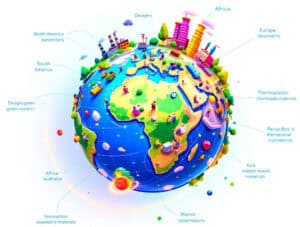
A product’s 환경 발자국 extends across its entire life, not only its manufacturing stage, and evaluating and reducing that full footprint is the skill this course builds. It opens with Life Cycle Assessment applied specifically to product design, compares it against Product Carbon Footprint 방법론, and moves through the product life cycle design phases, thermoplastic versus thermoset selection from a recyclability standpoint, design for 분해 under right-to-repair rules, and material-specific cases, magnet-based assembly and sodium polyacrylate among them, that show a sustainability constraint changing a real design decision.
규제 압력 on product sustainability has moved from a voluntary 마케팅 claim to a mandatory compliance requirement across most export markets, which makes this course relevant to any engineer designing a product sold internationally. It serves product developers who must answer a customer’s or regulator’s sustainability questionnaire with real data rather than a marketing statement, and manufacturers who need to redesign a product line to remain compliant with tightening producer responsibility rules. 트리즈 appears again here because several of its inventive principles map directly onto resource reduction and dematerialization strategies.