기업의 25% 미만이 통합 작업이 순조롭게 진행되고 있다고 생각한다는 사실을 알고 계셨습니까? 기후 변화 정책적인 측면에서 볼 때, 이는 제품 디자인에서 클린 시트 디자인과 같은 혁신적인 접근 방식의 필요성을 강조합니다. 백지 상태에서 출발함으로써 새로운 관점을 제시하고, 기능성을 재정의하며, 혁신을 촉진하고, 신제품의 탄소 발자국을 줄입니다. 기업의 지속가능성이 점점 더 중요해짐에 따라, 클린 시트 디자인은 현대 제품 개발을 위한 강력한 방법으로 부상하고 있습니다.
핵심 요약
- 백지상태 디자인(Clean Sheet Design)은 기존의 제약에서 벗어나 창의적인 디자인 솔루션을 개발할 수 있도록 새로운 출발을 가능하게 합니다.
- It can lead to significant cost savings by optimizing material and manufacturing processes.
- 감소시킵니다 탄소 발자국 이러한 제품들은 엄격한 환경 규제를 충족하는 데 도움이 됩니다.
- 명확한 출발점을 제공하여 설계 프로세스를 간소화하고 제품 성능을 향상시킵니다.
- 지속가능성을 강화하고 현대적이고 친환경적인 생산 방식과 부합합니다.
백지상태 설계 소개
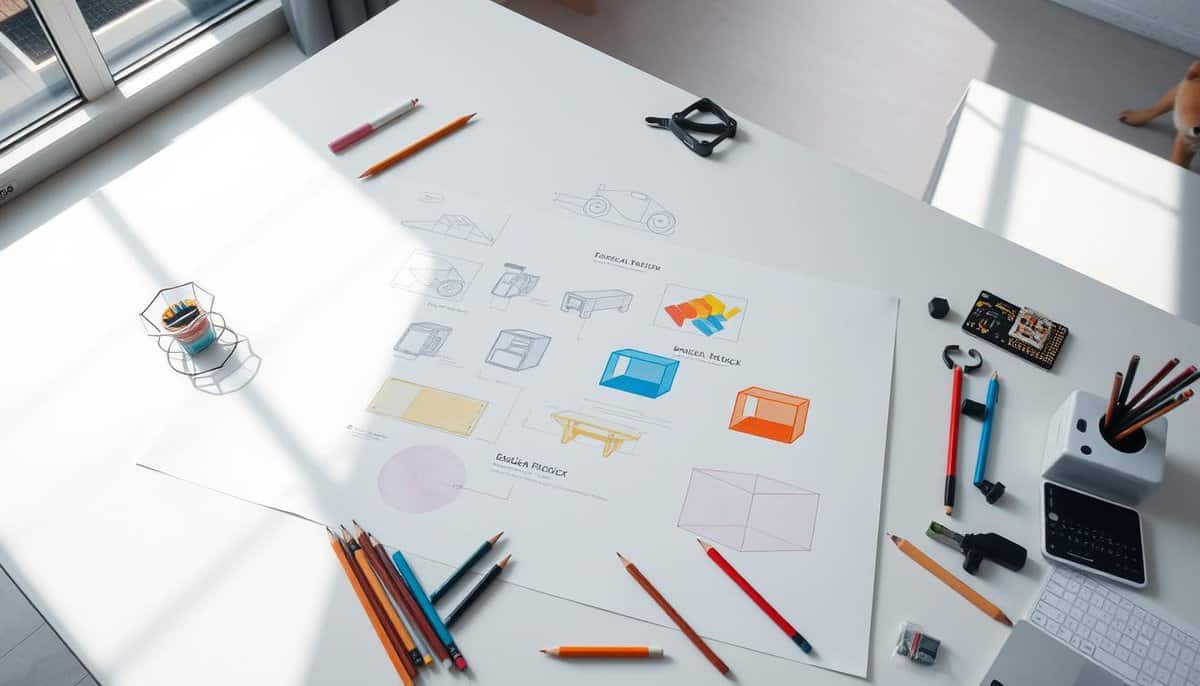
그만큼 백지상태 접근법 이는 디자인에 대한 새로운 접근 방식입니다. 기존 제품을 업데이트하는 대신, 디자이너들은 아무런 제약 없이 새롭게 시작합니다. 이를 통해 더욱 창의적인 디자인을 구현하고 시장의 요구를 더 잘 충족할 수 있습니다.
기본 사항 이해하기
백지상태 디자인이란 제품을 처음부터 새로운 방식으로 생각하는 것을 의미합니다. 디자이너는 기존의 관념에 얽매이지 않습니다. 이는 제품의 외관, 기능, 그리고 사용자가 느끼는 감각에 혁신을 가져옵니다.
주요 단계에는 3D 사용이 포함됩니다. 치사한 사람 구조 및 유한 요소 해석(FEA)을 통해 시스템을 개선합니다. 설계자들은 기계 및 전기 작업을 초기 단계부터 통합합니다.
현대 제품 개발에서의 중요성
백지상태에서 시작하는 접근 방식은 차별화를 원하는 기업에게 핵심적인 요소입니다. 이는 개발 비용을 절감하고 더 많은 수익을 창출하는 신제품을 만드는 데 도움이 됩니다.
| 주요 이점 | 통계 |
|---|---|
| 신제품 개발 비용 절감 | 20%+ |
| 고객 서비스 | 1000+ |
| 이익률 증가 | 평균 20~30% |
백지상태에서 시작하면 기업은 모든 세부 사항을 꼼꼼하게 계획할 수 있습니다. 그 결과, 기준에 부합하는 고품질 제품을 생산할 수 있을 뿐 아니라, 생산 비용과 시간도 절감할 수 있습니다. 백지상태에서 시작하는 설계는 신제품 개발에 성공하는 강력한 방법입니다.
백지상태 설계로 향상된 혁신
클린 시트 디자인은 기업들이 창의적인 디자인 솔루션과 제품 혁신에 대해 생각하는 방식을 바꾸고 있습니다. 이를 통해 기업들은 기존 디자인을 무시하고 새로운 소재와 기술을 제한 없이 탐구할 수 있습니다. 아마존과 같은 업계 선두 기업들은 클린 시트 디자인을 활용하여 AWS와 킨들 같은 혁신적인 제품을 만들어냈습니다.

창의적인 디자인 솔루션 육성
아마존은 이 방법이 얼마나 강력한지 보여주었습니다. 아마존은 다음과 같은 방법을 사용합니다. 디자인 사고 개념 변화하는 고객 요구를 충족하기 위해서입니다. 아마존의 많은 신제품들은 위험을 감수하는 것이 장기적인 성공으로 이어질 수 있음을 보여줍니다. 설령 처음에는 아이디어가 실패하더라도, 장기적인 목표와 고객 만족에 집중하면 결국 좋은 결과를 얻을 수 있습니다.
전통적인 제약에서 벗어나기
걸프스트림 에어로스페이스는 신제품 개발에 있어 백지상태 설계를 핵심으로 여깁니다. 일반적인 단계적 업데이트와는 달리, 걸프스트림의 G500 및 G600 제트기는 완전히 새로운 설계로 시작되었습니다. 고객의 요구를 기반으로 개발된 이 제트기들은 더욱 안전한 비행을 가능하게 하는 새로운 비행 기술을 탑재하고 있습니다. 이러한 새로운 출발에는 큰 포부, 고객 중심적인 접근 방식, 그리고 막대한 투자가 필요했습니다. 하지만 이러한 전략은 경쟁사 대비 강력한 우위를 확보하는 데 기여했습니다.
아마존과 걸프스트림 모두 기존 방식을 버리고 새롭고 개방적인 설계 방식을 채택함으로써 얻을 수 있는 이점을 보여줍니다. 디자인 사고 개념 고객을 최우선으로 생각하면 기업은 번창할 수 있습니다. 빠르게 변화하는 시장에서 앞서 나갈 수 있습니다.
Cost Efficiency in Product Design
Today, being cost-efficient in product design is key to stay ahead. Early adoption of robust design methods can lower costs and boost profits. This approach helps manage expenses from the start.
Reducing Material and Manufacturing Costs
Optimizing the production process is crucial, from material selection to delivery. This method cuts waste and saves money on design.
Approximately 80% of a product’s cost is decided in the design phase.
Redesigning products can lead to big savings. By analyzing the manufacturing process and using resources wisely, inefficiencies are exposed.
Optimizing the Design Methodology
Improving design isn’t just about cutting material costs. It involves teaming up finance experts, engineers, and product specialists early on. This collaboration leads to quicker launches and bigger profits, making a company more competitive.
The clean-sheet process also includes detailed analysis like comparing expected and actual costs. This helps in planning purchases and negotiating. By adopting this forward-thinking approach, manufacturers have seen significant cost improvements. This shows efficient processes are vital for long-term success.
Sustainability Through Clean Sheet Design for Product Design
Working towards sustainability in product design is key for businesses today. Clean sheet design brings new ideas that lessen environmental harm. It highlights the importance of planning from the start to achieve sustainability.

Reducing Carbon Footprint
This approach helps lower the environmental impact. It influences choices about materials and how things are made. Using smarter materials and more efficient ways to manufacture reduces carbon emissions.
A factory in Shanghai improved its main heat-transfer system to save energy. They used wider, shorter, straight pipes which lowered energy 사용 at least 86%.
Meeting Environmental Regulations
Focusing on sustainability helps companies meet and exceed environmental rules. This proactive approach keeps companies ahead and avoids fines. The EU’s chemicals strategy is a good example of aiming for sustainability while caring for future generations.
The following points highlight key benefits:
| 요인 | 세부 |
|---|---|
| Product Safety | Enhances safety by utilizing safer chemical alternatives. |
| Pollution Reduction | Minimizes pollution risks through improved design practices. |
| Circular Economy | Supports transitioning to a circular and low-carbon economy. |
| Regulatory Compliance | Assures alignment with stringent regulatory frameworks. |
Adopting unified methods and standards for 지속 가능한 디자인 leads to better, safer products. The European Commission’s Joint Research Centre develops sustainable design methodologies. These ensure products meet strict environmental standards.
Advantages of a Clear Starting Point
Starting from scratch in product design brings many benefits. It uses the clean sheet design approach for a clear start. Teams approach projects more openly, free from old design limits.

One of the best things about clean sheet design is the chance to rethink everything. Without old ideas, designers explore all possibilities. This ensures the final product is top quality and efficient.
| 혜택 | Explanation |
|---|---|
| Enhanced Innovation | Promotes creative solutions by breaking free from traditional design constraints. |
| Greater Alignment with Market Needs | Focuses on designing products that are immediately relevant to current consumer demands and technological capabilities. |
| Improved Product Performance | Allows for a comprehensive evaluation and optimization of functionalities and performance metrics. |
| Increased Design Flexibility | Enables the rethinking of design processes, allowing for the incorporation of advanced materials and methods. |
Furthermore, this fresh start allows for the use of new materials and technology. It makes the design process more adaptable to changing markets and consumer tastes.
So, the clean sheet design method leads to better products. It uses these advantages well, helping businesses grow and succeed in the market.
Improved Product Performance
With Clean Sheet Design, products get much better in how they work. This means the design is reliable and the products last longer. They also meet what people now expect. Breaking everything down to start fresh allows for the newest and best materials to be used. This kind of approach focuses on making products better in lots of ways.
Enhanced Functionality
Clean Sheet Design looks closely at what a product needs to do. It brings everyone to the table – engineers, suppliers, and more. They work together to make designs simpler and better. This makes the product work better without costing more. It also makes it easier to move from an idea to a real product.
Greater Reliability and Durability
Clean Sheet Design is known for making things last and work well. It uses fewer parts and the same materials across the board. This makes making them smoother and the quality stays the same. Using modules means changes are easy and the product stays strong.
Products end up weighing less and use less fuel, which is safer. These efforts are in line with what’s expected in today’s industry. They lead to products that last and don’t give up over time.
Streamlined Production Processes
Clean Sheet Design is key for better manufacturing. It aligns design with production from the start. This approach cuts costs and saves effort. By combining design and manufacturing early, companies save a lot of time and money. This leads to more efficient production.
In different sectors, Design for Manufacturing (DFM) proves very successful. For example, in medical devices, it leads to smooth surfaces that are easy to clean. This meets safety standards and ensures patient safety. In the aerospace sector, DFM helps make aircraft parts lighter. This improves fuel efficiency and performance.
In automotive engineering, streamlined manufacturing designs engine parts for easy maintenance. This saves costs. The electronics industry also gains from DFM. It makes parts more reliable and easier to assemble, cutting production expenses.
DFM uses simulation tools to make systems work better and designs more efficient. 유한 요소 Analysis (FEA) helps use materials wisely and lighten products. Computational Fluid Dynamics (CFD) boosts cooling systems. Moldflow Analysis improves designs for injection molding, making it faster and less error-prone.
Working together across fields helps spot issues early. It makes for cost-effective design changes. A big chunk of production cost comes from early design choices. This includes what materials to use and how to make the product. So, early design is very important.
By following Clean Sheet Design, companies can hit five main goals of DFM. These are cutting costs, boosting productivity, better product quality, quicker market entry, and being greener. This approach helps compete globally and tackle production challenges well.
Flexibility and Adaptability in Design
Today’s market changes fast. This makes flexibility in design essential. It allows businesses to stay ahead by adjusting quickly to new consumer needs and tech advancements. Flexibility brings many benefits for companies and their customers.
Adapting to Market Changes
Change is happening faster than ever. The Accenture Pulse of Change Index shows a 183% increase over four years. Adaptable designs help companies pivot quickly to keep up. With 83% of businesses speeding up their changes, being able to update products easily is key.
Customization for Specific Needs
Designs that respond to the market focus on what consumers want. Customizing products can make customers happier and more loyal. Here’s how:
| Customization Strategy | 혜택 |
|---|---|
| Modular Components | Allows easy adaptation to different markets |
| Configuration Options | Enables consumers to choose features they need |
| Scalable Platforms | Supports future upgrades and modifications |
Using these strategies helps businesses stay current and ready for the future. Agility is crucial in today’s world. Richard D’Aveni in “Hypercompetition” says being good at handling change is vital. Hence, adopting flexible designs is a must.
Utilizing Latest Technology Innovations
Using the newest technology in design is now essential for companies wanting to keep up. By adopting breakthrough materials and embracing modern making methods, businesses can greatly improve how they develop products. This leads to more innovation and efficiency.
Integrating Advanced Materials
Incorporating advanced materials can transform design and manufacturing. For example, the automotive sector can cut a structure’s mass by up to 70%. This is done by using a fresh approach and generative design. Also, by harnessing artificial intelligence, makers can sift through huge data sets. This helps them spot trends and continually enhance their processes. This shows the power of advanced materials in reshaping industry benchmarks and capabilities.
Leveraging Modern Manufacturing Techniques
Today’s manufacturing methods are key to unparalleled efficiency and quality. Automation, for one, improves speed, safety, and precision by reducing human mistakes in repetitive tasks. Meanwhile, 3D printing has changed digital manufacturing. It makes making complex structures repeatable and scalable, whether globally or locally. Tools like those seen in Boeing’s T-7A trainer cut assembly hours by 80%. This highlights the benefits of digital engineering in manufacturing.
In the aerospace realm, breakthroughs like the digital thread in MQ-25 production let teams follow 3D-model-based instructions precisely. The MQ-28, created by Boeing Australia, went from idea to first flight in three years. This quick development was due to advanced manufacturing techniques and digital engineering. It shows how modern methods can change aviation.
Key Statistics:
- Adoption of clean sheet design can reduce structure mass by 20-70%.
- AI processes large data volumes to drive continuous improvement in manufacturing.
- 3D printing drives scalable, repeatable digital manufacturing.
- Automation improves speed, safety, and accuracy in manufacturing processes.
By embracing these technological advances, industries enhance their product quality and performance. They also make their production processes more efficient. This leads to innovative, sustainable designs for the future.
Practical Steps to Implement Clean Sheet Design
Implementing clean sheet design involves several key steps. It requires careful planning, detailed research, and teamwork across departments. Following a structured approach ensures all aspects of design improvement are explored. This leads to better strategies from start to finish.
Initial Planning and Research
Starting with strategic planning is crucial for clean sheet design. It begins by identifying new market needs, especially in fast-evolving industries. For example, aerospace design shifts are often based on new technologies or market demands. Understanding clients’ goals is crucial to decide if a new design solution is needed.
Companies like NMG Aerospace excel in making innovative clean sheet designs. They create parts for fluid systems, safety, and landing gears that meet specific needs. An important step is doing cleansheet calculations. This offers insights into the costs of materials, labor, and equipment. Sharing this data helps improve design and cut costs.
Collaboration with Cross-Functional Teams
Working with teams from different departments is key for success. This ensures a well-rounded approach to design and manufacturing. For instance, creating aircraft designs involves building and testing prototypes. Safety and quality tests are also done to ensure the designs work in real life.
Clean sheet models, or “should cost” analyses, are also beneficial. They help understand the cost implications of designs. This aids in negotiating with suppliers and maintaining profitability. Relying on up-to-date data for costs, including R&D investments and taxes, improves model accuracy. Teams focus on their areas, like metal or electronics, for precise estimates.
This approach leads to significant savings and better product performance. Cleansheet analysis by McKinsey showed an average of 38% savings for one client.
결론
Clean sheet design benefits are crucial in today’s product development world. This approach pushes companies to think differently about their products. It helps create innovative products that stand out. By focusing on what’s truly important, designers can make products that perform better and meet specific needs.
The approach plays a big role in sustainable design. It reduces the use of materials and cuts manufacturing costs. This way, it lessens the harm to the environment. Companies can meet tough environmental rules, showing they care about our planet.
Clean sheet design also means products work better and last longer. This makes customers happy and loyal. Using the latest tech and making techniques, it brings new, exciting products to the market.
In short, clean sheet design is key for companies wanting to keep up with fast changes. It’s about being sustainable, improving products, and encouraging new ideas. For any company looking to excel in design, it’s essential.
관련 참고 문헌 및 방법
- Value engineering: analyzing product functions to reduce cost while maintaining performance.
- 디자인 사고: empathizing with users to create innovative solutions through iterative prototyping.
- 동시 공학: collaborative approach where cross-functional teams work simultaneously on product development.
- Sustainability in design: incorporating environmental considerations and 생명주기 analysis in the design process.
- Design for Manufacturability (DFM): designing products to simplify manufacturing processes and reduce production costs.
- Human-centered design: focusing on user needs and experiences to create more intuitive and accessible products.
- 역설계: analyzing competitors’ products to understand their design and improve upon them.
- 모듈형 디자인: creating products with interchangeable components to enhance flexibility and customization.
자주 묻는 질문
제품 디자인에서 클린 시트 디자인이란 무엇일까요?
클린 시트 디자인은 백지 상태에서 시작합니다. 기존 방식을 무시하여 혁신을 촉진합니다. 이는 제품의 기능과 사용자가 느끼는 방식을 완전히 새롭게 정의합니다.
클린 시트 디자인은 어떻게 혁신을 촉진합니까?
기존 규칙을 버리고 새로운 관점을 제시합니다. 백지상태에서 시작하는 디자인은 독창적인 해결책과 창의성을 이끌어내고, 제품 개발에 새로운 길을 열어줍니다.
현대 제품 개발에서 클린 시트 디자인의 의미는 무엇일까요?
이를 통해 기업은 환경 목표를 달성하고 탄소 배출량을 줄이며 최신 기술과 소재를 활용할 수 있습니다. 결과적으로 제품은 더욱 친환경적이 되고 시장에서 경쟁력을 갖추게 됩니다.
클린 시트 디자인은 제품 설계의 비용 효율성에 어떻게 기여합니까?
처음부터 다시 시작하면 생산 방식이 최적화됩니다. 재료비와 낭비를 대폭 줄여주므로, 높은 품질을 유지하면서 제품 수익을 증대시킬 수 있습니다.
클린 시트 디자인은 어떤 방식으로 지속가능성을 지원합니까?
이 방법은 친환경 소재와 효율적인 제조 방식을 선호합니다. 이는 지구에 미치는 악영향을 줄여줄 뿐만 아니라, 기업들이 엄격한 환경 규제를 준수하는 데에도 도움을 줍니다.
제품 디자인에 있어 명확한 출발점을 갖는 것의 장점은 무엇일까요?
새로운 시작은 명확한 비전과 적응력을 제공합니다. 이를 통해 팀은 기존의 생각에 얽매이지 않고 혁신에 전념할 수 있습니다. 새로운 기술을 활용하고 시장 수요를 충족하는 데 온전히 집중할 수 있습니다.
클린 시트 디자인은 제품 성능을 어떻게 향상시키나요?
모든 부분을 처음부터 다시 설계함으로써 제품의 작동 방식, 내구성 및 신뢰성을 향상시킬 수 있습니다. 최신 과학 및 연구 결과를 활용하여 더 나은 제품을 만듭니다.
클린 시트 디자인은 어떻게 생산 프로세스를 간소화합니까?
설계와 제작을 하나의 매끄러운 단계로 만들어줍니다. 이는 운영 시간과 비용을 절감하고, 가동 중지 시간을 줄여 효율적이고 지속 가능한 생산을 가능하게 합니다.
클린 시트 디자인은 어떻게 제품 디자인의 유연성과 적응성을 보장합니까?
이는 급변하는 시장 상황과 고객 맞춤형 요구에 맞춰 제품을 준비할 수 있도록 해줍니다. 따라서 제품은 새로운 수요에 잘 부응하고 경쟁력을 유지하며 기술적으로 앞서 나갈 수 있습니다.
클린 시트 설계에서 첨단 소재와 현대 제조 기술은 어떤 역할을 할까요?
새로운 기술과 소재는 제품을 돋보이게 합니다. 최신 제조 방식을 통해 효율성과 품질을 향상시킵니다.
클린 시트 디자인을 구현하기 위한 실질적인 단계는 무엇인가요?
신중한 계획, 철저한 조사, 그리고 부서 간 협력이 필요합니다. 그래야만 모든 개선 사항이 시작부터 끝까지 고려될 수 있습니다.
사용된 용어집
American Welding Society (AWS): 용접 산업을 위한 표준, 인증 및 교육 자료를 개발하고 용접 작업 및 기술의 안전, 품질 및 기술 발전을 촉진하는 비영리 단체입니다.
Computational Fluid Dynamics (CFD): a numerical method used to analyze fluid flow, heat transfer, and related phenomena by solving the governing equations of fluid motion and thermodynamics through discretization techniques, enabling simulation and visualization of complex fluid behavior in various engineering applications.
Computer Aided Design (CAD): 엔지니어링, 건축, 제조 등 다양한 분야에서 설계를 생성, 수정, 분석 및 최적화하는 데 사용되는 소프트웨어 응용 프로그램으로, 디지털 도구와 기술을 통해 정밀한 도면과 모델을 만들 수 있습니다.
Computer-Aided Design (CAD): 엔지니어링, 건축, 제조 등 다양한 분야에서 설계를 생성, 수정, 분석 및 최적화하는 데 사용되는 소프트웨어 응용 프로그램으로, 디지털 도구와 기술을 통해 정밀한 도면과 모델을 만들 수 있습니다.
Design for Manufacturability (DFM): 제조 공정을 단순화하고 최적화하여 생산 비용을 절감하고 품질을 향상시키며 제품 출시 기간을 최소화하기 위해 설계 단계에서 제조 능력과 제약 조건을 고려하는 것을 목표로 하는 일련의 엔지니어링 관행입니다.
Design for Manufacturing (DfM): 제조 공정, 재료 및 조립 기술을 설계 단계에서 고려하여 제품 설계를 단순화하고 최적화함으로써 제조 용이성을 향상시키고 생산 비용을 절감하며 품질을 개선하는 것을 목표로 하는 일련의 원칙입니다.
Finite Element Analysis (FEA): 복잡한 공학 문제를 해결하기 위한 수치적 방법으로, 구조물을 요소라고 하는 더 작고 단순한 부분으로 분해하여 다양한 조건에서 응력, 변형률 및 변형을 분석할 수 있게 합니다.
Value Engineering (VE): 프로젝트의 기능을 분석하고 비용을 절감하며 품질이나 신뢰성을 희생하지 않고 성능을 향상시켜 프로젝트의 가치를 높이는 체계적인 방법입니다. 이는 비용 효율적인 대안을 파악하고 실행하기 위해 여러 분야의 전문가가 협력하는 팀워크를 포함합니다.