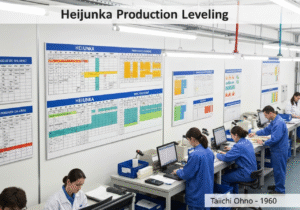
Heijunka, or level scheduling, finds extensive application across various industries such as automotive, electronics, and consumer goods, where maintaining a steady flow of production is vital. In the automotive sector, for example, manufacturers often implement Heijunka to synchronize production rates across different models, ensuring that assembly lines operate smoothly regardless of demand fluctuations. This methodology is especially advantageous during the implementation phase of lean manufacturing practices, as it requires initial planning and commitment from all stakeholders, including production managers, supply chain coordinators, and quality assurance teams. Participants typically analyze historical sales data and forecast trends to design a balanced production schedule that accommodates different product variants, reducing the tendency to overproduce some items while underproducing others. Engaging cross-functional teams can enhance collaboration and communication, mitigating risks associated with stockouts or excess inventory. Heijunka also emphasizes continuous improvement practices, prompting teams to regularly evaluate workload distribution and resource utilization to identify areas for enhancement. Companies that successfully implement level scheduling often report increased flexibility, as they can swiftly adapt to market changes without significant disruptions, subsequently improving customer satisfaction and promoting long-term sustainability. With a focus on minimizing waste through consistent production output, organizations can achieve smoother workflows that contribute to enhanced operational efficiency and reduced costs, reinforcing the broader principles of lean manufacturing.
この方法論の主なステップ
現在の生産プロセスを分析して、需要と生産能力の変動を特定する。
顧客需要と利用可能な資源のバランスを取り、理想的な生産率を決定する。
加工要件が類似する製品をグループ分けすることで、平準化を容易にする。
指定された期間内に作業負荷を均等に分散させる生産スケジュールを作成する。
実際の需要に合わせて生産量を調整するプルシステムを導入し、過剰在庫を削減する。
需要パターンの変化に基づいて、生産スケジュールを定期的に見直し、調整する。
平準化の原則と実践についてスタッフを研修し、平準化スケジュールの遵守を徹底させる。
主要業績評価指標を監視し、平準化戦略の有効性を評価する。
プロのヒント
Implement takt time calculations at each workstation to synchronize production rates with customer demand, minimizing variability in output.
Utilize visual management tools, such as Kanban boards, to monitor workflow and adjust production schedules in real time, supporting continuous improvement.