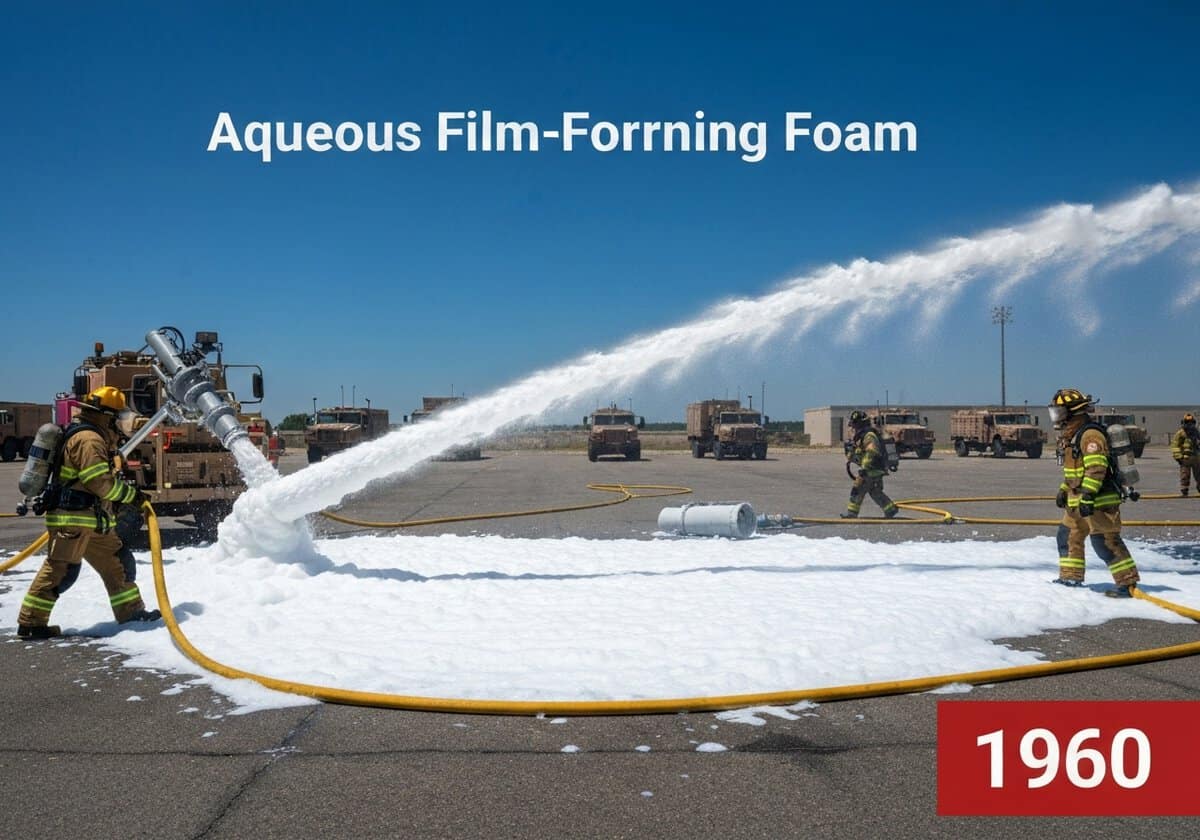
AFFF was a revolutionary development in firefighting technology. Before AFFF, protein-based foams were used, but they were less effective and slower to control large liquid fuel fires. The key innovation in AFFF is the use of fluorosurfactants. These molecules have a water-soluble (hydrophilic) head and a water-insoluble (hydrophobic) fluorocarbon tail. When mixed with water and aerated, they create a foam blanket. Crucially, as the foam drains, the fluorosurfactants create a thin aqueous film that floats on the surface of the hydrocarbon fuel. This film has a surface tension lower than that of the fuel, allowing it to spread rapidly and reseal if disturbed. The film serves multiple purposes: it suppresses the release of flammable vapors, separates the fuel from oxygen, and the water content provides a cooling effect. This combination makes AFFF exceptionally fast and effective at extinguishing difficult-to-control liquid fires, which is why it became the standard for high-risk environments like airports and military installations. However, the environmental persistence and toxicity of the PFAS used in AFFF have led to it becoming a major source of groundwater contamination at training sites.