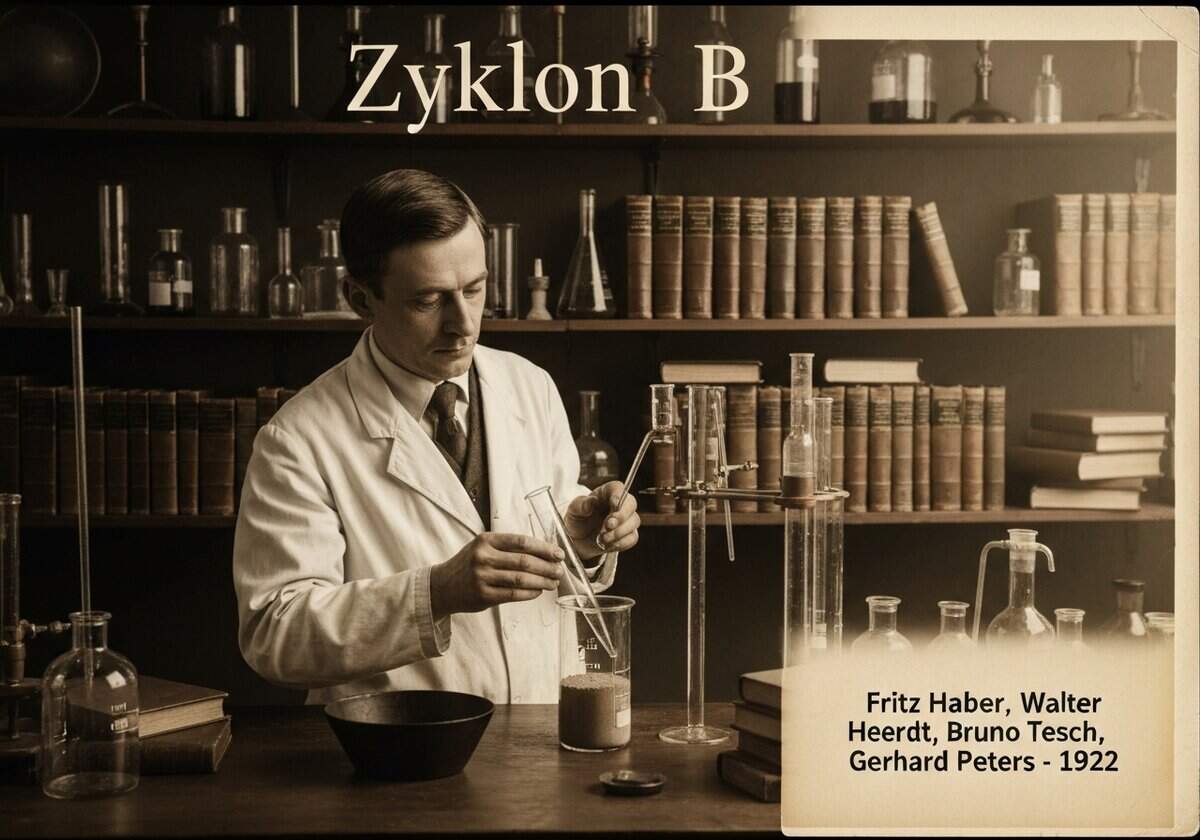
ツィクロンBは、シアン化物系殺虫剤の商品名でした。その有効成分は、揮発性の高い毒物であるシアン化水素(HCN)でした。液体のHCNは、珪藻土や木材パルプディスクなどの多孔質固体担体に吸着されました。重合を防ぐために安定剤が添加され、安全のために通常は眼刺激性の警告剤が含まれていました(大量殺戮用バージョンでは、市販版から意図的に削除されていました)。


(画像はイメージです)
ツィクロンBは、シアン化物系殺虫剤の商品名でした。その有効成分は、揮発性の高い毒物であるシアン化水素(HCN)でした。液体のHCNは、珪藻土や木材パルプディスクなどの多孔質固体担体に吸着されました。重合を防ぐために安定剤が添加され、安全のために通常は眼刺激性の警告剤が含まれていました(大量殺戮用バージョンでは、市販版から意図的に削除されていました)。
一部には適切な農薬使用例もあったものの、この物質は第二次世界大戦中にドイツのナチスがガス室で110万人以上を殺害するために使用した毒ガスとして、永遠に悪名高い記憶として残るだろう。
Zyklon B’s formulation was an “innovation” in the handling of hydrogen cyanide (HCN), also known as prussic acid. HCN is a liquid with a low boiling point of 26 °C (79 °F), making it extremely volatile and dangerous to transport and apply directly. The key technical challenge was to create a stable, safe-to-handle product that could release the gaseous poison in a controlled manner. The solution, developed at Fritz Haber’s institute in the early 1920s, was to use a principle of adsorption. Liquid HCN was sealed in canisters containing a porous and inert carrier material. Diatomaceous earth, a naturally occurring, soft, siliceous sedimentary rock, was a common choice, as were gypsum pellets or wood pulp discs. This carrier acted like a sponge, holding the HCN. A stabilizer was also added to prevent the HCN from polymerizing, which could lead to an explosive reaction. Additionally, a warning odorant, typically a lachrymatory agent (tear gas) like methyl chloroacetate or chloropicrin, was included. When the canister was opened and the contents exposed to air, the HCN would evaporate from the carrier, with the rate of release dependent on the ambient temperature. A temperature above 26 °C was required for “efficient” release. This formulation turned a highly hazardous liquid into a manageable solid product for fumigation.
ボットによるトラフィック(現在1日あたり4万件以上)を排除するため、このコンテンツはコミュニティメンバー限定となっています。
> ログイン < または > 登録 < (100%無料)でこれにアクセスできます。他のすべての制限付きコンテンツとツールも同様です。
ツィクロンB
(日付が不明または関連性がない場合、例えば「流体力学」などでは、その注目すべき出現時期の概算値が提示されます。)
フルサイズの画像とダウンロードは、登録会員のみが100%無料で利用できます。
> ログイン <