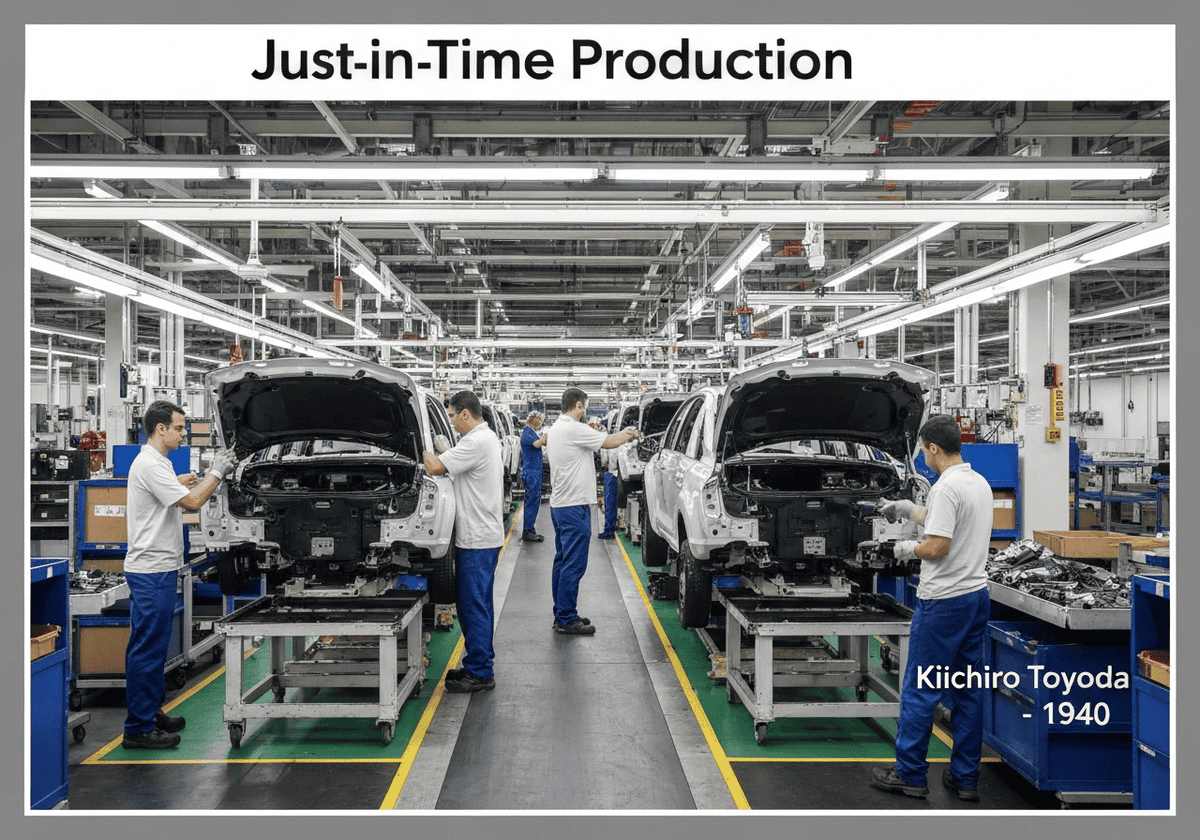
JIT production is a core pillar of the Toyota Production System and lean manufacturing. Its implementation fundamentally shifts a company from a “push” system, where production is based on forecasts, to a “pull” system, where production is triggered by actual customer demand. This pull is often managed using a signaling system like Kanban. The benefits of JIT are significant: it drastically reduces inventory holding costs, minimizes the space required for storage, and exposes production problems like defects or bottlenecks that were previously hidden by excess inventory. However, JIT is not without risks. It makes the production system highly vulnerable to disruptions in the supply chain, as there is little to no buffer stock. A delay from a single supplier can halt the entire production line. Therefore, successful JIT implementation requires strong, reliable relationships with suppliers, high-quality processes to prevent defects, and a flexible, well-trained workforce capable of responding quickly to changes in demand. It is a system that demands discipline and continuous improvement to function effectively.