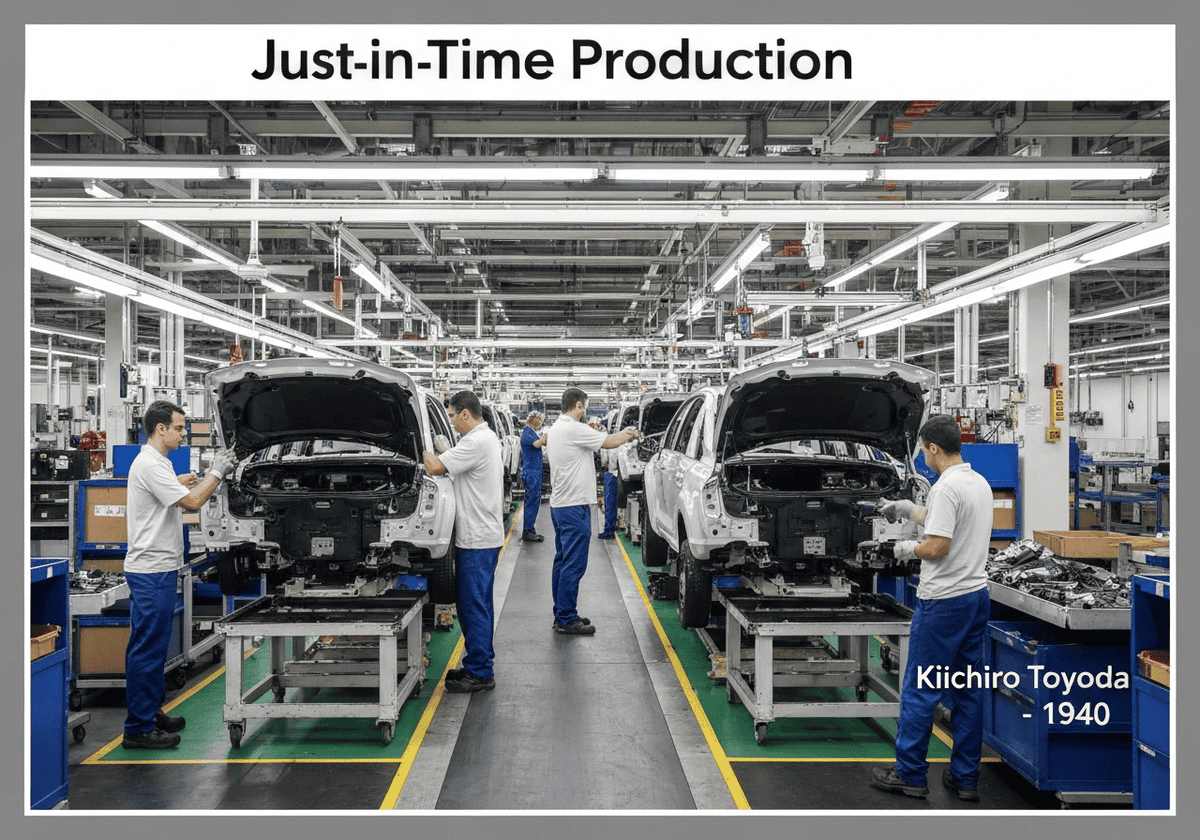
적시생산(JIT)은 생산 과정에서 필요할 때만 자재를 공급받아 효율성을 높이고 낭비를 줄임으로써 재고 비용을 절감하는 생산 전략입니다. 방법 정확한 예측과 고도로 조율된 공급망이 필요합니다. 목표는 적절한 자재를 적절한 장소에 적절한 시기에 정확한 양으로 공급하는 것입니다.

(설명을 위한 생성된 이미지입니다)
적시생산(JIT)은 생산 과정에서 필요할 때만 자재를 공급받아 효율성을 높이고 낭비를 줄임으로써 재고 비용을 절감하는 생산 전략입니다. 방법 정확한 예측과 고도로 조율된 공급망이 필요합니다. 목표는 적절한 자재를 적절한 장소에 적절한 시기에 정확한 양으로 공급하는 것입니다.
JIT production is a core pillar of the Toyota Production System and lean manufacturing. Its implementation fundamentally shifts a company from a “push” system, where production is based on forecasts, to a “pull” system, where production is triggered by actual customer demand. This pull is often managed using a signaling system like Kanban. The benefits of JIT are significant: it drastically reduces inventory holding costs, minimizes the space required for storage, and exposes production problems like defects or bottlenecks that were previously hidden by excess inventory. However, JIT is not without risks. It makes the production system highly vulnerable to disruptions in the supply chain, as there is little to no buffer stock. A delay from a single supplier can halt the entire production line. Therefore, successful JIT implementation requires strong, reliable relationships with suppliers, high-quality processes to prevent defects, and a flexible, well-trained workforce capable of responding quickly to changes in demand. It is a system that demands discipline and continuous improvement to function effectively.
현재 하루 4만 건이 넘는 봇 트래픽을 차단하기 위해 이 콘텐츠는 커뮤니티 회원만 이용할 수 있습니다.
> 로그인 < 또는 >등록 < 이 콘텐츠를 비롯한 모든 제한된 콘텐츠와 도구는 (100% 무료로) 이용할 수 있습니다.
적시생산(JIT)
(날짜를 알 수 없거나 관련이 없는 경우, 예를 들어 "유체역학"의 경우, 주목할 만한 등장 시기를 대략적으로 추정하여 제공합니다.)

고화질 이미지 및 다운로드는 등록된 회원에게만 100% 무료로 제공됩니다.
> 로그인 <