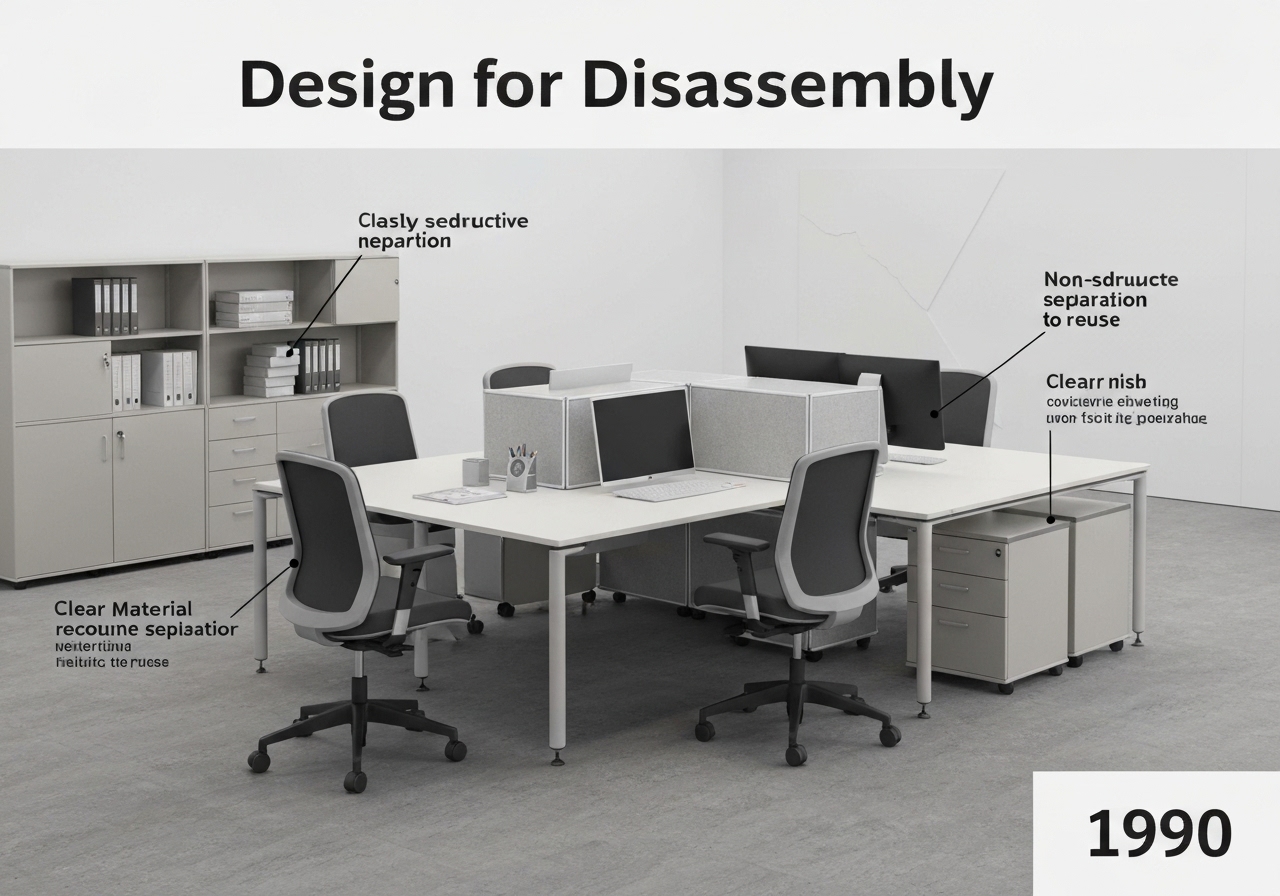
分解しやすい設計(DfD)とは、製品のライフサイクル終了時に、構成部品や材料を容易かつ費用対効果の高い方法で分離できるようにするための設計戦略です。DfDは非破壊的な分離を優先することで、修理、再利用、再製造、高純度リサイクルを促進します。主な手法としては、接着剤ではなく機械的な締結具を使用すること、モジュール構造を採用すること、そして明確な材料表示を行うことで、価値回収を最大化することが挙げられます。


(画像はイメージです)
分解しやすい設計(DfD)とは、製品のライフサイクル終了時に、構成部品や材料を容易かつ費用対効果の高い方法で分離できるようにするための設計戦略です。DfDは非破壊的な分離を優先することで、修理、再利用、再製造、高純度リサイクルを促進します。主な手法としては、接着剤ではなく機械的な締結具を使用すること、モジュール構造を採用すること、そして明確な材料表示を行うことで、価値回収を最大化することが挙げられます。

Design for Disassembly is a practical application of circular economy principles. Its technical execution involves a deliberate choice of product architecture and joining methods. Designers employing DfD minimize the variety and quantity of fasteners, opting for common types like screws instead of permanent bonds like glue or ultrasonic welds. Products are often designed with a clear hierarchy, allowing major modules to be removed without disturbing the entire assembly. Materials are selected not only for performance but also for their compatibility in recycling streams, and are clearly marked with international recycling codes to aid in sorting. This approach stands in contrast to conventional Design for Assembly (DfA), which often prioritizes initial production speed and can lead to integrated, inseparable designs that are destined for landfill. The novelty of DfD was its explicit consideration of the end-of-life phase as a critical design constraint, shifting the perspective from a linear ‘take-make-dispose’ model to a circular one where components and materials retain their value through multiple life cycles.
ボットによるトラフィック(現在1日あたり4万件以上)を排除するため、このコンテンツはコミュニティメンバー限定となっています。
> ログイン < または > 登録 < (100%無料)でこれにアクセスできます。他のすべての制限付きコンテンツとツールも同様です。
分解設計(DfD)
(日付が不明または関連性がない場合、例えば「流体力学」などでは、その注目すべき出現時期の概算値が提示されます。)
フルサイズの画像とダウンロードは、登録会員のみが100%無料で利用できます。
> ログイン <