Product Design, Manufacturing & Innovation Resources
بيت » Design for Disassembly (DfD)

Design for Disassembly (DfD)

1990
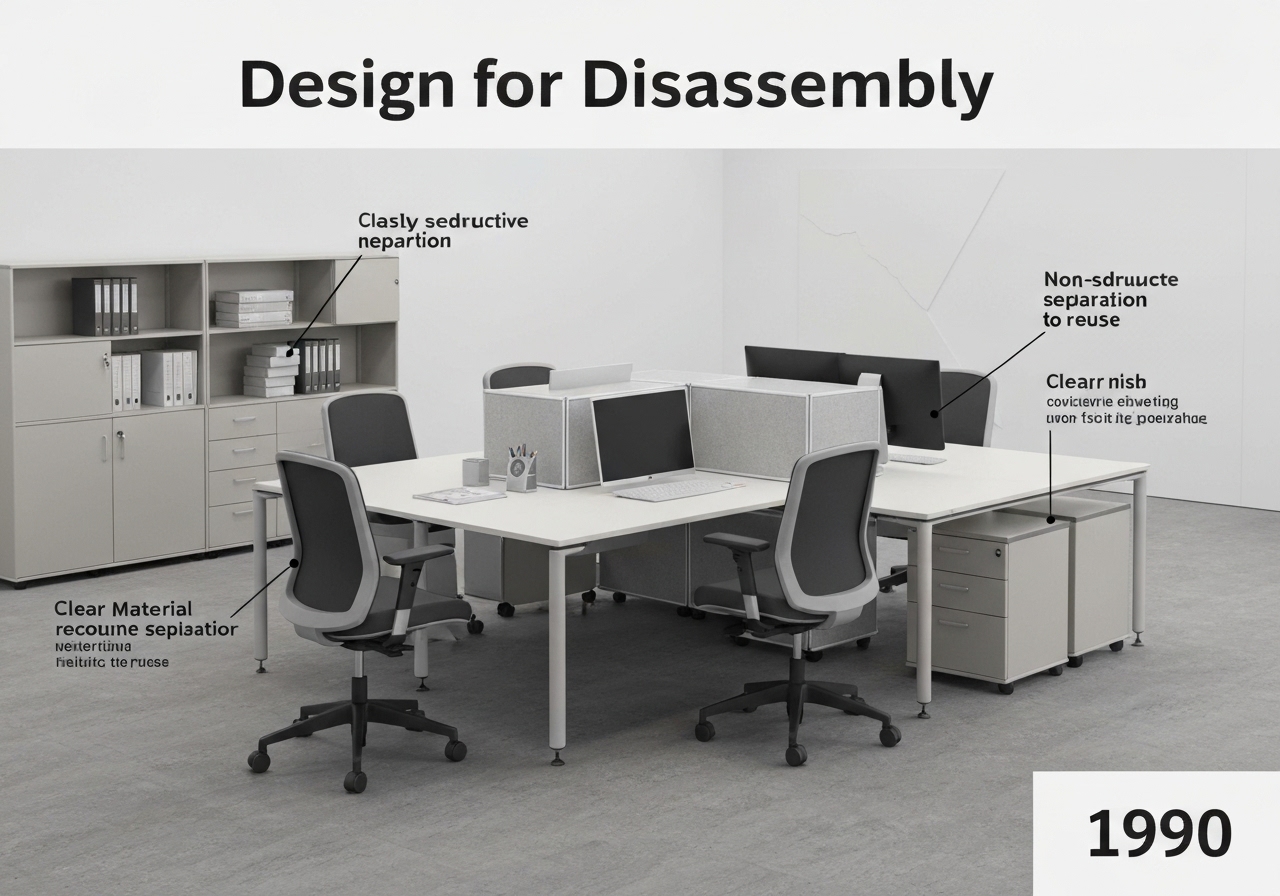
أثاث مكتبي معياري مصمم للتفكيك وإعادة الاستخدام في التصميم الصناعي.

(صورة تم إنشاؤها للتوضيح فقط)

التصميم من أجل التفكيك (DfD) هو استراتيجية تصميم تركز على تمكين الفصل السهل والفعال من حيث التكلفة لمكونات المنتج ومواده عند انتهاء عمره الافتراضي. ومن خلال إعطاء الأولوية للفصل غير المتلف، يسهّل التصميم من أجل التفكيك التدميري الإصلاح وإعادة الاستخدام وإعادة التصنيع وإعادة التدوير عالي النقاء. تشمل التقنيات الرئيسية استخدام المثبتات الميكانيكية بدلاً من المواد اللاصقة، والبناء المعياري، ووضع علامات واضحة على المواد لزيادة استرداد القيمة إلى أقصى حد.


Design for Disassembly is a practical application of circular economy principles. Its technical execution involves a deliberate choice of product architecture and joining methods. Designers employing DfD minimize the variety and quantity of fasteners, opting for common types like screws instead of permanent bonds like glue or ultrasonic welds. Products are often designed with a clear hierarchy, allowing major modules to be removed without disturbing the entire assembly. Materials are selected not only for performance but also for their compatibility in recycling streams, and are clearly marked with international recycling codes to aid in sorting. This approach stands in contrast to conventional Design for Assembly (DfA), which often prioritizes initial production speed and can lead to integrated, inseparable designs that are destined for landfill. The novelty of DfD was its explicit consideration of the end-of-life phase as a critical design constraint, shifting the perspective from a linear ‘take-make-dispose’ model to a circular one where components and materials retain their value through multiple life cycles.

UNESCO Nomenclature: 3301
- الهندسة المعمارية

يكتب

النظام التجريدي

الاضطراب

كبير

الاستخدام

الاستخدام الواسع النطاق

السلائف

  • traditional repair and maintenance practices
  • design for assembly (dfa) principles
  • growing awareness of landfill limitations and resource scarcity
  • legislation on extended producer responsibility (epr)
  • the rise of the electronics industry and associated e-waste problem

التطبيقات

  • modular smartphones (e.g., fairphone)
  • repairable home appliances
  • automotive design for easier servicing and parts harvesting
  • office furniture designed for reconfiguration and reuse
  • construction systems using bolted connections instead of welding

براءات الاختراع:

NA

أفكار ابتكارات محتملة

بسبب عمليات جمع البيانات من خلال برامج الروبوت، والتي تتجاوز حاليًا 40 ألفًا يوميًا، فإن هذا المحتوى مخصص لأعضاء المجتمع فقط.
> تسجيل الدخول < أو > سجل < (مجاني 100٪) للوصول إلى هذا، وكذلك جميع المحتويات والأدوات الأخرى المقيدة.

ذات الصلة: التصميم من أجل التفكيك، DFD، الاقتصاد الدائري، قابلية الإصلاح، إعادة التدوير، التصميم المعياري، نهاية عمر المنتج، الهندسة المستدامة، الحق في الإصلاح، النفايات الإلكترونية.

السياق التاريخي

Design for Disassembly (DfD)

1987-03
1990
1990
1990
1990
1990
1990
1987
1989
1990
1990
1990
1990
1990
1990

(إذا كان التاريخ غير معروف أو غير ذي صلة، على سبيل المثال "ميكانيكا الموائع"، يتم توفير تقدير تقريبي لظهوره الملحوظ)

الاختراع والابتكار والمبادئ التقنية ذات الصلة

الصور بالحجم الكامل والتنزيلات متاحة فقط 100% مجاناً للأعضاء المسجلين.