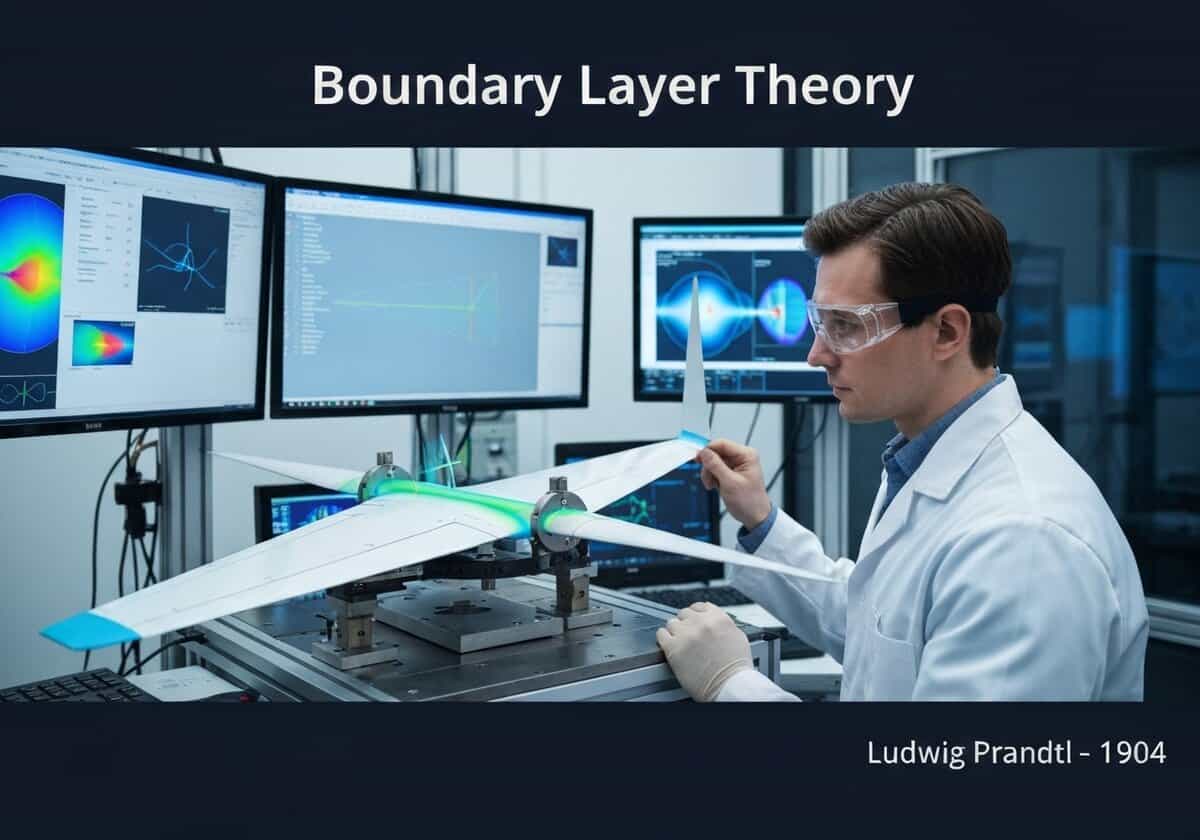
Within this layer, the fluid velocity changes from zero at the surface (the no-slip condition) to the free-stream velocity at the edge of the layer. This velocity gradient creates shear stress, which is the source of skin friction drag, one of the two main components of aerodynamic drag. The behavior of the boundary layer is crucial. It can be either smooth and orderly (laminar) or chaotic and irregular (turbulent). A turbulent boundary layer has more energy and is more resistant to separating from the surface, but it also creates significantly more skin friction drag. Flow separation, where the boundary layer detaches from the surface, often occurs due to an adverse pressure gradient and leads to a massive increase in pressure drag, which is the other main drag component. Understanding and controlling the boundary layer is a central goal of aerodynamic design.