Product Design, Manufacturing & Innovation Resources
» インスリンシグナル伝達経路

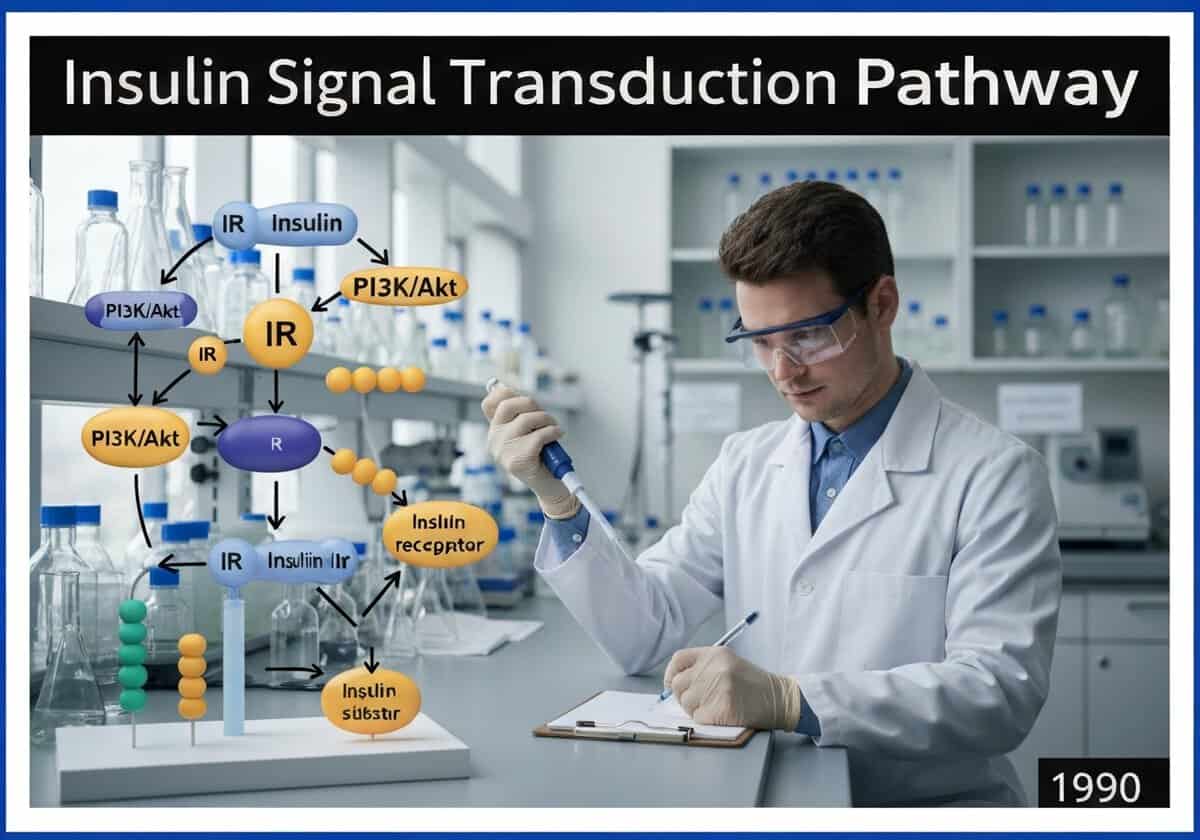
インスリンシグナル伝達経路

1990
インスリンのシグナル伝達経路と受容体および下流への作用。.

(画像はイメージです)

Insulin initiates its effects by binding to the insulin receptor (IR), a receptor tyrosine kinase. This binding triggers autophosphorylation of the receptor, creating docking sites for insulin receptor substrate (IRS) proteins. Phosphorylated IRS proteins then activate downstream pathways, primarily the PI3K/Akt pathway, which mediates most of insulin’s metabolic effects, including the translocation of GLUT4 glucose transporters to the cell membrane.

The insulin signaling cascade is a complex and highly regulated network that controls cellular growth, survival, and metabolism. It begins when insulin binds to the extracellular alpha subunits of the insulin receptor (IR). This causes a conformational change, activating the tyrosine kinase domain located on the intracellular beta subunits. The activated kinase phosphorylates specific tyrosine residues on the opposing beta subunit, a process called autophosphorylation. These phosphotyrosine sites act as recruitment platforms for various adapter proteins, most notably the insulin receptor substrate (IRS) family (IRS1-4). Once docked, IRS proteins are themselves phosphorylated by the IR kinase. This creates binding sites for other signaling molecules containing SH2 domains, such as phosphatidylinositol 3-kinase (PI3K). The recruitment of PI3K to the plasma membrane is a critical step. Activated PI3K phosphorylates the lipid [latex]PIP_2[/latex] (phosphatidylinositol 4,5-bisphosphate) to generate [latex]PIP_3[/latex] (phosphatidylinositol 3,4,5-trisphosphate). [latex]PIP_3[/latex] acts as a second messenger, recruiting and activating other kinases, including PDK1 and Akt (also known as Protein Kinase B). Activated Akt is a central node in the pathway, phosphorylating a multitude of downstream targets to mediate insulin’s effects. A key action of Akt is to promote the translocation of vesicles containing the glucose transporter GLUT4 from the cell’s interior to the plasma membrane in muscle and adipose tissue. This insertion of GLUT4 allows for the rapid uptake of glucose from the bloodstream, lowering blood sugar levels. Akt also promotes glycogen synthesis, protein synthesis, and lipid synthesis, while inhibiting processes like gluconeogenesis and apoptosis.

UNESCO Nomenclature: 2403
細胞生物学

タイプ

抽象システム

混乱

基礎

使用法

広く普及している

前駆物質

  • discovery of protein phosphorylation as a regulatory mechanism by edwin g. krebs and edmond h. fischer
  • concept of second messengers by earl sutherland, jr.
  • identification and cloning of the insulin receptor gene
  • discovery of tyrosine kinases and sh2 domains

アプリケーション

  • development of drugs for type 2 diabetes that target components of the signaling pathway (e.g., metformin, tzds)
  • cancer research, as the pi3k/akt pathway is often dysregulated in tumors
  • understanding the molecular basis of insulin resistance
  • research into aging and longevity, as this pathway is linked to lifespan regulation
  • development of therapies for metabolic syndrome

特許:

NA

潜在的なイノベーションのアイデア

ボットによるトラフィック(現在1日あたり4万件以上)を排除するため、このコンテンツはコミュニティメンバー限定となっています。
> ログイン < または > 登録 < (100%無料)でこれにアクセスできます。他のすべての制限付きコンテンツとツールも同様です。

Related to: signal transduction, insulin receptor, tyrosine kinase, irs, pi3k, akt, glut4, insulin resistance, cell biology, phosphorylation.

歴史的背景

インスリンシグナル伝達経路

1977
1983
1987
1990
1990
1990
1997
1975
1979
1983
1988
1990
1990
1997
2000

(日付が不明または関連性がない場合、例えば「流体力学」などでは、その注目すべき出現時期の概算値が提示されます。)

関連する発明、革新、および技術原理

フルサイズの画像とダウンロードは、登録会員のみが100%無料で利用できます。