Product Design, Manufacturing & Innovation Resources
» サザンブロット

サザンブロット

1975
  • Edwin Southern
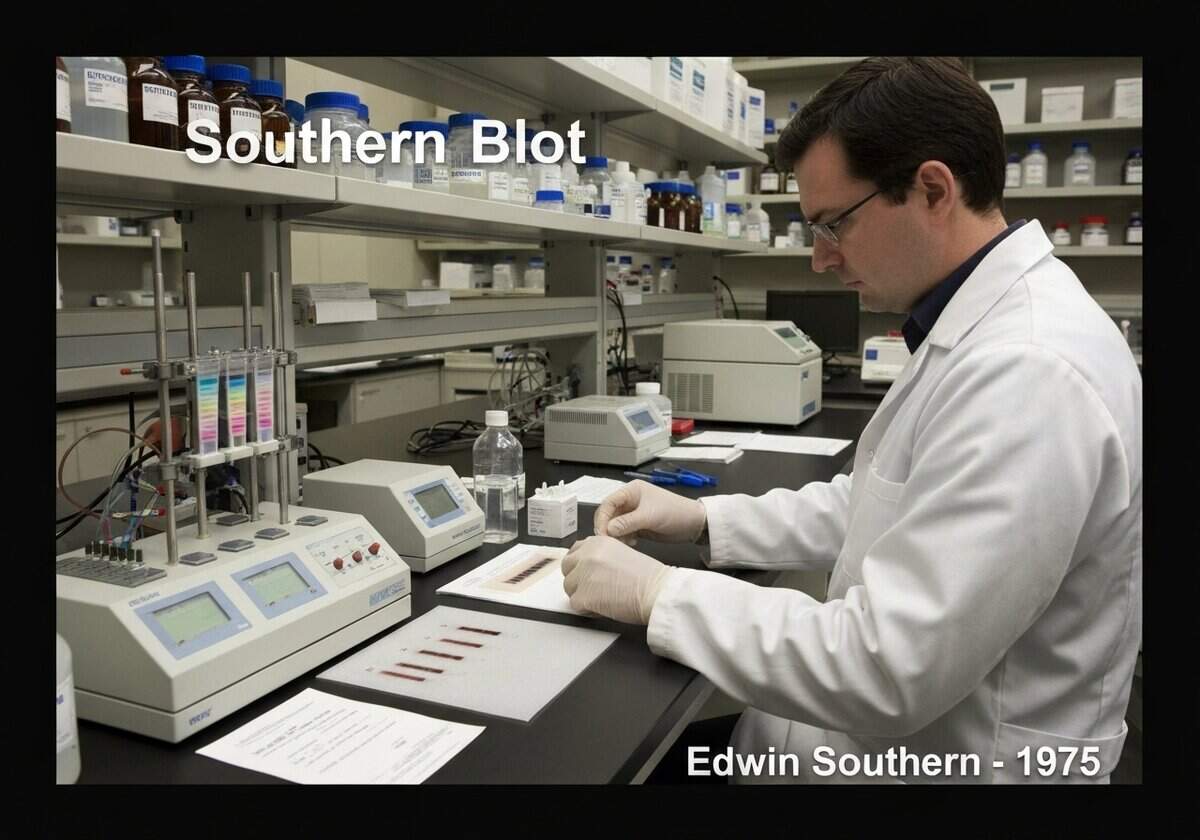
分子遺伝学におけるDNA解析のためのサザンブロット法を実演する実験風景。.

(画像はイメージです)

The Southern blot is a 方法 used for the detection of a specific DNA sequence in a DNA sample. It combines transfer of electrophoresis-separated DNA fragments to a filter membrane with subsequent fragment detection by a labeled DNA probe. The technique allows researchers to identify a specific gene within a complex DNA mixture based on size and sequence.


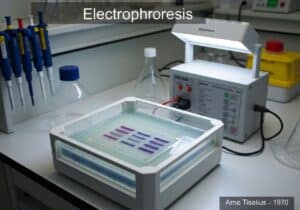
The Southern blot, named after its inventor Edwin Southern, is a powerful and specific method for detecting a target DNA sequence within a complex mixture of DNA. It was a foundational technique in molecular genetics before the widespread adoption of PCR and sequencing. The process is a multi-step procedure that combines size separation with specific molecular recognition. It begins with the digestion of the total genomic DNA sample using one or more restriction enzymes, which cleaves the DNA into fragments of varying sizes. These fragments are then separated according to their size by agarose gel electrophoresis. The gel now contains a smear of countless DNA fragments, sorted by length. The crucial next step is the transfer, or ‘blotting,’ of these separated DNA fragments from the fragile gel onto a more durable membrane, typically made of nitrocellulose or nylon. This is achieved through capillary action, which wicks a buffer solution through the gel and the membrane, carrying the DNA along with it and immobilizing it on the membrane’s surface. The DNA is first denatured into single strands so it can bind to the probe. The membrane now holds a faithful replica of the DNA fragment pattern from the gel. To find the specific gene of interest among the thousands of fragments, a labeled probe is used. This probe is a single-stranded piece of DNA (or RNA) that has a sequence complementary to the target gene and is tagged with a marker, such as a radioactive isotope ([latex]^{32}P[/latex]) or a fluorescent/chemiluminescent molecule. The membrane is incubated with this probe, which hybridizes (forms a double helix) only with its complementary DNA fragment on the membrane. After washing away any unbound probe, the location of the hybridized probe is detected, revealing a band that corresponds to the size of the DNA fragment containing the target gene.

UNESCO Nomenclature: 2406
分子生物学

タイプ

化学プロセス

混乱

増分

使用法

ニッチ/専門分野

前駆物質

  • gel electrophoresis for DNA separation
  • discovery of restriction enzymes
  • understanding of DNA hybridization principles
  • development of radioactive labeling techniques for probes
  • techniques for creating nitrocellulose membranes

アプリケーション

  • gene mapping
  • diagnosing genetic diseases (e.g., sickle cell anemia)
  • identifying gene mutations or rearrangements
  • forensic DNA analysis (RFLP)
  • paternity testing
  • detecting transgenes in GMOs

特許:

NA

潜在的なイノベーションのアイデア

ボットによるトラフィック(現在1日あたり4万件以上)を排除するため、このコンテンツはコミュニティメンバー限定となっています。
> ログイン < または > 登録 < (100%無料)でこれにアクセスできます。他のすべての制限付きコンテンツとツールも同様です。

Related to: Southern blot, Edwin Southern, DNA detection, hybridization, DNA probe, RFLP, blotting, molecular biology, gene identification, electrophoresis.

歴史的背景

サザンブロット

1960
1970
1973
1975
1979
1983
1988
1960
1967
1970
1975
1977
1983
1987
1990

(日付が不明または関連性がない場合、例えば「流体力学」などでは、その注目すべき出現時期の概算値が提示されます。)

関連する発明、革新、および技術原理

フルサイズの画像とダウンロードは、登録会員のみが100%無料で利用できます。