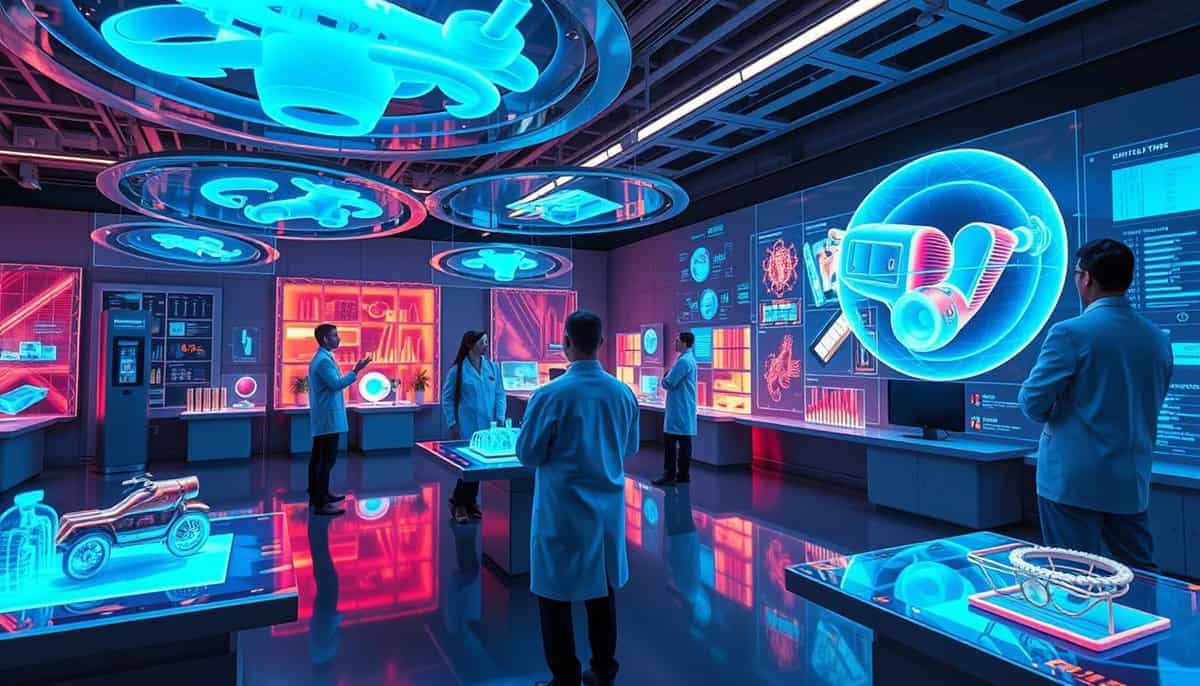
今後5年間で、企業の収益のうち30兆ドルは新製品に依存することになるでしょう。これは、研究開発(R&D)におけるデジタルツイン技術の大きな可能性を浮き彫りにしています。製品開発担当役員の75%がデジタル化に注力していることから、デジタルツイン技術市場は毎年約60%の成長が見込まれています。2027年までに、市場規模は735億ドルに達すると予想されています。
Digital twins create virtual copies of physical systems. This allows for better simulation, prediction, and operation. They’re changing how we innovate and making development, cost optimization, and efficiency better. Thanks to this tech, we can get real-time data and predict product performance and market trends accurately.
主なポイント
- デジタルツインを活用することで、製品開発期間を20~50%短縮でき、複数のプロトタイプを作成する必要性を減らすことができる。
- デジタルツインを活用することで、品質問題が25%減少し、売上が3~5%増加する。
- デジタルツインの世界市場は、年間60%の成長が見込まれ、2027年までに735億ドルに達すると予測されている。
- 製造業やバイオテクノロジーなど、多くの分野でデジタルツインが活用されている。
- サプライチェーンの問題に取り組む企業にとって、デジタルツインへの投資は極めて重要です。コスト削減と収益向上に役立ちます。
デジタルツインを理解する:包括的な概要
デジタルツインは、産業界がモノを利用し、モノについて学ぶ方法に大きな変化をもたらします。これらは、現実のモノに非常に近い仮想モデルです。これにより、深い洞察とより良い利用が可能になります。デジタルツインは、さまざまな場所からのデータを統合します。 IoT センサーを用いて、現実世界を忠実に再現する。
研究におけるIoTの活用は、デジタルツインにとって非常に重要です。IoTデバイスはデータを継続的に収集・分析し、モデルを動的にします。例えば、自動車の場合、デジタルツインは車両の状態をリアルタイムで監視します。これにより、問題を予測し、発生する前に発見することができます。
デジタルツインにAIと予測分析を組み込むことは、大きな前進です。これにより、モデルは自己改善し、自律的に意思決定を行うことができるようになります。これは、細部が非常に重要な航空宇宙分野などで特に有効です。デジタルツイン市場は2027年までに735億米ドルに達すると予測されており、その重要性と普及度合いがいかに高まっているかを示しています。
| 業界 | 応用 | 利点 |
|---|---|---|
| 自動車 | 車両性能監視 | 摩耗や損傷の早期発見 |
| 航空宇宙 | システム最適化 | 安全性と効率性の向上 |
| 製造業 | プロセス最適化 | Cost Reduction |
| 健康管理 | 予知保全 機器 | 運用信頼性の向上 |
| 都市計画 | シナリオテスト | インフラストラクチャの最適化 |
リアルタイムデータ技術の新たな進歩により、デジタルツインは迅速な対応能力を獲得しました。これは、多くの分野における迅速かつ的確な意思決定に役立ちます。例えば、都市計画においては、デジタルツインを用いて持続可能な成長を促進するための変更を検証することができます。
サイバーセキュリティ デジタルツインは多くの個人データを扱うため、セキュリティは非常に重要です。 暗号化これは、データの保護に役立ちます。デジタルツインの構築には費用がかかる場合もありますが、最終的にはその価値に見合うだけのメリットが得られます。コストと労力に見合うだけのメリットがもたらされるのです。
デジタルツイン技術の進化と歴史
The development of digital twins started as simple models. They are now complex systems that work with AI and machine learning. The path of digital twin technology began in the 1960s. NASA used them first during the Apollo 13 mission. Since that time, the concept has grown and become very popular, especially in the early 2000s.
2015年までに、デジタルツインは「インダストリー4.0」革命の鍵を握る存在となった。これはデジタルツインの歴史における大きな一歩だった。2021年の市場規模は65億ドルだったが、2030年には1257億ドルに達する可能性がある。この成長は、デジタルツインがもたらす大きなメリットによるものだ。効率性の向上、時間とコストの節約、リスク評価の精度向上などが挙げられる。
Recently, digital twins came back into the spotlight with the 2022 metaverse boom. They give businesses and users a clearer view of our physical world. Their benefits include cutting costs, fewer failures, and smoother operations. This applies in many fields, like aerospace and healthcare.
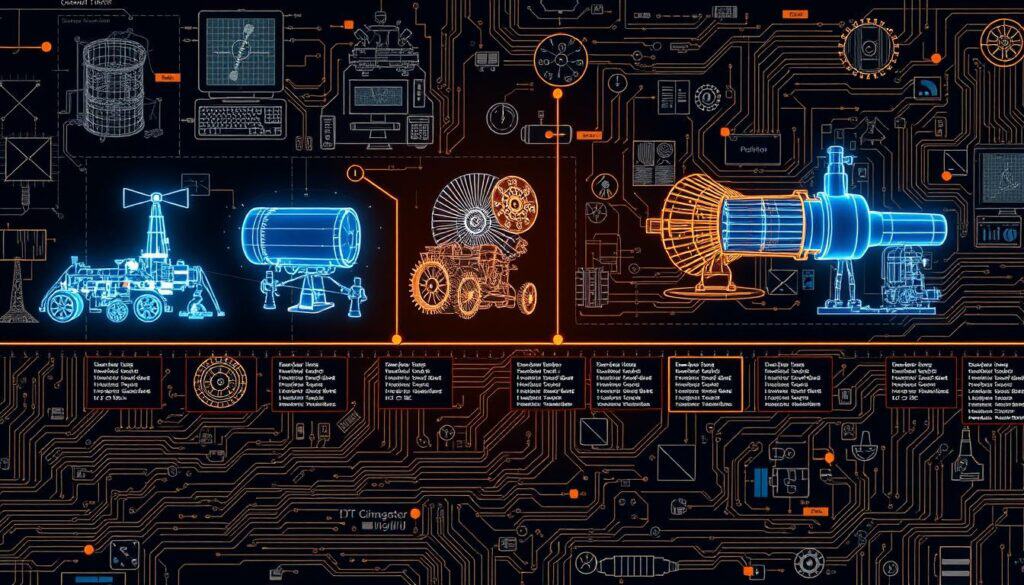
| 年 | マイルストーン |
|---|---|
| 1960年代 | アポロ13号ミッション中のNASAの使用 |
| 2000年代初頭 | このコンセプトは人気を集めている。 |
| 2015 | 「インダストリー4.0」との統合 |
| 2022 | メタバースブーム時の復活 |
研究開発にデジタルツインを活用することで状況は大きく変わりますが、同時に困難も伴います。初期費用が高額であることや、ノウハウの習得が必要となることが大きな課題です。しかし、企業は価値創造に注力しています。デジタルツインは、現実世界の要素をモデル化したりテストしたりするためのスマートな方法を提供します。これにより、業務を円滑に進め、中断することなく継続することが可能になります。
また、リアルタイムキャプチャや生成AIといった技術は、こうした難題の解決に役立ちます。これらの技術によって、デジタル製品の作成がより迅速かつ容易になります。
結論として、デジタルツインの歴史的展望は、それがアイデアから現代の研究開発における重要なツールへと成長してきたことを示している。デジタルツインは今後さらに発展し、新たなものを生み出す大きな可能性を秘めている。
Key Benefits of Digital Twins in Product Development
Digital twins are important in making products today. They help improve designs and make things cost-effective. With a digital twin, companies can test and change products in a virtual world. This means less money spent on making models and faster time getting products out there. This way, products become better and more reliable.
Enhancement of Product Design and Engineering
Companies get better at making products with digital twins. This technology lets them test changes in a virtual space. Engineers can fix problems before they appear in the real world. This leads to products that work better and have more features.
A report by McKinsey shows 75% of companies using digital twins achieved medium complexity. Some areas where it’s used include:
- Automotive: helps in working together on car designs worldwide.
- Industrial manufacturing: boosts product quality and reduces costs by finding issues early.
- 航空宇宙: makes plane performance better without as much testing, saving time and money.
Using digital twins to test and polish designs lessens the need for physical models. This leads to faster development times. Products can be released quicker and more efficiently.
Cost Reduction and Process Optimization
Digital twins play a big role in saving money in research and development. They make processes better and use resources wisely. By finding where waste happens, they help companies save a lot. For example, using digital twins has cut development time by 20-50% and lowered the costs of early models.
Also, digital twins offer valuable services after a sale, like predicting when maintenance is needed. This improves how long a product lasts, makes customers happier, and keeps them coming back.
| 業界 | Use Case |
|---|---|
| 家電 | Optimizing supply chain quality and reducing waste |
| 自動車 | Facilitating global collaboration in 3D automotive design |
| Industrial Manufacturing | Improving product quality and cutting costs through early problem identification |
| 航空宇宙 | Simulating and optimizing aircraft performance to reduce testing time and costs |
| エネルギー | Optimizing infrastructure performance and identifying cost-saving opportunities |
The benefits and process improvements from digital twins highlight their value in making products. The market for digital twins is expected to grow a lot, by 37.5% from 2023 to 2030. This technology will change how things are made and make R&D more efficient in many industries.
Implementing Digital Twins: Challenges and How to Overcome Them
The journey toward integrating digital twins within an organization’s framework is full of obstacles. These must be identified and addressed with careful planning and strong strategies.
Data Complexity and Quality is a big barrier in the world of digital twins. When you mix data from different sources, it can cause accuracy problems and inefficiencies. This could lead to delays in the digital twin process. Making sure the data is reliable and high-quality is crucial for success.
System Integration is yet another hurdle. Old systems often can’t easily work with new digital twin technology. Overcoming this challenge requires making plans for effective integration. This allows for smooth data exchange and functionality across all systems.
Cost and ROI Concerns greatly impact digital twin implementation. It can be tough to get budget approval without clear return-on-investment figures. That’s why it’s key to create solid financial plans. Showing the long-term benefits is essential to get support.
Technical Expertise is vital for a successful strategy. There’s a lack of professionals who know how to use digital twin tech. We need more training programs and focused hiring to fill this skills gap.
Scalability is a big issue. Applying digital twin tech across different areas can spread resources thin. It demands careful resource management to keep things running smoothly and effectively.
Cybersecurity is crucial. Strong security steps must protect sensitive data from cyber threats. High security standards keep data safe and boost confidence in the organization.
Cultural Resistance can slow down digital twin adoption in a company. To overcome this, companies need to build a culture that welcomes digital advances. Effective 変更管理 helps support this shift.
Regulatory Compliance adds more complexity. Companies have to deal with specific industry rules and laws, especially about using and keeping data safe. This ensures a smooth implementation process.
Real-time Data Processing is essential. A strong IT setup is necessary to handle data quickly and reduce delays. This makes sure the operation is efficient and dependable.
Long-term Maintenance keeps digital twins relevant and accurate. Ongoing updates make the technology keep up with business changes. This ensures it stays useful over time.
This is summarized in the table below:
| Challenge | 説明 | Solutions |
|---|---|---|
| Data Complexity and Quality | Issues in merging data from multiple sources | Implementing rigorous data validation processes |
| System Integration | Compatibility problems with legacy systems | Developing custom integration solutions |
| Cost and ROI Concerns | Securing budget approval | Clear financial projections and ROI demonstrations |
| Technical Expertise | Shortage of skilled professionals | Targeted training and recruitment programs |
| Scalability | Resource management issues in expansion | Streamlined resource allocation strategies |
| サイバーセキュリティ | Protecting sensitive data | Implementing robust security measures |
| Cultural Resistance | Internal resistance to change | Effective change management practices |
| Regulatory Compliance | Navigating industry-specific regulations | Adhering to regulatory standards |
| Real-time Data Processing | Handling and minimizing data latency | Investing in strong IT infrastructure |
| Long-term Maintenance | Sustaining technology relevance | Ongoing upkeep and alignment with business needs |
Applicable Industries for Digital Twins
Digital twins are changing many industries by making operations better and sparking new ideas. They create virtual versions of physical things. This is how they’re changing specific sectors.
Automotive and Aerospace
In the automotive and aerospace fields, digital twins are very important. In aerospace, around 75% of leaders are exploring these technologies. Boeing, for example, safely increased its 737-800’s cargo capacity by 23% with digital twins.
These technologies are also crucial in the car industry. They’re predicted to make up at least 15% of the digital twin market. They help car makers improve design, testing, and more. This boosts vehicle safety and performance.
Healthcare and Life Sciences
Digital twins are making big changes in medicine and research. They simulate how human bodies react, improving drug tests and medical procedures. This tech helps create treatments that are just right for each patient. It lowers costs and improves care.
The market for digital twins in health is growing fast. It’s expected to jump from $9.5 billion in 2022 to over $72 billion by 2032. Its uses range from studying genes to planning complex surgeries.
Infrastructure and Energy Sectors
In infrastructure and energy, digital twins help make things work better and last longer. For cities, it’s about planning and sustainability. ABI Research thinks we’ll see 500 digital city twins by 2025. They help manage resources well and make cities greener.
In energy, they watch over and predict how well equipment will work. This cuts down on unexpected stops and makes things safer. Using digital twins saves money and helps keep our energy supply reliable and clean.
Here’s a look at how digital twins are used in different areas:
| Sector | アプリケーション | 利点 |
|---|---|---|
| 自動車 | Design & R&D, Performance Testing | Enhanced Innovation, Safety Improvements |
| 航空宇宙 | Weight Optimization, 予知保全 | Operational Efficiency, Increased Cargo Capacity |
| 健康管理 | Drug Testing, Personalized Medicine | Better Treatment Plans, Reduced Costs |
| Infrastructure | Urban Planning, Resource Management | Sustainability, Efficient Operations |
| エネルギー | Performance Monitoring, 予知保全 | Safety, コスト削減 |
Digital Twins in R&D: Revolutionizing Research and Development
Digital twins are changing how research gets done by allowing for virtual tests. This method cuts down on the time and resources needed for real-world trials. A 2023 McKinsey report found that digital twins help companies get their products out 30% faster.
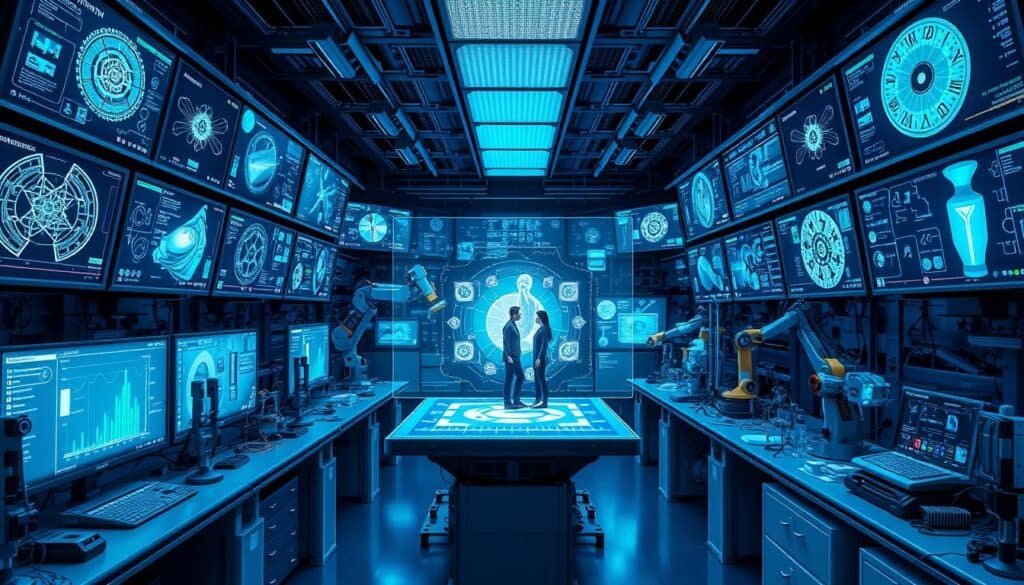
Researchers can work faster, get immediate responses, and analyze their findings in depth with digital twins. This not only boosts innovation in research but also makes predictive models and experiments more precise. A 2022 study by Gartner showed using digital twins can cut costs by up to 50%.
Digital twins reduced our flight test time by 20% and brought substantial cost savings,” said Airbus when discussing the benefits of virtual testing.
In the drug-making world, digital twins could shorten the time to develop new medicines by up to 25%, says CSols Inc. This is key since about 80% of clinical trials don’t start on time, and 55% end early because they can’t get enough participants.
Ford uses digital twins to check how self-driving cars would do in different road situations. This helps them make safer cars faster, according to Ford Media Center. Digital twins are proving essential for new breakthroughs in various fields.
| 業界 | 利点 | ソース |
|---|---|---|
| 航空宇宙 | 20% reduction in flight test time, cost savings | Airbus |
| 医薬品 | 25% reduction in drug development timelines | CSols Inc. |
| 自動車 | Accelerated development of autonomous vehicles | Ford Media Center |
Key Tools and Technologies for Creating Digital Twins
To build and manage digital twins effectively, you need the right tech. It starts with advanced simulation software, real-time data gathering through IoT devices and sensors, and powerful data analytics platforms. These elements ensure the digital twin mirrors the real object well. They provide insights that help improve performance and find areas for improvement.
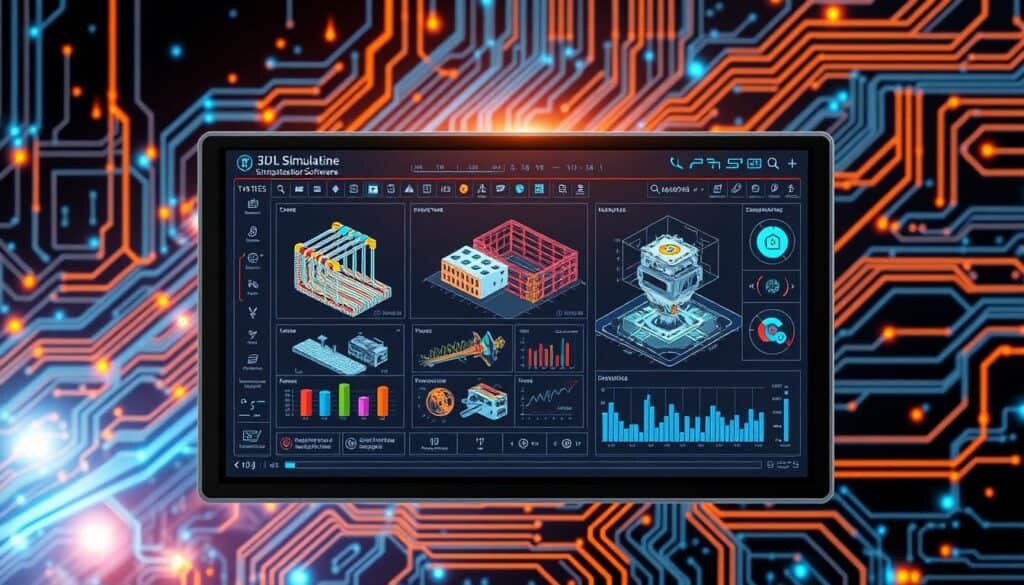
Simulation Software
Simulation software is crucial for a good digital twin. Giants like Siemens and NVIDIA have worked together for years. They use tools like NVIDIA Omniverse and OpenUSD. These help in designing, simulating, and enhancing products and facilities. Thanks to these tools, we can deeply understand and operate digital twins. This drives better productivity and innovation in several fields.
IoT Devices and Sensors
Adding IoT devices and sensors is essential for collecting data in real time. This makes digital twins more lively and reactive. Famous names like BMW Group and Amazon Robotics connect these devices to their digital twins for 3D monitoring. This greatly aids in refining production and solving issues faster. With continuous IoT data, digital twins always match their physical versions.
Data Analytics Platforms
強い data analytics platforms are key for handling the huge data from digital twins. These platforms enhance the twins’ functionality and accuracy. NVIDIA’s Omniverse Cloud offers an environment for creating and managing industrial digital applications. Using data analytics in research and development lets companies dig deeper. This way, they can optimize their work for better results.
Tips for Effective Digital Twin Implementation
Implementing digital twins successfully requires a well-thought strategy. This includes managing different data sources, taking care of security, and keeping an eye on costs. Here are some useful tips to help you tackle these issues effectively.
Ensuring Data Integration and Management
It’s vital to manage and blend large data amounts from various places. Good integration strategies are key. They help keep data consistent, allow easy data sharing, and keep data accurate. You can achieve great data management by:
- Establishing standardized data formats to ease integration between various systems.
- Using advanced data analytics platforms to process and analyze the data efficiently.
- Employing IoT devices and sensors to ensure real-time data acquisition and reliability.
This not only improves data integration but also aids in making smarter decisions and boosts operational performance.
Maintaining Data Security and Privacy
Keeping digital twin data secure is vital for protecting private information and following privacy laws. Implementing strong security measures is a must. This includes encryption and managing who can access the data. Important steps involve:
- Conducting regular security audits to identify and fix weaknesses.
- Encrypting data when stored and during transfer to stop unauthorized access and leaks.
- Implementing role-based access controls to keep data limited to approved staff only.
Strong security practices build trust and ensure sensitive data stays safe in digital twins.
Managing Implementation Costs
Handling cost management in R&D and the initial high costs of starting with digital twins is essential. With careful cost-value studies and looking for scalable options, controlling expenses becomes possible. Ways to do this include:
- Choosing digital twin platforms that are modular and scalable, allowing you to start small and grow as needed.
- Partnering with outside experts for insights and cost-saving methods.
- Training your own teams to better their tech skills which lowers the need for outside help.
Using these strategies helps keep costs in check while fully benefiting from digital twins in R&D.
| Challenge | Strategic Approach |
|---|---|
| Data Integration | Standardized data formats, advanced analytics, IoT devices |
| Security and Privacy | Regular audits, data encryption, role-based access |
| Cost Management | Scalable solutions, expert collaboration, internal training |
Using Digital Twins for Predictive Maintenance
Predictive maintenance is changing industries with digital twins. It helps predict equipment failure. This means less downtime and longer life for machinery. It improves efficiency and cuts maintenance costs.
It’s very useful for vehicles and factories. It stops small issues from becoming big problems. For example, in aviation, digital twins keep an eye on engine performance. They offer real-time info and predict risks. This makes sure planes are safe and reliable.
Digital twins use five kinds of data for maintenance. These are digital models, static data, IoT data, service data, and simulations. These data types help make better maintenance decisions. As digital tools get better, maintenance becomes more efficient. This leads to less downtime and better reliability in operations.
補足資料と方法
- Internet of Things (IoT) Integration: sensor data acquisition, IoT architecture design, edge computing.
- Machine Learning and AI: predictive analytics, anomaly detection, reinforcement learning.
- Data Analytics and Big Data: data fusion, real-time analytics, data visualization.
- Cloud Computing: cloud storage solutions, distributed computing, scalability management.
- Cybersecurity for Digital Twins: threat modeling, encryption techniques, access control systems.
- Augmented Reality (AR) and Virtual Reality (VR): immersive visualization, AR/VR interface design, ユーザーエクスペリエンス optimization.
- Systems Engineering: Systems architecture design, lifecycle management, requirements engineering.
よくある質問
研究開発におけるデジタルツインとは何ですか?
研究開発におけるデジタルツインは、実システムの仮想コピーのようなものです。シミュレーション、予測、分析に役立ち、イノベーションを促進し、研究開発の効率を高めます。
デジタルツイン技術は製品開発にどのように貢献するのか?
この技術により、物理的なモデルを使わずに詳細な分析とより優れた製品設計が可能になります。品質向上、開発スピードアップ、コスト削減に貢献します。
デジタルツインの作成において、仮想モデリングはどのような役割を果たすのでしょうか?
仮想モデリングはデジタルツインにとって不可欠です。現実世界の状況をシミュレートすることで、正確な表現が可能になります。これは予測分析や運用管理に役立ちます。
デジタルツインから最も恩恵を受ける業界はどれか?
自動車、航空宇宙、医療、インフラ、エネルギーといった業界は、デジタルツインによって大きな恩恵を受ける。これらの業界は、デジタルツインを活用することで、設計、テスト、効率性、メンテナンスの向上を実現できる。
デジタルツインは時間の経過とともにどのように進化してきたのか?
デジタルツインは、シンプルなモデルからAIや機械学習を用いた高度なシステムへと進化を遂げてきた。現在では、ビッグデータを活用することで、より深い洞察と精度を実現している。
デジタルツインを構築するために不可欠なツールとテクノロジーは何ですか?
必須ツールには、高度なシミュレーションソフトウェアとデータ収集用のIoTデバイスが含まれます。データ分析プラットフォームは、データを精査して双子の機能と精度を向上させます。
デジタルツインは、予知保全をどのように強化できるのか?
デジタルツインは、データを分析して機器の故障を予測することで、予防保全を可能にします。このアプローチにより、ダウンタイムが削減され、機器の寿命が延びます。
効果的なデジタルツインの実装を確実にするには、どのような戦略が有効でしょうか?
成功する戦略には、シームレスなデータ統合、強固なデータセキュリティ、そして導入コストの管理が不可欠です。これらによって、デジタルツインのメリットを最大限に引き出すことができます。
用語集
Internet of Things (IoT): センサー、ソフトウェア、その他の技術が組み込まれた相互接続されたデバイスのネットワークであり、インターネットを介してデータを収集および交換することを可能にし、さまざまなプロセスやシステムの自動化、監視、および制御を容易にする。
Network-attached storage (NAS): ネットワークに接続されたストレージデバイスで、複数のユーザーやデバイス間でのデータアクセスと共有を可能にし、通常は集中型のファイルストレージ、バックアップ、管理機能を提供する。コンピュータとは独立して動作し、標準的なネットワークプロトコルを介してアクセスできる。
Return on Investment (ROI): 投資の収益性を評価するために使用される財務指標で、投資による純利益を初期費用で割って算出され、パーセンテージで表されます。
User experience (UX): the overall satisfaction and perception of a user when interacting with a product, system, or service, encompassing usability, accessibility, design, and emotional response throughout the entire interaction process.
































