Product Design, Manufacturing & Innovation Resources

सीढ़ी-सीढ़ी तकनीक

सीढ़ी-सीढ़ी तकनीक

सीढ़ी-सीढ़ी तकनीक

उद्देश्य:

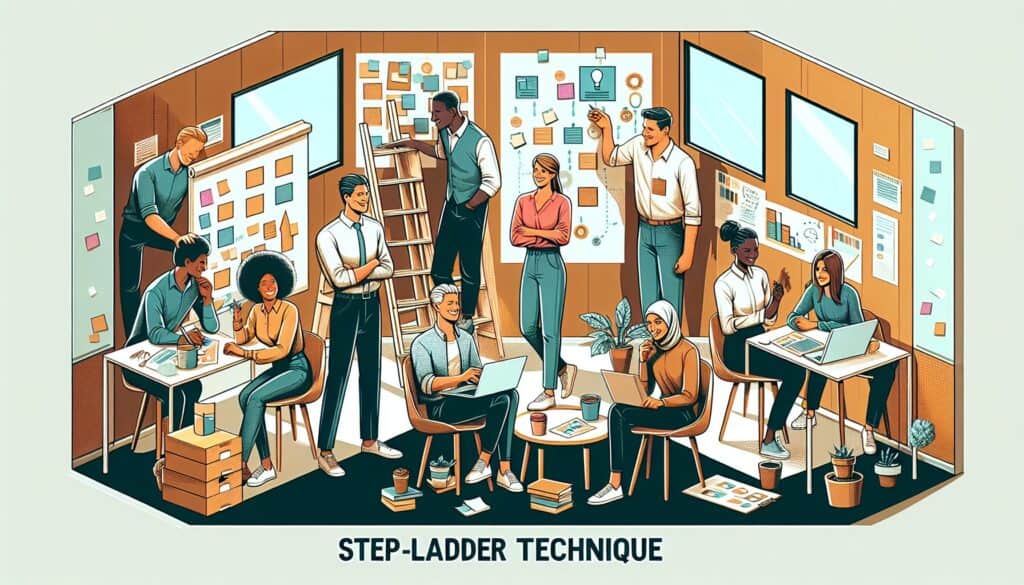
A structured group decision-making or brainstorming technique designed to ensure all members contribute their independent thoughts before being influenced by the group.

इसका उपयोग कैसे किया जाता है:

फायदे

नुकसान

श्रेणियाँ:

इसके लिए सबसे अच्छा:

The Step-Ladder Technique is highly applicable in various sectors such as technology, healthcare, and automotive design, where teams are often tasked with solving intricate problems that require diverse perspectives for effective solutions. This methodology is particularly useful during the ideation phase of a project when the team is brainstorming solutions for new products or improvements. Typically, the process begins with two core members sharing their thoughts on the problem at hand, creating a baseline of ideas that new team members can build upon when they present their contributions one by one. This approach can involve engineers, designers, product managers, or even stakeholders who might impact the final decision. Each new member’s contribution is discussed in the context of previous suggestions, avoiding premature convergence on a single idea and ensuring that each voice is heard. This method promotes independent thought and minimizes the risk of groupthink, which is often prevalent in collaborative environments, especially when a few dominant personalities may sway the discussion. As such, companies using this technique often report enhanced creativity and innovation due to the varied viewpoints being considered. In settings where high-stakes decisions are required, such as clinical environments or product safety assessments, the Step-Ladder Technique can ensure that all sides of an issue are deliberated and that the final decision is informed by a comprehensive understanding of the problem, leading to more robust outcomes that reflect a wider range of experiences and expertise.

इस पद्धति के प्रमुख चरण

  1. Two core members discuss the problem and generate initial ideas.
  2. Each additional member presents their ideas one at a time.
  3. After each new member presents, facilitate a discussion of all ideas shared so far.
  4. Encourage refinement and evaluation of ideas through further discussion.
  5. Continue this process until all members have contributed their ideas.
  6. Conclude the session with a comprehensive discussion incorporating all ideas shared.

प्रो टिप्स

  • Integrate role rotation within the group to enhance diverse viewpoints and counteract any single member's bias during discussions.
  • Utilize time-boxing for each member's idea presentation to maintain engagement and encourage concise expressions of thoughts.
  • Incorporate anonymous feedback mechanisms after discussions to assess satisfaction with solutions and further uncover any overlooked insights.

विभिन्न पद्धतियों को पढ़ने और उनकी तुलना करने के लिए, हम अनुशंसा करते हैं

> व्यापक कार्यप्रणाली भंडार  <
अन्य 400 से अधिक पद्धतियों के साथ।

इस कार्यप्रणाली पर आपकी टिप्पणियाँ या अतिरिक्त जानकारी का स्वागत है। नीचे टिप्पणी अनुभाग देखें ↓ , साथ ही इंजीनियरिंग से संबंधित कोई भी विचार या लिंक।

ऐतिहासिक संदर्भ

मार्केटिंग टीम एक आधुनिक कार्यालय में उत्पाद जीवन चक्र विस्तार की रणनीति बना रही है।

उत्पाद जीवन चक्र विस्तार रणनीतियाँ

कंपनियां सक्रिय रूप से एक उत्पाद के जीवन चक्र का प्रबंधन और विस्तार कर सकती हैं, विशेष रूप से परिपक्वता और गिरावट के चरणों के दौरान, इसकी लाभप्रदता को अधिकतम करने के लिए। सामान्य रणनीतियों में बाजार विकास (मौजूदा उत्पादों के लिए नए बाजार खोजना), बाजार पैठ (मौजूदा बाजारों में हिस्सेदारी बढ़ाना), उत्पाद विकास (नई सुविधाएँ या संस्करण पेश करना), और विविधीकरण (नए बाजारों के लिए नए उत्पाद विकसित करना) शामिल हैं। ये समय से पहले गिरावट को रोकते हैं। नोट: यह दृष्टिकोण ऐतिहासिक बिक्री-उन्मुख उत्पाद जीवन चक्र पर आधारित है। आधुनिक उत्पाद जीवन चक्र की हमारी परिभाषा देखें, जैसा कि इस साइट पर कई पोस्ट (विचार, विनिर्माण, रखरखाव, रीसाइक्लिंग, अपसाइक्लिंग सहित...) हैं।
आधुनिक कार्यालय में विपणन पेशेवर उत्पाद जीवन चक्र के चार चरणों का विश्लेषण कर रहे हैं।

उत्पाद जीवन चक्र के चार चरण (ऐतिहासिक संस्करण)

उत्पाद जीवन चक्र (PLC) मॉडल उन चरणों का वर्णन करता है जिनसे एक उत्पाद अपनी लॉन्चिंग से लेकर बाजार से वापसी तक गुजरता है। ये चार प्रमुख चरण हैं: परिचय (कम बिक्री, उच्च लागत), वृद्धि (तेजी से बढ़ती बिक्री और लाभ), परिपक्वता (उच्चतम बिक्री, घटते लाभ मार्जिन), और गिरावट (गिरती बिक्री और लाभ)। यह ढांचा रणनीतिक विपणन और प्रबंधन निर्णयों में मदद करता है। महत्वपूर्ण नोट: अधिक आधुनिक दृष्टिकोणों में, और कम बिक्री या विपणन उन्मुख, उत्पाद जीवन चक्र में इसके विनिर्माण, साथ ही इसके रीसाइक्लिंग चरण शामिल होने चाहिए। एक और भी अधिक पूर्ण दृष्टिकोण, जैसे कि हम innovation.world पर दृढ़ता से वकालत करते हैं, इसमें एक बाजार अध्ययन और एक विचार चरण भी शामिल होगा, और क्षेत्र के आधार पर, पोस्ट मार्केट निगरानी भी।
1942
1957
1957
1960
1960
1965
1970
1914
1950
1957
1957
1960
1960
1970
1980

(यदि तिथि अज्ञात है या प्रासंगिक नहीं है, उदाहरण के लिए "द्रव यांत्रिकी", तो इसके उल्लेखनीय उद्भव का एक अनुमानित आंकड़ा प्रदान किया गया है)

नवीनतम परिवर्धन

शीर्ष पोस्ट और लेख

शीर्ष मूल उपकरण

10वां वर्ष सालगिरह

पंजीकृत सदस्यों के लिए पूर्ण आकार की छवियाँ और डाउनलोड 100% निःशुल्क उपलब्ध हैं।