Due to their performance yet cheap price, plastic bottles are the highest volume of consumable plastic parts produced, which converts into the highest plastic pollution source on earth. View here the technology principles of plastic bottle manufacturing and the फ़ैक्टरी भ्रमण इनका जानबूझकर उपयोग करें या अपने अगले डिजाइन में विकल्प खोजें।
(इस पोस्ट के अंत में 2 फ़ैक्टरी टूर वीडियो हैं)
प्लास्टिक की बोतलों के निर्माण के चरण
1. पेट्रोलियम से पेलेट्स तक
अधिकांश प्लास्टिक निर्माण प्रक्रियाओं की तरह, प्लास्टिक की बोतलों के निर्माण की प्रक्रिया भी रिफाइनरी में प्लास्टिक पेलेट्स के निर्माण से शुरू होती है, जिन्हें आसानी से नापा और संभाला जा सकता है। ये पेलेट्स कच्चे माल (पेट्रोलियम, प्राकृतिक गैस आदि) को विभिन्न रसायनों और योजकों के साथ मिलाकर बनाए जाते हैं। पेलेट्स की सटीक विधि उपयोग किए जा रहे प्लास्टिक के प्रकार पर निर्भर करती है, प्लास्टिक की बोतलों के लिए सबसे आम प्लास्टिक पीईटी है।
PET = PolyEthylene Terephthalate
अधिक जानकारी के लिए पॉलीथीन टैरीपिथालेट विकिपीडिया पर उपलब्ध हैं।
यह प्रक्रिया फिलिंग साइट पर कभी नहीं की जाती, बल्कि पेट्रोलियम रूपांतरण के लिए समर्पित कारखानों में की जाती है।
2. पेलेट्स से प्रीफॉर्म तक
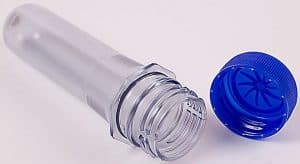
ब्लो मोल्डिंग तकनीक में, सबसे पहले पारंपरिक प्लास्टिक इंजेक्शन मशीनों द्वारा प्लास्टिक की एक खोखली नली बनाई जाती है। इस तथाकथित "प्रीफॉर्म" में पहले से ही स्क्रू और कॉलेट का अंतिम आकार होता है, जिनका उपयोग अगले चरण में भविष्य की बोतल को पकड़ने के लिए किया जाएगा। नली की लंबाई अगले ऑपरेशन को आसान बनाती है और सामग्री के नियमित विस्तार की अनुमति देती है।
क्योंकि बाद में कोई भी सामग्री नहीं हटाई जाती, इसलिए प्रीफॉर्म का वजन पहले से ही अंतिम खाली प्लास्टिक बोतल के वजन के बराबर होता है। इस बाजार की अत्यधिक मात्रा और प्रीफॉर्म के छोटे क्रॉस-सेक्शन के कारण, इंजेक्शन मोल्ड में बहुत अधिक कैविटी होती हैं, जिससे प्रत्येक प्रेस चक्र में कई प्रीफॉर्म तैयार होते हैं। मोल्ड में डाली जाने वाली सामग्री को छोड़कर, बहुत कम कच्चा माल बर्बाद होता है।
3. प्रीफॉर्म से लेकर प्लास्टिक की बोतलों तक
इस मोल्डिंग प्रक्रिया को कई तरीकों से किया जा सकता है, लेकिन सबसे आम विधि को "ब्लो मोल्डिंग" के नाम से जाना जाता है। पिछली प्रक्रिया में इंजेक्ट किए गए प्रीफॉर्म को फिर एक मोल्ड के ऊपर रखा जाता है और गर्म हवा के झोंके का उपयोग करके ट्यूब को मोल्ड के आकार में ढाला जाता है।
खाली प्लास्टिक की बोतलों की मात्रा और इस स्तर पर उनकी साफ स्थिति के कारण, यह चरण हमेशा अंतिम फिलिंग फैक्ट्री में किया जाता है।
4. भरना और अंतिम चरण
नवनिर्मित बोतलों को फिर अंतिम तरल से भरा जाता है, आमतौर पर प्लास्टिक के पेंचदार ढक्कन से सील किया जाता है, अलग से इंजेक्ट किया जाता है, आमतौर पर पॉलीएथिलीन (पीई) में, लेबल लगाया जाता है और चिह्नित किया जाता है:
- उत्पाद की जानकारी
- पता लगाने की क्षमता संबंधी जानकारी
- समाप्ति तिथि
और फिर उन्हें इकट्ठा करके उपभोक्ता लॉट और लॉजिस्टिक लॉट में पैक किया जाता है, अक्सर अतिरिक्त प्लास्टिक फिल्मों के साथ।
प्लास्टिक की बोतलों के कारखाने के भ्रमण
A फ़ैक्टरी का दौरा अत्यधिक मात्रा में बोतलें बनाने की तकनीक में निपुण, प्रसिद्ध जूस और सोडा ब्रांडों की तकनीकों का प्रतिनिधित्व करने वाली तकनीक।
और यह प्रस्तुति पहले वाली की तुलना में कहीं अधिक व्यावसायिक है, लेकिन पूरक भी है।
Note: while we agree on the “recyclable” term used in the video, it does not mean effectively पुनर्नवीनीकरण in the real life. The degradation of physical properties of recycled compounds, and likely also the costly collection effort required by disseminated trash versus low new material cost, lower the quantity of effectively recycled materials.
Ecological Alternative Approaches
Use fewer consumables
As our मूल्य विश्लेषण moto, follow the first rule:
Do not improve something you can suppress at the first place
- by not buying liquids that can be obtained without bottles at all. Example: tap water in countries with excellent local or national piping distribution systems.
- by using bottles made of reusable glass or reusable plastic. Some countries have a full bottle refilling circuit, usually with a deposit system. The bottles are produced in a similar way as shown above but have much thicker walls to withstand the additional logistic circuit and intense cleaning and disinfection before refilling and relabelling.
- go for the biggest bottle whenever possible. Not only does it contain the biggest quantity of liquid per quantity of plastic material, it also has only one cap compared to several small bottles, but it is way easier to collect as it disseminates less.
Use other Materials
Ask your plastic compounds supplier about bio-sourced plastic alternatives. More and more can be used in traditional injection machines with few parameter changes. Cost is higher but some markets are ready for this. More on these new bio-sourced materials in our पारिस्थितिक डिज़ाइन अनुभाग।
बख्शीश: mind when these raw materials are only used as a percentage, and when the principle is just to split the usual raw plastic material into pieces. Of course, the trash becomes less visible in the field, but in fact, it disseminates the plastics in tiny bits impossible to collect, with almost the same huge degradation time. Instead, look for materials where the core raw material degrades naturally and fast, typically made of starch or equivalent.
Or use no plastic at all, but glass or metals, or other materials. See our dedicated article on this.
Again, only to be used when single-use bottles can not be suppressed completely in the first place.
पूरक पठन सामग्री एवं विधियाँ
- पुनर्चक्रण Processes for Plastic Bottles: Explore how plastic bottles are collected, sorted, and reprocessed into new products.
- Innovations in Biodegradable Plastics: Discover advancements in creating eco-friendly alternatives to traditional plastic bottles.
- Regulations and Policies on Plastic Bottles: Understand the global and local regulations governing the use and disposal of plastic bottles.
- Alternative Packaging Solutions: Investigate other materials and designs being used to replace plastic bottles.
- Consumer Behavior and Plastic Usage: Study how consumer habits impact the demand for plastic bottles.
- Energy Consumption in Plastic Production: Assess the energy requirements and efficiency of producing plastic bottles.
- Chemical Composition of Plastics: Learn about the types of plastics used in bottle manufacturing and their chemical properties.
External Links on Plastic Bottles
अंतर्राष्ट्रीय मानक
- ISO 8317:2019 Plastic bottles – Child-resistant packaging – Requirements and testing
- ASTM D6400-19:2019 Standard Specification for Labeling of Plastics Designed to be Aerobically Composted in Municipal or Industrial Facilities
- ISO 11607-1:2019 Packaging for terminally sterilized medical devices – Part 1: Requirements for materials, sterile barrier systems and packaging systems
(सामग्री का हमारा विवरण देखने के लिए लिंक पर होवर करें)
प्रयुक्त शब्दों की शब्दावली
Positron Emission Tomography (PET): एक चिकित्सा इमेजिंग तकनीक जो पॉज़िट्रॉन विनाश द्वारा उत्सर्जित गामा किरणों का पता लगाती है, जिसका उपयोग ऊतकों में चयापचय प्रक्रियाओं को देखने के लिए किया जाता है, और अक्सर कैंसर, तंत्रिका संबंधी विकार और हृदय रोग जैसी स्थितियों का आकलन करने के लिए रेडियोट्रेसर का उपयोग किया जाता है।