Product Design, Manufacturing & Innovation Resources
بيت » قانون أفوجادرو

قانون أفوجادرو

1811
  • Amedeo Avogadro
Laboratory setup demonstrating Avogadro's Law in physical chemistry with gas measurements.

(صورة توضيحية فقط)

Avogadro’s law states that equal volumes of all gases, at the same temperature and ضغط, contain the same number of molecules. This establishes a direct proportionality between the volume of a gas and the amount of substance (number of moles). The mathematical relationship is expressed as [latex]V \propto n[/latex] or, more commonly, as [latex]V/n = k[/latex], where k is a constant.
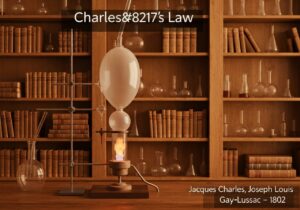
Avogadro’s law, originally a hypothesis, was a crucial step in understanding the nature of matter. It was proposed to reconcile John Dalton’s atomic theory with Joseph Louis Gay-Lussac’s law of combining volumes. Gay-Lussac had observed that the volumes of reacting gases and their products were in simple whole-number ratios. For example, two volumes of hydrogen gas react with one volume of oxygen gas to produce two volumes of water vapor.

Dalton’s theory could not explain this, as it assumed a simple 1:1 combination of atoms. Avogadro’s revolutionary insight was to propose that elementary gases were not single atoms but molecules containing two or more atoms (e.g., H₂, O₂, N₂). This distinction between atoms and molecules resolved the paradox. The reaction could now be written as [latex]2H_2 + O_2 rightarrow 2H_2O[/latex], which perfectly matched the observed 2:1:2 volume ratio.

Despite its elegance, Avogadro’s hypothesis was largely ignored for nearly 50 years. Leading chemists of the era, including Dalton and Jöns Jacob Berzelius, rejected the idea that atoms of the same element could bond together. The law’s profound importance was only recognized after Stanislao Cannizzaro championed it at the Karlsruhe Congress in 1860. He demonstrated that accepting Avogadro’s law allowed for the creation of a consistent and logical system of atomic weights, unifying chemistry and laying the groundwork for the periodic table.

UNESCO Nomenclature: 2209
– Physical chemistry

يكتب

نظام مجرد

خلل

أساسيات

الاستخدام

استخدام واسع النطاق

مقدمات

  • john dalton’s atomic theory (1803)
  • joseph louis gay-lussac’s law of combining volumes (1808)

التطبيقات

  • الحسابات المتكافئة في التفاعلات الكيميائية التي تتضمن الغازات
  • تحديد الصيغ الجزيئية والكتل المولية
  • foundation for the قانون الغاز المثالي
  • حسابات كثافة الغاز

براءات الاختراع:

NA

أفكار ابتكارية محتملة

  • أنظمة مراقبة تفاعلات الغاز في الوقت الفعلي للتركيب الصناعي
  • أجهزة استشعار الغاز على نطاق صغير تعتمد على التغيرات في الحجم في تجاويف النانو
  • نماذج مناخية متقدمة تتضمن تفاعلات دقيقة بين الغاز والهباء الجوي
  • controlled drug delivery systems using gas-generating nanoparticles
  • تقنيات جديدة لحفظ الطعام باستخدام خلطات غازية دقيقة
  • خلايا الوقود عالية الكفاءة تعمل على تحسين نسب المواد المتفاعلة بالغاز
  • أنظمة آلية لمعايرة الأدوات التحليلية باستخدام معايير الغاز
  • هياكل الطوارئ ذاتية التضخم الناتجة عن توليد الغاز الكيميائي
  • برنامج تعليمي لتصور السلوك الجزيئي في الغازات
  • تركيب الغازات النادرة حسب الطلب للإضاءة المتخصصة
Related to: avogadro’s law, gas laws, ideal gas, stoichiometry, amedeo avogadro, molar volume, mole concept, physical chemistry, gas volume, number of molecules.

السياق التاريخي

قانون أفوجادرو

1801
1802
1808
1811
1816-11-16
1820
1820
1800
1802
1802
1810
1816
1816-11-16
1820
1820

(إذا كان التاريخ غير معروف أو غير ذي صلة، على سبيل المثال "ميكانيكا الموائع"، يتم توفير تقدير تقريبي لظهوره الملحوظ)

أحدث الإضافات

أهم المنشورات والمقالات

أفضل الأدوات الأصلية

السنة العاشرة عيد

الصور والتنزيلات بالحجم الكامل متاحة فقط، ومجانية تمامًا، للأعضاء المسجلين.