Product Design, Manufacturing & Innovation Resources
بيت » النظرية الذرية الحديثة

النظرية الذرية الحديثة

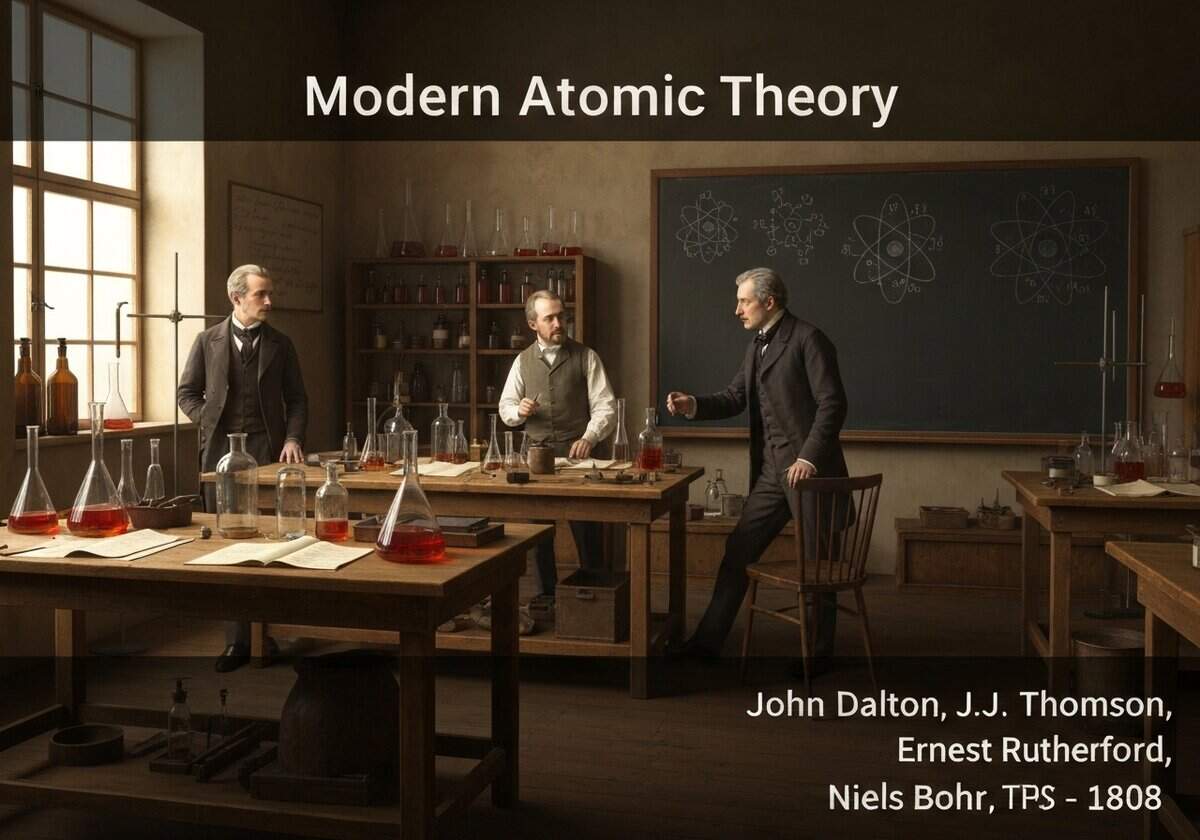
1808
  • John Dalton
  • J.J. Thomson
  • Ernest Rutherford
  • Niels Bohr
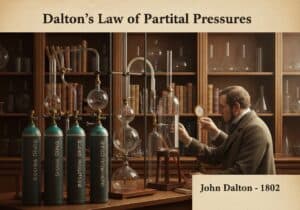
مختبر يعود للقرن التاسع عشر يدرس فيه العلماء التركيب الذري والتفاعلات الكيميائية.

(صورة تم إنشاؤها للتوضيح فقط)

تفترض النظرية الذرية أن المادة كلها تتكون من وحدات منفصلة تُسمى الذرات. يتكون العنصر من ذرات تحتوي نواتها على عدد محدد من البروتونات. وبينما كانت الذرات تُعتبر غير قابلة للتجزئة، يُعرف الآن أنها تتكون من جسيمات دون ذرية: بروتونات ونيوترونات وإلكترونات. تتضمن التفاعلات الكيميائية إعادة ترتيب هذه الذرات، والتي تُحفظ أثناء العملية.

The modern understanding of the atom is the result of a series of revolutionary discoveries that refined initial concepts. John Dalton’s early 19th-century theory provided the first scientific framework, postulating that elements were made of identical, indivisible atoms and that compounds were combinations of these atoms in fixed ratios. This explained the laws of mass conservation and definite proportions. However, the discovery of the electron by J.J. Thomson in 1897 proved that atoms were divisible. He proposed the ‘plum pudding’ model, with electrons embedded in a sphere of positive charge.

This model was overturned by Ernest Rutherford’s gold foil experiment in 1909. By firing alpha particles at a thin gold foil, he observed that while most passed through, a few were deflected at large angles. This implied a small, dense, positively charged nucleus, leading to his planetary model of the atom with electrons orbiting the nucleus. Niels Bohr refined this in 1913 by incorporating quantum ideas, proposing that electrons exist in specific, quantized energy levels or orbits. This model successfully explained the emission spectra of hydrogen. The final major evolution was the development of quantum mechanics in the 1920s by Schrödinger, Heisenberg, and others. In the current quantum mechanical model, electrons do not have fixed orbits but exist in probability distributions called orbitals, described by wavefunctions. This sophisticated model is the foundation for understanding chemical bonding, reactivity, and the properties of all matter.

UNESCO Nomenclature: 2201
الفيزياء الذرية والجزيئية

يكتب

النظام التجريدي

الاضطراب

ثوري

الاستخدام

الاستخدام الواسع النطاق

السلائف

  • المفهوم اليوناني القديم لـ "الذرة" (ديمقريطس، ليوكيبوس)
  • قانون حفظ الكتلة (لافوازييه)
  • قانون النسب الثابتة (جوزيف بروست)
  • قانون النسب المتعددة (جون دالتون)

التطبيقات

  • تطوير الجدول الدوري
  • فهم الروابط الكيميائية والبنية الجزيئية
  • الطاقة النووية والأسلحة
  • تكنولوجيا النانو
  • تكنولوجيا أشباه الموصلات والإلكترونيات
  • التحليل الطيفي للمواد

براءات الاختراع:

NA

أفكار ابتكارات محتملة

بسبب عمليات جمع البيانات من خلال برامج الروبوت، والتي تتجاوز حاليًا 40 ألفًا يوميًا، فإن هذا المحتوى مخصص لأعضاء المجتمع فقط.
> تسجيل الدخول < أو > سجل < (مجاني 100٪) للوصول إلى هذا، وكذلك جميع المحتويات والأدوات الأخرى المقيدة.

متعلق بـ: الذرة، النظرية الذرية، جون دالتون، النواة، البروتون، النيوترون، الإلكترون، ميكانيكا الكم، الجسيمات دون الذرية، العنصر الكيميائي.

السياق التاريخي

النظرية الذرية الحديثة

1800
1801
1802
1808
1811
1816-11-16
1820
1800
1800
1802
1802
1810
1816
1816-11-16
1820

(إذا كان التاريخ غير معروف أو غير ذي صلة، على سبيل المثال "ميكانيكا الموائع"، يتم توفير تقدير تقريبي لظهوره الملحوظ)

الاختراع والابتكار والمبادئ التقنية ذات الصلة

الصور بالحجم الكامل والتنزيلات متاحة فقط 100% مجاناً للأعضاء المسجلين.