Product Design, Manufacturing & Innovation Resources
بيت » Cytotoxicity

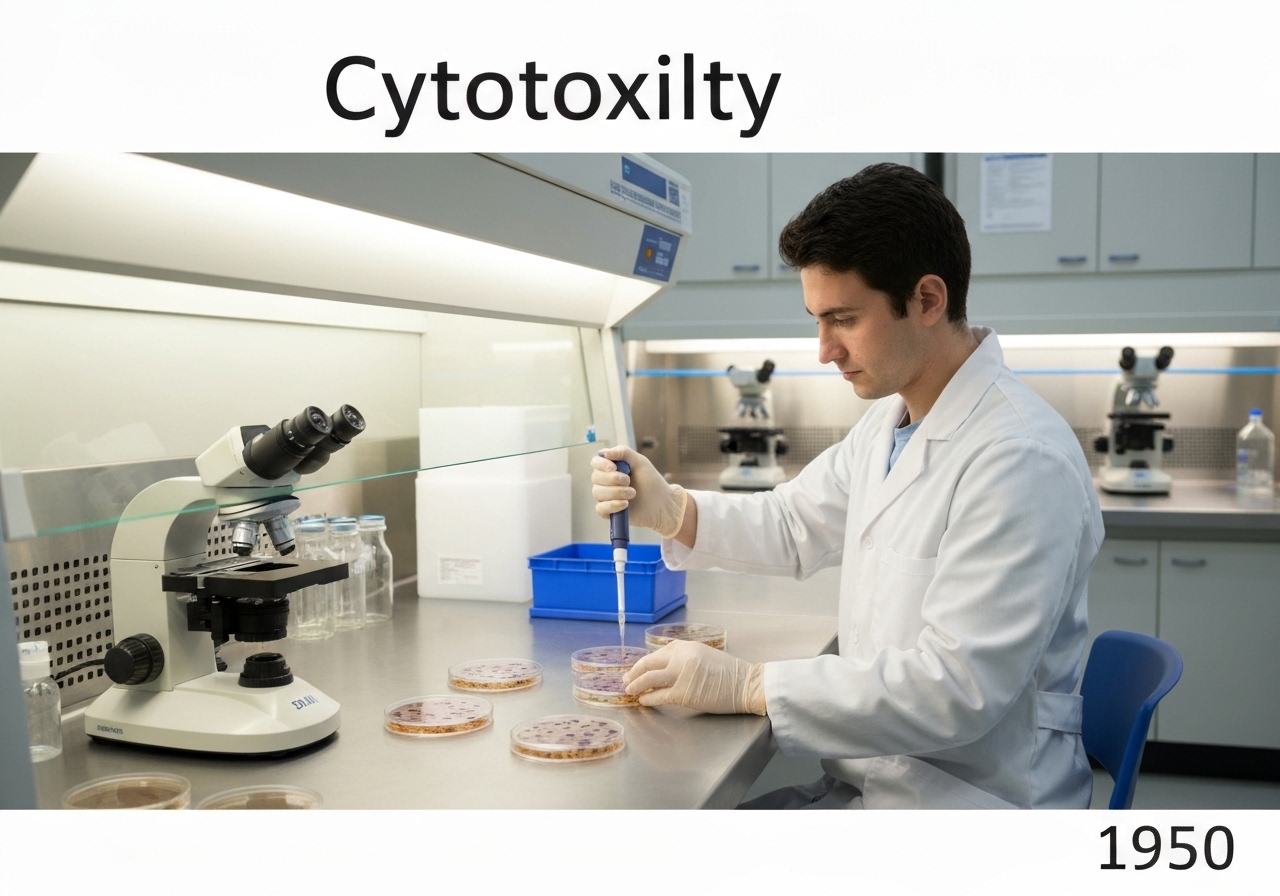
Cytotoxicity

1950
Laboratory cytotoxicity assay with cell cultures and cytotoxic agents in cell biology research.

(صورة توضيحية فقط)

Cytotoxicity is the quality of a substance or cell being toxic to other cells. Cytotoxic agents can induce cell death through necrosis, where the cell membrane loses integrity leading to lysis and inflammation, or apoptosis, a controlled, programmed cell death process. This is distinct from cytostatic agents, which only inhibit cell division without directly causing cell death.
Cytotoxicity is a fundamental concept in toxicology, pharmacology, and immunology. It describes the ability of certain chemical compounds, physical agents, or biological cells to damage or kill other cells. The outcome of a cytotoxic event depends on the agent, its concentration, and the target cell type. The two primary pathways of cell death are necrosis and apoptosis.

Necrosis is a traumatic form of cell death resulting from acute cellular injury. It involves the swelling of the cell and its organelles, loss of membrane integrity, and the uncontrolled release of intracellular contents into the surrounding environment. This release triggers an inflammatory response, which can cause further damage to neighboring tissues. In contrast, apoptosis is a highly regulated and programmed process. It is characterized by cell shrinkage, chromatin condensation, nuclear fragmentation, and the formation of apoptotic bodies, which are then phagocytosed by other cells without inducing inflammation. Many modern cancer therapies are designed to specifically induce apoptosis in tumor cells while sparing healthy ones.

Understanding the distinction between cytotoxic and cytostatic effects is crucial in drug development. A cytotoxic drug kills cancer cells, while a cytostatic drug prevents them from proliferating. Both can be effective, but their mechanisms and potential side effects differ significantly.

UNESCO Nomenclature: 2406
– Biology of the cell

يكتب

Biological Concept

خلل

أساسيات

الاستخدام

استخدام واسع النطاق

مقدمات

  • discovery of cells by robert hooke (1665)
  • cell theory by schleiden and schwann (1839)
  • development of cell culture techniques (early 20th century)
  • discovery of chemical warfare agents and their effects on tissues (wwi)
  • early work on chemotherapy by paul ehrlich (early 1900s)

التطبيقات

  • cancer chemotherapy
  • drug safety screening
  • immunotherapy development
  • pesticide and herbicide formulation
  • environmental toxicology studies

براءات الاختراع:

NA

أفكار ابتكارية محتملة

  • AI-powered prediction of drug cytotoxicity from molecular structure
  • high-throughput organ-on-a-chip systems for personalized cytotoxicity screening
  • nanoparticles designed to deliver cytotoxic agents specifically to cancer cells
  • gene therapies that introduce cytotoxic genes into tumor cells
  • biosensors for real-time monitoring of environmental cytotoxicity
  • development of cytostatic agents that target specific cell cycle checkpoints in pathogens
  • crispr-based screens to identify genes that confer resistance or sensitivity to cytotoxic drugs
  • probiotic formulations that produce cytotoxic compounds against gut pathogens
  • smart biomaterials that release cytotoxic agents in response to disease markers
  • cytotoxicity-based assays for detecting food and water contaminants
Related to: cytotoxicity, cell death, apoptosis, necrosis, toxicology, pharmacology, cytostatic, cell viability, chemotherapy, cell lysis.

السياق التاريخي

Cytotoxicity

1930
1930
1940
1950
1951
1958
1960
1928
1930
1940
1950
1950
1954
1960
1967

(إذا كان التاريخ غير معروف أو غير ذي صلة، على سبيل المثال "ميكانيكا الموائع"، يتم توفير تقدير تقريبي لظهوره الملحوظ)

أحدث الإضافات

أهم المنشورات والمقالات

أفضل الأدوات الأصلية

السنة العاشرة عيد

الصور والتنزيلات بالحجم الكامل متاحة فقط، ومجانية تمامًا، للأعضاء المسجلين.