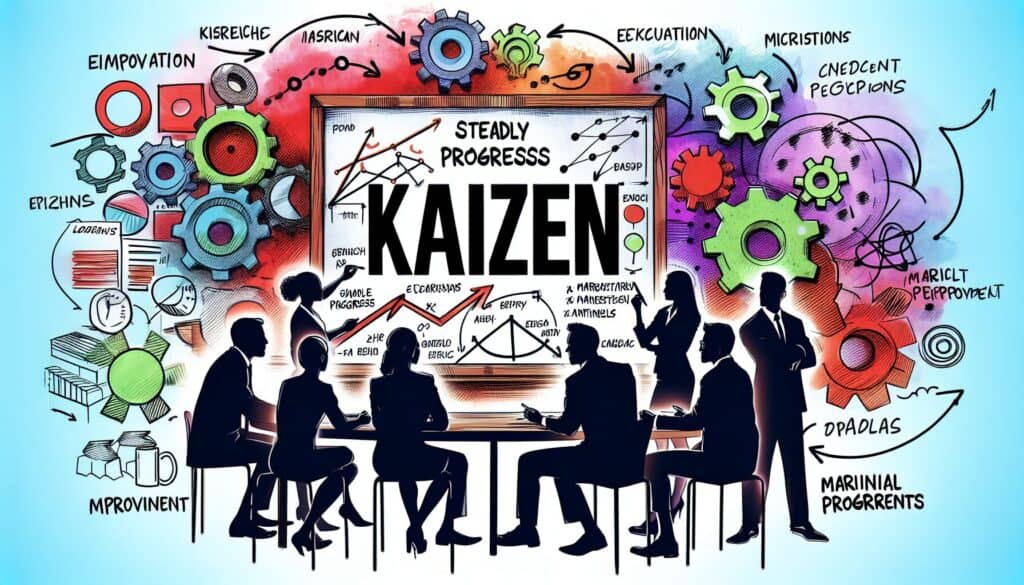
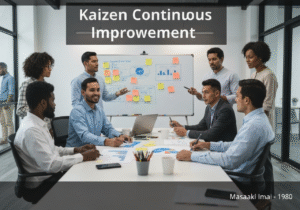
Involves regular, small-scale improvement activities (e.g., Kaizen events or Blitzes, suggestion systems) where teams identify waste or inefficiencies, brainstorm solutions, implement changes, and standardize successful improvements. Focuses on PDCA cycles.
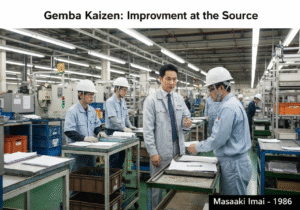
Kaizen is frequently applied across various industries including manufacturing, healthcare, and service sectors, where continuous improvement can significantly enhance operational effectiveness. During the development phase of a product, teams can initiate Kaizen events or Blitzes, bringing together cross-functional groups to identify specific areas of waste or inefficiency within processes. For instance, in a manufacturing setting, Kaizen might focus on optimizing assembly line procedures through small adjustments that minimize downtime or eliminate redundant steps. Healthcare facilities often employ Kaizen to improve patient flow and resource allocation, allowing staff to devise solutions that enhance care delivery without necessitating substantial budget increases. Participating team members may include engineers, quality control experts, frontline staff, and management, all of whom contribute their unique perspectives and expertise to the problem-solving process. The use of PDCA (Plan-Do-Check-Act) cycles enables teams to systematically implement improvements, monitor the impact, and standardize successful changes. These methodologies can lead to a culture where employees feel empowered to suggest ongoing refinements, ultimately engendering a sense of ownership and commitment to achieving excellence within the organization. As improvements accumulate over time, the results can transform operational capabilities, increase customer satisfaction, and promote a sustainable environment where continuous learning becomes integral to the organization’s ethos.