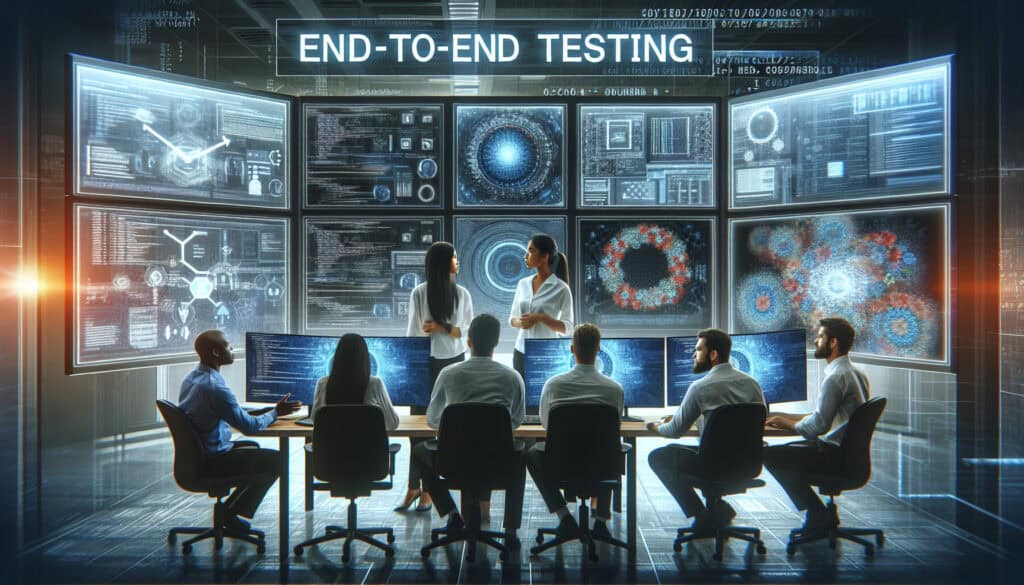
End-to-End Testing is widely adopted across various industries such as finance, healthcare, e-commerce, and telecommunications, where robust applications integrating multiple components are commonly developed. This methodology plays a pivotal role during the testing phase of product development, particularly after integration testing, as it comprehensively verifies the interplay among components under conditions akin to real-world usage. In practice, this testing approach often involves collaboration among stakeholders, including project managers, quality assurance teams, developers, and end-users, thus ensuring diverse perspectives are considered. For instance, in an e-commerce platform, End-to-End Testing would verify interactions such as product searches, user authentication, payment processing, and order fulfillment, ensuring that each step in the user journey functions seamlessly. This comprehensive validation can identify issues related to data flow and system interactions that may not be captured in isolated unit tests, thereby enhancing reliability and user satisfaction before a product launch. Such testing can also be integrated into continuous deployment pipelines, allowing for automated checks that assure successful operation following updates or code changes. With global teams often involved, considering different user scenarios from various geographies can add another layer of robustness to the testing process. Prioritization of End-to-End Testing is critical, especially when significant features or third-party services are added, to mitigate potential user experience pitfalls upon release.
该方法的关键步骤
专业提示
阅读和比较几种方法、 我们建议
> 广泛的方法论资料库 <
以及其他 400 多种方法。
欢迎您就此方法发表评论或提供更多信息,请登录 下面的评论区 ↓ ,因此任何与工程相关的想法或链接都是如此。