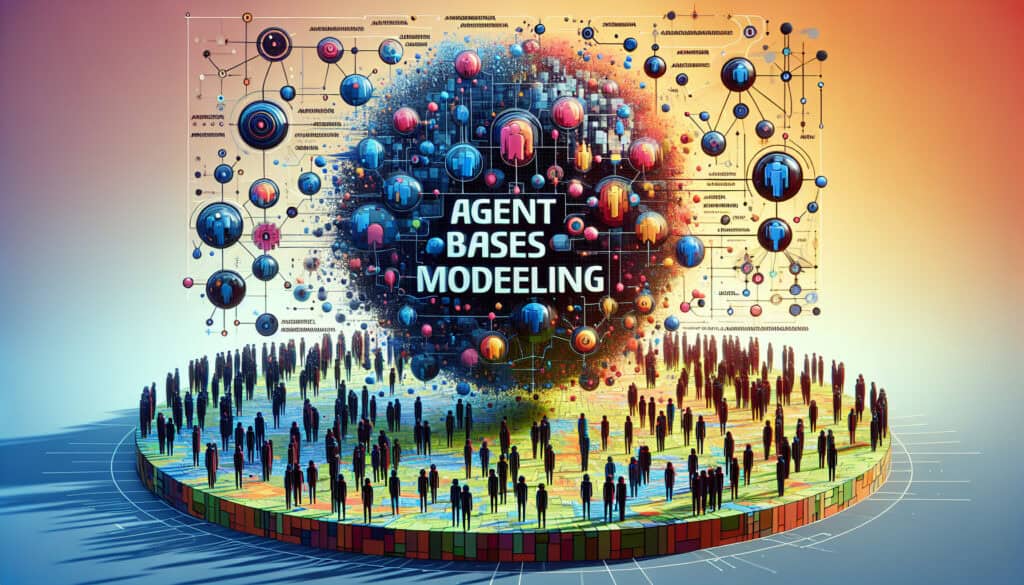
Agent-Based Modeling (ABM) serves as a powerful tool across various fields, including environmental science, economics, sociology, and engineering, where it can effectively simulate and analyze the behavior of individual agents, such as consumers, animals, or even products, within a system. In environmental science, for example, ABM can model the interactions between different species and their habitat, providing insights into ecosystem dynamics and aiding in conservation efforts. In the realm of economics, researchers use ABM to simulate market behaviors, allowing for the examination of how economic agents react to changes in policy or market conditions, which can inform government decisions on regulations and intervention strategies. The methodology is also applicable in urban planning, where it can simulate the movement and behavior of residents within a city to optimize infrastructure development. During different phases of a project lifecycle, ABM can be integrated at the design and testing stages, allowing stakeholders, including engineers, designers, and researchers, to visualize potential outcomes and refine product features accordingly. By involving cross-disciplinary teams, including domain experts, data scientists, and end-users, ABM can facilitate collaborative problem solving, leading to more effective and user-centered designs. This methodology’s adaptability enables it to be tailored to specific research questions and contexts, making it suitable for use in pilot studies or large-scale implementations, depending on the project’s goals and resource availability.
该方法的关键步骤
专业提示
阅读和比较几种方法、 我们建议
> 广泛的方法论资料库 <
以及其他 400 多种方法。
欢迎您就此方法发表评论或提供更多信息,请登录 下面的评论区 ↓ ,因此任何与工程相关的想法或链接都是如此。