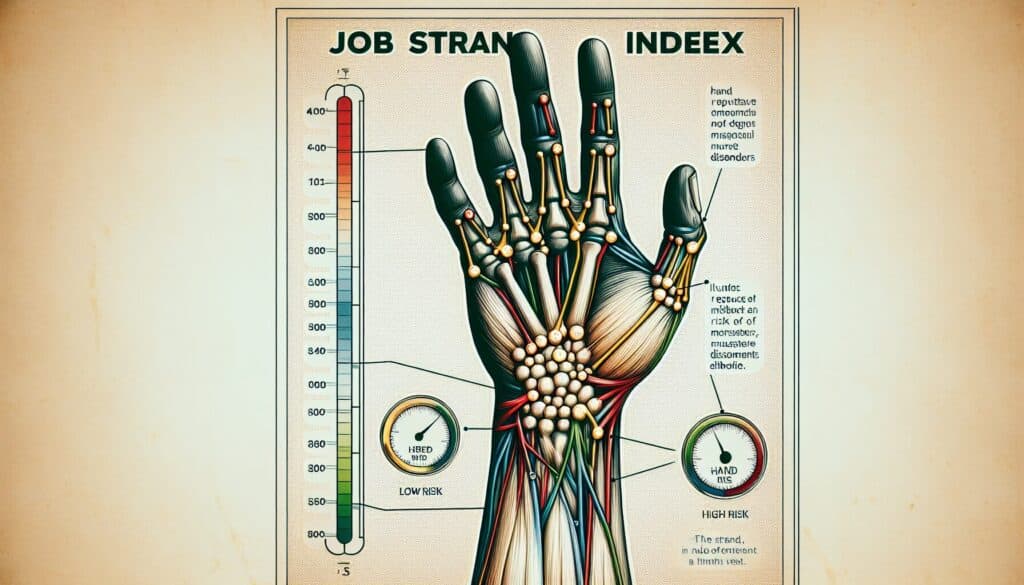
工作压力指数 (JSI) 在涉及体力劳动的行业,例如制造业、建筑业、医疗保健和仓储业,尤为重要,因为这些行业的工人容易患上肌肉骨骼疾病。该方法最有效地应用于工作场所设计的工效学评估阶段,或在评估现有工作任务时,以识别与特定工作活动相关的风险。它通常由职业健康与安全专业人员、工效学家或人因专家发起,并经常与工人、主管和管理层合作,以确保全面了解工作需求和工作环境。该过程包括对工人工作任务的观察研究和数据收集,从而使不同的利益相关者参与到评估过程中,包括希望改进工作的工程师。 工作站 designs and occupational therapists assessing the impact of job requirements on individual health. The JSI score serves as a quantifiable measure that can drive interventions, such as redesigning tasks to minimize risk factors, implementing job rotation strategies, or offering training to modify manual handling techniques. Its user-friendly nature allows for quick on-site evaluations, making it a practical tool during safety audits or in the development of workplace initiatives that aim to enhance worker well-being while maintaining productivity standards. By providing a clear numerical 风险评估, JSI aids in prioritizing actions needed for improvement, offering a straightforward approach to risk management in operational settings.