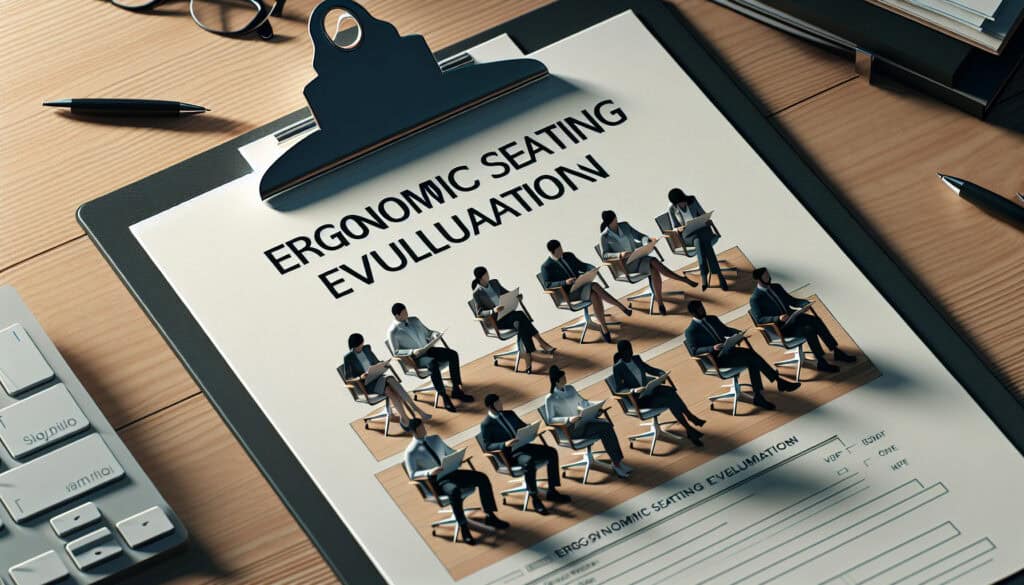
The Ergonomic Seating Evaluation Form is applicable across various sectors such as office environments, healthcare settings, educational institutions, and manufacturing facilities, where seating arrangements significantly influence user comfort and health. Common application phases include the selection and procurement processes, where HR teams or workplace safety committees 从事 in assessing potential chairs prior to bulk purchasing. Involving cross-disciplinary stakeholders, including ergonomics specialists, occupational health professionals, and end-users, in the evaluation can enrich the assessment and yield better recommendations tailored to specific user needs. The checklist typically covers aspects like seat height adjustment, lumbar support, material breathability, armrest positioning, and stability during use. Those who initiate the evaluation generally include office managers, facilities coordinators, or personnel directly involved in enhancing work environment ergonomics, with participants typically including employees who will use the chairs. This methodology not only facilitates informed choices that may enhance productivity but also contributes to mitigating workplace injuries by emphasizing posture-forming features in the selected chairs. Objective assessment aids in determining compliance with ergonomic standards and guides collective discussions in team meetings about the most suitable seating options that foster a comfortable and supportive work atmosphere.
该方法的关键步骤
评估座椅高度、靠背角度和扶手位置的可调节性选项。
评估座椅和靠背的缓冲性能,包括舒适性和压力分布。
检查腰部支撑功能及其对脊柱对齐的调节性。
检查所用材料的透气性和耐用性。
测量活动范围,以评估灵活性和易用性。
测试稳定性及底座设计,确保使用安全。
分析设计是否便于清洁和维护。
考虑美学与工作场所环境的融合。
收集用户反馈,以了解实际使用中的舒适性和功能性。
将研究结果与人体工程学指南和标准进行比较。
专业提示
将姿势指标和人体工程学数据纳入考量,以改进座椅评估流程,确保人体工程学标准与生产力目标保持一致。
Evaluate the materials used in the chair’s construction, considering breathability and durability to optimize user experience and chair 寿命.