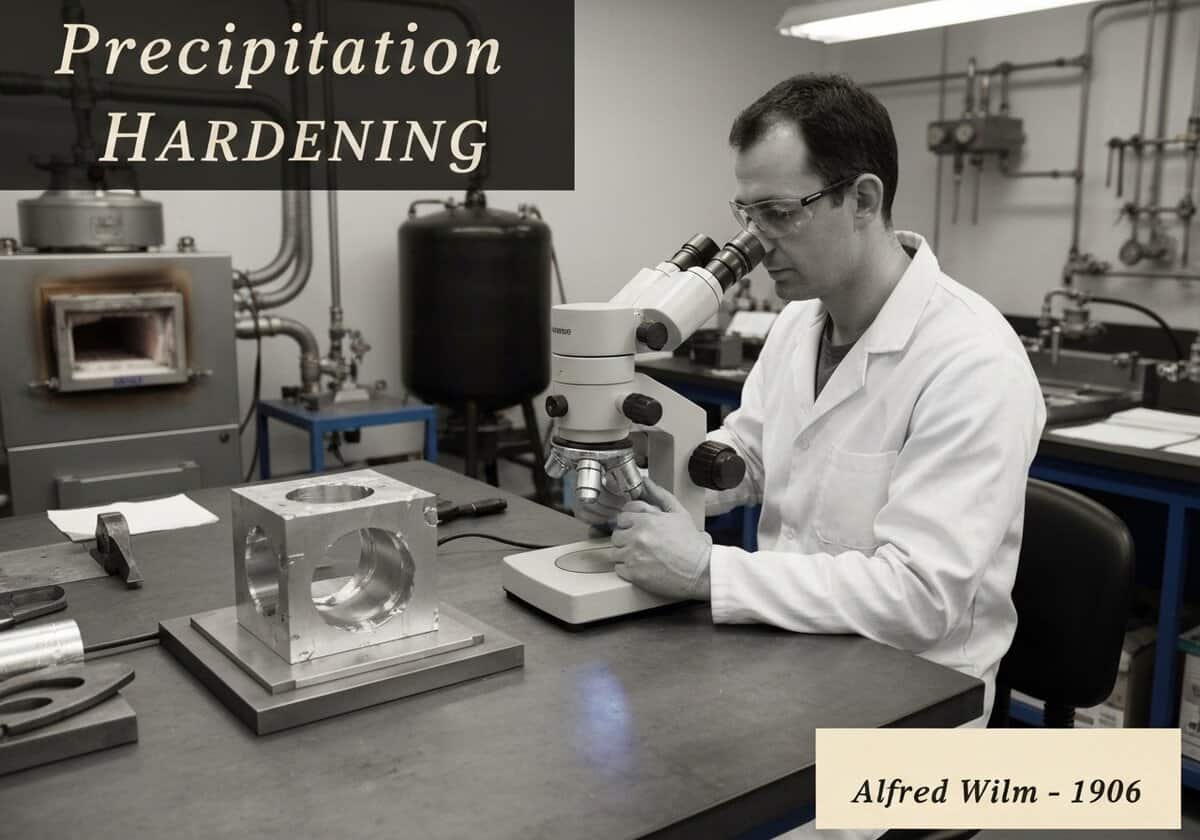
These precipitates act as powerful obstacles to the movement of dislocations, which are the primary carriers of plastic deformation in crystalline materials. The effectiveness of the strengthening depends on the size, shape, and distribution of these precipitates. Initially, as precipitates form and grow, the strength increases. However, if the aging process continues for too long (over-aging), the precipitates become too large and lose coherency with the matrix, allowing dislocations to bypass them more easily, which leads to a decrease in strength. This process allows for the precise tailoring of an alloy’s mechanical properties.