Product Design, Manufacturing & Innovation Resources
» 立方体卫星

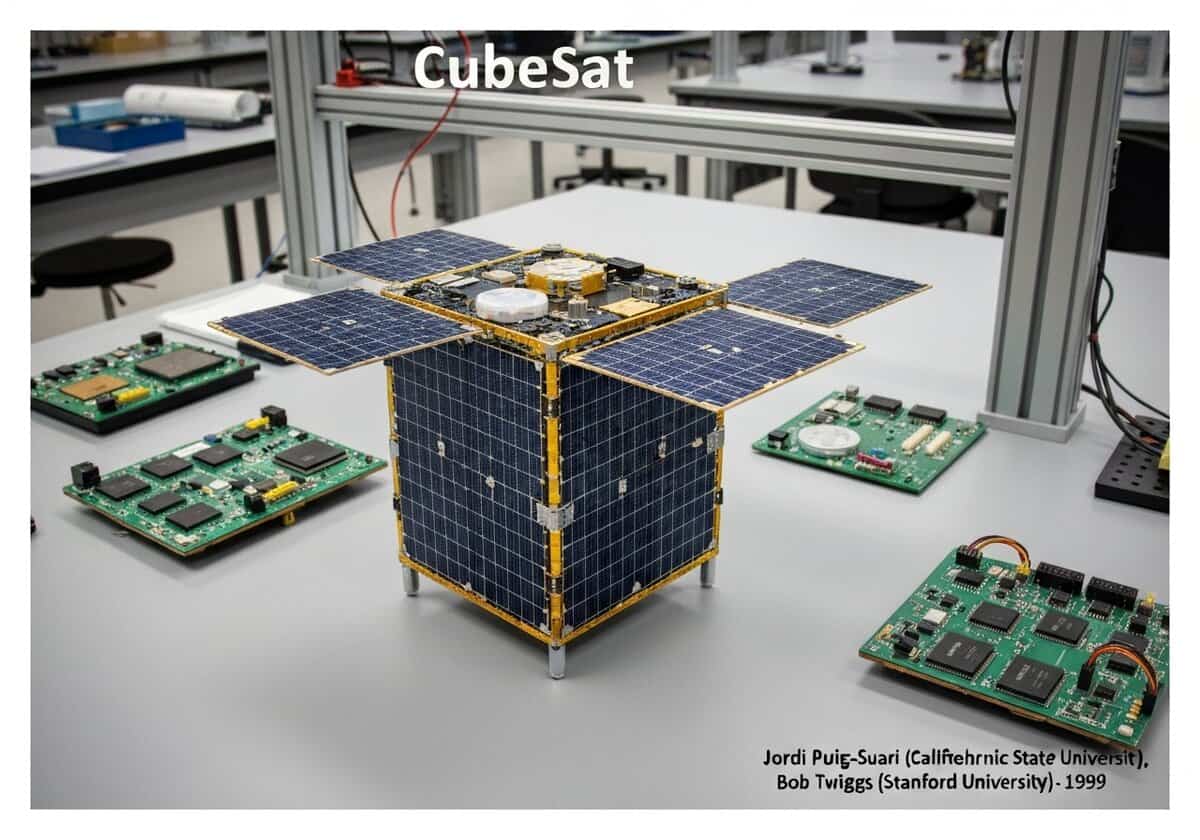
立方体卫星

1999
  • Jordi Puig-Suari (California Polytechnic State University)
  • Bob Twiggs (Stanford University)
在航空航天工程实验室设计立方体超小型卫星。.

(图片仅供参考)

一类纳米卫星的规格,采用10×10×10厘米的标准单元尺寸(称为1U),质量最大可达2千克。立方体卫星的尺寸可扩展至1.5U、2U、3U、6U或12U+。这种标准化极大地降低了太空任务的准入门槛,实现了发射装置的共享和现成组件的市场化。

立方体卫星标准于1999年提出,旨在为研究生提供卫星设计、建造、测试和运行方面的实践经验,作为一种教学工具。其核心创新不仅在于尺寸小巧,更在于外形尺寸及其与运载火箭接口的标准化。这一目标的实现得益于多皮卫星轨道部署器(P-POD),这是一种箱形装置,可在发射过程中牢固地固定立方体卫星,并利用弹簧系统将其释放到轨道上。

By standardizing the external dimensions and providing a simple, reliable deployment method, the CubeSat specification decoupled the satellite’s design from the specifics of the launch vehicle. This allowed launch providers to treat CubeSats as a uniform type of secondary payload, simplifying integration and safety reviews. This predictability fueled the creation of a vibrant ecosystem of commercial-off-the-shelf (COTS) components. Companies began mass-producing CubeSat-compatible subsystems like power systems, on-board computers, radios, and attitude control systems. This COTS market drastically reduced the cost and development time for new missions, transforming the CubeSat from a purely educational tool into a viable platform for commercial ventures, government science, and even interplanetary exploration.


UNESCO Nomenclature: 3302
航空航天工程

类型

设计标准

中断

革命

用法

广泛使用

前体

  • 斯坦福大学空间系统开发实验室早期的皮卫星项目
  • 研究生教育需要一个标准化、低成本的平台
  • 商用现成电子产品的进步
  • 开发用于二级有效载荷(例如 ASAP 环)的标准化运载火箭适配器

应用程序

  • 大学主导的空间科学任务
  • 商业地球观测星座(例如,行星实验室)
  • 在轨技术演示,用于展示新型硬件和软件
  • 行星际任务(例如,马可波罗-A 和马可波罗-B)
  • 业余无线电通信卫星

专利:

NA

潜在创新理念

由于机器人流量被拦截(目前每天超过 4 万),此内容仅限社区成员查看。
> 登录 > 或者 > 注册 < (100% 免费)即可访问此内容,以及所有其他受限内容和工具。

相关术语:立方体卫星、纳米卫星、卫星标准、1U、p-pod、Bob Twiggs、Jordi Puig-Suari、新空间、cot、标准化设计。

历史背景

立方体卫星

1993-07-22
1996
1998
1999
2000
2000
2000
1993
1994
1997
1998
1999-05-01
2000
2000
2000

(如果日期未知或不相关,例如“流体力学”,则提供其显著出现的近似估计)

相关发明、创新和技术原理

只有注册会员才能免费获得 100% 的全尺寸图片和下载。.

> 登录 <