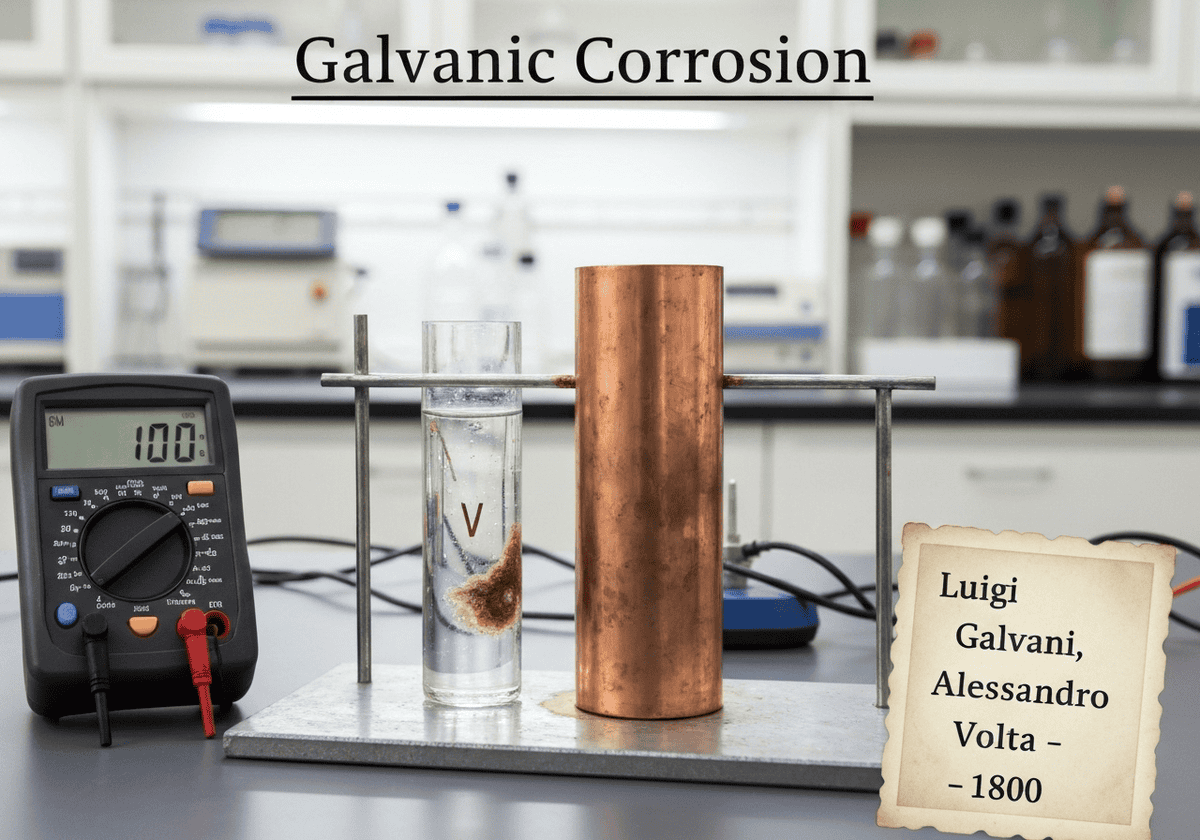
The rate of galvanic corrosion is influenced by several factors, including the potential difference between the metals (a larger difference leads to faster corrosion), the ratio of the cathode-to-anode surface area (a large cathode and small anode is the worst-case scenario, leading to rapid localized corrosion of the anode), and the conductivity of the electrolyte. The Galvanic Series, which ranks metals and alloys by their electrochemical potential in a specific electrolyte (commonly seawater), is a critical tool for engineers to predict and prevent this type of corrosion by selecting compatible materials.