Product Design, Manufacturing & Innovation Resources
» 제품 디자인 » 방법론 » 재료 식별 기술 - 양성 재료 식별(PMI)

재료 식별 기술 - 양성 재료 식별(PMI)

Materials Identification Techniques and Positive Material Identification (PMI)

제조업, 석유 및 가스, 항공우주 산업과 같이 빠르게 발전하는 분야에서는 안전과 규정 준수를 보장하기 위해 재료 식별(Positive Material Identification, PMI)을 이해하는 것이 매우 중요합니다. 연구에 따르면 모든 제조 결함의 약 20%가 부적절한 재료 사용에서 비롯되며, 이는 신뢰할 수 있는 식별 기술의 필요성을 강조합니다(출처: 미국 국립보건원). 표준 (및 기술). 이 글에서는 X선 형광 분석(XRF), 광 방출 분광법(OES), 레이저 유도 파괴 분광법(LIBS)을 포함한 다양한 일반적인 PMI 기법을 분석하고, PMI 과정에서 비파괴 검사(NDT)의 중요성을 강조합니다. 

핵심 요약
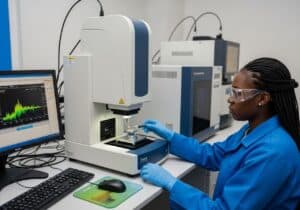
Positive material identification
정확한 물질 식별은 물질의 무결성을 향상시킵니다. 제품 디자인 그리고 공학.
  • 양성 재료 식별(Positive Material Identification)은 재료의 무결성을 보장합니다.
  • XRF, OES 및 LIBS는 효율적인 PMI 분석 방법입니다.
  • 비파괴 검사는 재료의 손상되지 않은 상태를 유지합니다.
  • 품질 보증은 신뢰성과 안전성을 향상시킵니다.
  • 표준을 준수하면 규제 위험을 완화할 수 있습니다.
  • 재료의 특성은 산업 분야 및 적용 분야에 따라 다양합니다.

PMI의 실무를 통한 품질 관리는 규제 준수를 충족하고 다양한 산업 분야에 적용되는 재료 특성을 평가하는 데 중점을 둡니다. 전문가들은 이를 통해 제품의 높은 품질 기준을 유지하는 데 필수적인 귀중한 통찰력을 얻게 됩니다.

일반적인 PMI 기법
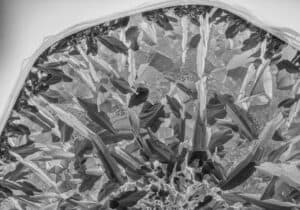
Crystal structure
혁신적인 소재 설계를 위해 원료 금속의 내부 결정 구조를 분석합니다.

양성 재료 식별(PMI) 기술은 제조 공정 전, 도중, 후에 재료를 정확하게 식별하는 것을 보장합니다. 이러한 방법론은 첨단 기술을 활용하여 원소 구성을 검증함으로써 중요 응용 분야에서 재료 혼동과 같은 문제를 방지합니다. 분광학 또는 X선 기술을 활용하면 산업계는 합금의 차이를 높은 특이도로 감지할 수 있습니다. 항공우주 분야의 한 연구에 따르면 부품 고장의 60%가 재료 오식별에서 비롯된 것으로 나타났습니다.

널리 사용되는 PMI 방법 중 일부는 다음과 같습니다.
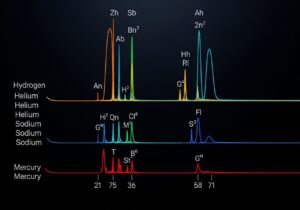
Optical emission spectroscopy
제품 혁신을 위한 광학 방출 분광법을 이용한 재료 분석.
  • X선 형광 분석(XRF): XRF(X선 형광 분석법)는 재료의 원소 조성을 효율적으로 분석할 수 있어 널리 활용되고 있습니다. 이 분석법은 시료에 X선을 조사하여 원자를 여기시키고 형광 X선을 방출하게 하는 원리로 작동합니다. 방출된 X선을 분석하여 원소 조성을 확인합니다. XRF는 특히 신속한 결과 도출이 가능하여 실시간 분석이 용이하며, 합금 종류를 구분하는 것이 경제적으로 중요한 금속 재활용 산업에서 선호되는 방법입니다. 이 기술은 나트륨(Na)부터 우라늄(U)까지의 원소를 백만 분의 1 수준의 감도로 검출할 수 있습니다.
  • 광학 방출 분광법(OES) 차트: 이는 특히 금속에 대해 또 다른 강력한 접근 방식을 제공합니다. 재료를 특정 조건에 노출시킴으로써, 고에너지 아크 또는 스파크를 이용하여 OES(광학 방전 분석)는 원자를 여기시켜 빛을 방출하게 합니다. 방출된 빛의 스펙트럼을 분석하여 원소 함량을 정밀하게 식별할 수 있습니다. 이 방법은 특히 합금 분석에 효과적이며 최대 0.01%의 정확도를 달성할 수 있습니다. OES는 일관된 재료 특성이 중요한 야금 품질 보증 분야에서 자주 사용됩니다.
  • 레이저 유도 파괴 분광법(LIBS): 레이저 유도 플라즈마 분광법(LIBS)은 금속, 세라믹, 유리 등 다양한 재료 분석에 유망한 기술로 여겨집니다. 이 방법에서는 고에너지 레이저 펄스가 표면에서 물질을 제거하여 빛을 방출하는 플라즈마를 생성합니다. 이 빛을 분석하면 원소 구성 정보를 얻을 수 있으며, 수소(H)부터 우라늄(U)까지 미량 원소까지 검출 가능합니다. LIBS는 토양 내 금속 오염물질 평가와 같은 현장 응용 분야에서 효과적으로 활용되어 왔으며, 기존 분석법에 비해 환경 평가에 이점을 제공합니다.


팁: PMI 장비의 정기적인 교정은 정확성과 신뢰성을 향상시킵니다. 인증된 표준 물질을 사용하여 정기적인 점검을 실시하여 측정의 높은 기준을 유지하십시오.

팁: 신속한 현장 분석에는 XRF를, 실험실 환경에서는 더 높은 정확도를 제공하는 OES를 선택하십시오. LIBS는 다양한 재료를 다룰 때 유용합니다.

기술주요 산업
& 응용 프로그램
장점단점검출 한계
X선 형광 분석(XRF)고철 정렬, 합금 분석, 광업 및 지질학, 제조 품질 관리, 환경 모니터링.

시료를 손상시키지 않고 보존하는 비파괴 방식입니다.

빠른 결과, 거의 즉각적인 결과 제공 정성적 식별 결과.

휴대가 간편하고 사용이 편리하며, 시료 준비가 최소화되어 있습니다.

특히 중금속을 비롯한 다양한 원소를 검출할 수 있습니다.

고체, 액체 및 분말을 분석할 수 있습니다.

리튬, 베릴륨, 붕소와 같은 경원소의 검출이 제한적입니다.

주로 표면 분석 기법이며, 코팅이나 표면 오염이 결과에 영향을 미칠 수 있습니다.

측정 정확도는 매트릭스 효과(시료 구성이 형광에 영향을 미침)의 영향을 받을 수 있습니다.

일부 미량 원소의 검출 한계는 OES에 비해 더 높을 수 있습니다.

최상의 정확도를 얻으려면 시료와 유사한 기준 물질이 필요한 경우가 많습니다.

대부분의 원소에 대해 1ppm 미만에서 100ppm까지의 측정 범위를 가지며, 이는 원소 종류와 측정 장비(EDXRF 대 WDXRF)에 따라 달라집니다.

일반적으로 무거운 원소일수록 검출 한계가 낮습니다. 미량 시료 및 박막의 경우 2~20 ng/cm² 정도입니다.

광학 방출 분광법(OES)금속 제조 및 가공(예: 철강, 알루미늄), 자동차, 항공우주, 주조 공장, 높은 정밀도가 요구되는 품질 관리 분야.

특히 미량 원소 및 경원소(예: C, N, P, S, B) 측정에 있어 매우 정확하고 정밀합니다.

무거운 원소와 가벼운 원소를 모두 포함하는 광범위한 원소 범위.

합금 조성에 대한 심층 분석을 제공합니다.

탄소와 질소를 현장에서 분석할 수 있습니다.

신속한 분석으로, 정량 분석 ​​완료까지 3초에서 30초밖에 걸리지 않습니다.

일반적으로 시료 전처리(예: 분쇄, 연마)가 필요합니다.

일반적으로 휴대성이 떨어지며, 장비가 크고 실험실 환경에 적합한 경우가 많습니다.

XRF 또는 LIBS에 비해 초기 장비 비용이 더 높습니다.

시료에 작은 그을음 ​​자국을 남깁니다(파괴적).

복잡한 행렬에서 스펙트럼 간섭의 영향을 받을 수 있습니다.

매우 낮은 검출 한계를 가지고 있어 원소 및 매트릭스에 따라 ppm 또는 sub-ppm 수준까지 미량 원소를 측정할 수 있습니다.

Be, Mg, Ca, Sr, Ba와 같은 일부 원소는 용액 내에서 수십 pg/mL(ppt) 수준의 농도로 존재할 수 있습니다(ICP-OES 분석).

레이저 유도 파괴 분광법(LIBS)현장 금속 분류 및 재료 식별(예: 고철 재활용), 항공우주(경원소 분석), 배터리 제조, 지질 탐사, 산업 분야 프로세스 제어.

매우 빠른 단일 지점 분석은 일반적으로 몇 초밖에 걸리지 않습니다.

휴대성이 뛰어나고 다양한 용도로 현장 사용에 적합합니다.

리튬, 베릴륨, 붕소, 캘리포니아와 같은 가벼운 원소를 감지하는 데 탁월합니다.

시료 준비가 거의 또는 전혀 필요하지 않습니다.

금속을 비롯한 다양한 재료를 분석할 수 있습니다. 플라스틱(토양, 생물 조직 등).

검출 한계는 일반적으로 OES 또는 일부 XRF 응용 분야만큼 낮지 않습니다.

정확도와 재현성은 매트릭스 효과 및 시료의 이질성에 의해 영향을 받을 수 있습니다.

시료 표면에 작은 절삭 흔적을 남깁니다(미세 파괴).

교정은 복잡할 수 있으며 매트릭스 일치 표준이 필요할 수 있습니다.

플라즈마의 특성은 주변 대기의 영향을 받을 수 있습니다.

일반적으로 중금속 원소의 경우 낮은 ppm 범위(1~100 ppm)를 나타냅니다. 원소, 매트릭스 및 특정 LIBS 장비 구성에 따라 크게 달라질 수 있습니다.

특정 매트릭스 내의 일부 원소에 대해서는 검출 한계(LOD)를 개선할 수 있습니다(예: 알루미늄 합금에서 Cr, Cu, Mn, Mg의 경우 몇 ppm 수준).

Non-Destructive Testing in Effective PMI

Non-destructive testing
A method for evaluating material integrity without causing damage.

Non-destructive testing (NDT) methods serve a pivotal function in material identification, allowing professionals to discern material properties without inflicting damage. Techniques such as 초음파 testing and radiography provide insights into the integrity and composition of materials. These methods can effectively identify flaws such as cracks or inclusions, which might compromise performance and are essential for assuring safety in critical applications like aerospace and construction.

NDT methods complement positive material identification efforts by ensuring results are reliable and comprehensive. For instance, ultrasonic testing can yield detailed thickness measurements alongside identifying material composition. According to a study in the Journal of Nondestructive Evaluation, organizations implementing simultaneous NDT and PMI improved their detection rate of material inconsistencies by nearly 30% compared to PMI alone.

In quality assurance, NDT methodologies enable manufacturers to uphold standards by verifying the material type against specifications. This double-check mechanism mitigates risks related to non-compliance with industry 규정.

팁: utilize a combination of NDT AND chemometric analysis to achieve more accurate material identification. This approach has been shown to enhance the precision of NDT methods by correlating chemical composition data with mechanical properties, leading to informed decision-making in material selection.

기술주요 산업
& 응용 프로그램
StrengthsWeaknesses
Ultrasonic Testing (UT)

Manufacturing (weld inspection, thickness gauging),

Aerospace (composite and metal inspection, flaw detection),

Oil and Gas (pipeline corrosion assessment, weld integrity).

  • High sensitivity to both surface and subsurface discontinuities (e.g., cracks, voids, inclusions).
  • Can accurately determine the depth of internal flaws and material thickness.
  • Versatile for a wide range of materials including metals, plastics, composites, and ceramics.
  • Non-hazardous to operators and nearby personnel.
  • Portable equipment allows for on-site inspections, even in hard-to-reach areas.
  • Provides real-time results, allowing for quick decision-making.
  • Only requires access to one side of the component being tested.
  • Can estimate the size, shape, and orientation of defects.
  • Requires a skilled and experienced operator for accurate setup, execution, and interpretation of results.
  • Surface condition is critical; rough, irregular, or very small/thin objects can be difficult to inspect.
  • A couplant (liquid or gel) is usually needed to transmit sound waves between the transducer and the test piece.
  • Can be less effective for detecting volumetric flaws, such as certain types of inclusions, compared to radiography.
  • Homogeneous materials with uniform properties are ideal; materials with varying properties can present challenges.
  • Difficulty in detecting defects that are oriented parallel to the sound beam.
  • May produce false indications from part geometry or acceptable anomalies.
X-ray Radiography (RT) of metal internal part

Construction (weld inspection in bridges and buildings, concrete integrity),

Aerospace (inspecting critical components, castings, welds),

Manufacturing (quality control of welds, castings, and assemblies).

  • Provides a permanent visual record (영화 or digital image) of the internal structure of the object.
  • Effective at detecting volumetric flaws such as porosity, inclusions, and voids.
  • Can inspect a wide variety of materials and assembled components.
  • Less sensitive to surface condition compared to UT.
  • Can reveal internal and external defects, providing a good overall view of the component’s integrity.
  • Relatively straightforward to interpret images for certain types of defects.
  • Involves the use of ionizing radiation (X-rays or gamma rays), requiring stringent safety precautions and evacuated controlled areas to protect personnel.
  • Generally less sensitive to planar defects like cracks, especially if they are not favorably oriented to the radiation beam.
  • Access to both sides of the object is typically required (source on one side, detector/film on the other).
  • Results are not available in real-time as film processing or digital image acquisition takes time.
  • Equipment can be bulky and less portable than some UT systems, especially for high-energy sources.
  • Limited ability to determine the depth of a flaw from a single 2D image.
  • Can be more expensive than UT due to equipment costs, safety measures, and longer inspection times.
  • Less effective for very thick components where sufficient penetration of radiation is difficult.

Performances & Quality Control through PMI Practices


Implementation of PMI not only safeguards the integrity of the final product but also strengthens supplier relationships.

팁: in-house so as external 의사소통 and open-book policy on these controls help a common goal of quality and high standards and safety

Regulatory compliance in materials identification demands strict adherence to several industry standards and guidelines. Among the notable references are the American Society for Testing and Materials (ASTM) standards and the International Organization for Standardization (ISO) protocols. Failure to comply can lead to substantial penalties, operational disruptions, or safety hazards. Furthermore, safety standards like OSHA and environmental regulations necessitate proper identification methods to prevent workplace hazards.

Material evaluation insures that applications meet safety and performance requirements.

Automotive industry
Innovative advancements in vehicle design and engineering.
  • The aerospace sector demands materials with high strength-to-weight ratios and resistance to corrosion. Advanced composites, like Carbon Fiber Reinforced Polymers (CFRP), are extensively tested for tensile strength, 탄성계수, and impact resistance. Statistically, CFRP can reduce component weight by up to 50% compared to metal counterparts while achieving equivalent performance, thus enhancing fuel efficiency for aircraft, but with the increased absolute necessity of more materials and more process controls.
  • The automotive industry frequently utilizes methodologies to assess material properties such as fatigue resistance and heat behavior, ensuring safety over diverse operating conditions. For instance, metals like high-strength steel undergo tensile testing to establish 항복 강도, elongation, and reduction of area.
산업Key Parameters Evaluated일반 재료Efficiency Gains
항공우주Tensile strength, 부식 저항성CFRP, 티탄 alloysUp to 50% reduction in weight
자동차Fatigue resistance, heat behaviorAHSS, AluminumUp to 30% reduction in weight

팁: aim to implement simulations that predict material performance under real-world conditions to improve selection efficiency and reduce the risk of failure in critical applications.

결론

Oil & gas
Design and engineering of 압력 vessels for oil and gas structures.

Positive Material Identification techniques reveals their profound impact on industries where safety and compliance are non-negotiable. With approaches like X-ray fluorescence (XRF), Optical Emission Spectroscopy (OES), and Laser-Induced Breakdown Spectroscopy (LIBS), professionals are equipped with powerful tools to ensure accurate material 확인. The integration of non-destructive testing enhances these methods, safeguarding quality control and compliance with ever-evolving regulatory standards. Addressing potential flaws in material handling significantly mitigates risks across various sectors, including oil & gas, structures, pressure vessels and aerospace.

The adoption of these techniques is no longer a choice but a necessity.


Frequently Asked Questions

What are Positive Material Identification (PMI) techniques?

Positive Material Identification (PMI) techniques are methods used to verify the composition of materials, ensuring that they meet specified standards and tolerances. They are widely employed in industries where material integrity is critical, such as aerospace, oil and gas, and manufacturing.

What are the common techniques used for PMI?

Common techniques for Positive Material Identification include X-ray fluorescence (XRF), optical emission spectroscopy (OES), and laser-induced breakdown spectroscopy (LIBS). Each method has unique advantages in terms of speed, accuracy, and the types of materials it can analyze.

What is the role of non-destructive testing (NDT) in PMI?

Non-destructive testing (NDT) plays a significant role in PMI by allowing materials to be assessed without causing damage, i.e. when destroying a sample is not an option. This is crucial for maintaining material integrity and compliance with industry standards, especially in critical applications like power generation and aerospace.

How does PMI ensure quality control and assurance?

PMI ensures quality control and assurance by verifying that materials used in manufacturing meet precise specifications, compositions and standards. This minimizes the risk of material failure, which can lead to catastrophic consequences in industries such as automotive and pharmaceuticals.

What are the regulatory compliance and safety standards in PMI?

Regulatory compliance in PMI involves adherence to industry-specific safety standards set by organizations such as ASTM, ISO, and ASME. Following these standards is critical for ensuring that materials comply with legal requirements, thereby enhancing safety in applications like oil and gas and power generation.

How do PMI techniques benefit the oil and gas industry?

PMI techniques benefit the oil and gas industry by ensuring that materials used in pipelines, rigs, and storage tanks are of the correct specification. This not only helps in preventing failures but also promotes safety and compliance with regulatory standards, reducing risks associated with hazardous materials.
 
Metallographic analysis
Metallographic analysis for phase distribution in metals.

관련 주제

  • Thermal and Electrical Conductivity Testing: evaluation of materials based on their response to thermal and electrical stimuli.
  • Corrosion Testing Methods: assessment of a material’s resistance to corrosion in specific environments.
  • Fatigue Testing Procedures: techniques used to determine a material’s durability and performance under cyclic 스트레스.
  • Surface Hardness Testing: methods for measuring the hardness of materials and predicting wear performance.
  • Destructive Testing Methods: explores techniques that evaluate the properties of materials by subjecting them to failure.
  • Metallographic Analysis: examination of the structure of metals through microscopic techniques to identify phase distribution.
  • Material Selection Criteria for Engineering Applications: guidelines for choosing materials based on performance, cost, and regulatory factors.
  • Applications of PMI in Recycling and Sustainability: the role of material identification in promoting sustainable practices within industries.
  • Substance Detection in Hazardous Materials: methodologies used to identify and manage dangerous materials in manufacturing.

External Links on Positive Material Identification (PMI)

(링크 위에 마우스를 올려놓으면 콘텐츠에 대한 설명을 볼 수 있습니다.)

사용된 용어집

American Society for Metals (ASM): 재료과학 및 공학에 중점을 둔 전문 단체로서, 출판물, 학술대회 및 교육 프로그램을 통해 야금 및 재료 분야의 지식과 혁신을 증진합니다. 이 단체는 해당 분야 전문가들이 전문성을 향상시키고 네트워크를 구축할 수 있는 자원 역할을 합니다.

American Society for Testing and Materials (ASTM): an international standards organization that develops and publishes voluntary consensus technical standards for materials, products, systems, and services, aimed at improving quality and safety across various industries.

American Society of Mechanical Engineers (ASME): 기계공학 분야의 표준을 정립하고, 교육 및 연구를 장려하며, 학술대회, 출판물, 기술위원회를 통해 엔지니어 간의 지식 교류를 촉진하는 전문 단체입니다. 또한 엔지니어링 실무에서 안전 및 성능에 관한 규정과 표준을 개발합니다.

Code of Federal Regulations (CFR): a compilation of the general and permanent rules published by federal agencies in the United States, organized by subject matter into 50 titles, serving as the official legal source for federal regulations.

International Organization for Standardization (ISO): a non-governmental international body that develops and publishes standards to ensure quality, safety, efficiency, and interoperability across various industries and sectors, facilitating global trade and cooperation. Established in 1947, it comprises national standardization organizations from member countries.

Non-Destructive Testing (NDT): a method used to evaluate material properties, integrity, or structure without causing damage, employing techniques such as ultrasonic, radiographic, magnetic particle, and dye penetrant testing to detect flaws or discontinuities.

parts per million (ppm): a unit of measurement representing the concentration of one substance in one million parts of another, often used to quantify pollutants or contaminants in air, water, or soil. It is equivalent to milligrams of substance per liter of solution or per kilogram of material.

Positive Material Identification (PMI): X선 형광 분석이나 광학 방출 분광법과 같은 비파괴 검사 기술을 통해 재료, 특히 금속의 구성을 확인하는 데 사용되는 공정으로, 사양 준수를 보장하고 제조 및 건설 과정에서 재료 혼동을 방지합니다.

X-ray Fluorescence (XRF): X선 발생원을 이용하여 시료를 여기시켰을 때 시료에서 방출되는 특성 X선을 측정함으로써 물질의 원소 구성을 분석하는 기술입니다. 재료 과학 및 환경 분석을 비롯한 다양한 분야에서 널리 사용됩니다.

다룬 주제: 재료 식별, 양성 재료 식별(PMI), X선 형광 분석(XRF), 광학 방출 분광법(OES), 레이저 유도 파괴 분광법(LIBS), 비파괴 검사(NDT), 품질 보증, 규정 준수, 원소 구성, 분광학적 기법, 제조 결함, 재료 무결성, ASTM E2923, ISO 15156, ASTM E1479 및 ISO 17025.

역사적 맥락

1965
1970
1980
1980
1990
1960
1969
1976-05-28
1980
1990

(날짜를 알 수 없거나 관련이 없는 경우, 예를 들어 "유체역학"의 경우, 주목할 만한 등장 시기를 대략적으로 추정하여 제공합니다.)

고화질 이미지 및 다운로드는 등록된 회원에게만 100% 무료로 제공됩니다.

> 로그인 <