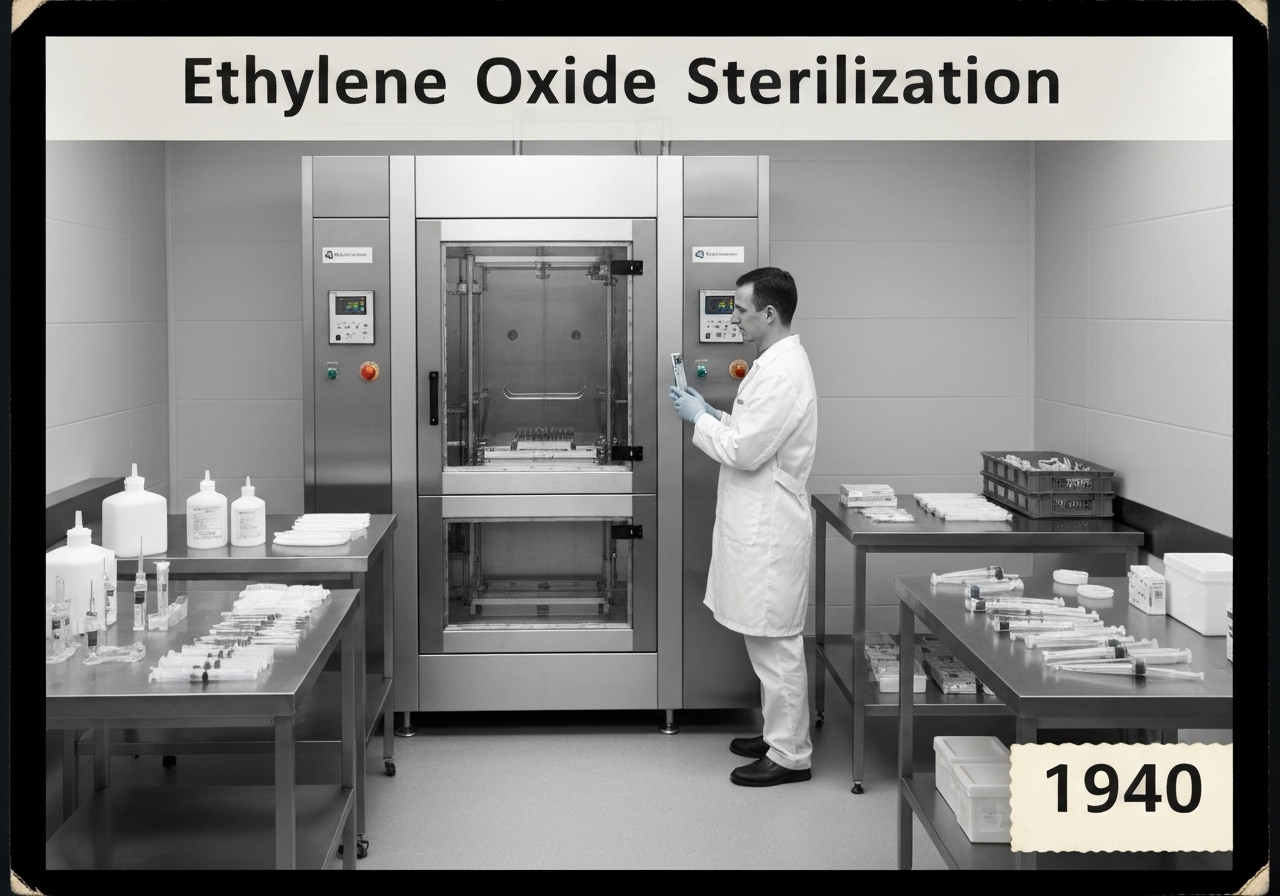
저온 화학 살균 방법 에틸렌옥사이드 가스를 사용합니다. 열과 습기에 민감한 재료를 살균하는 데 효과적입니다. 플라스틱전자 기기 및 광학 기기에 사용됩니다. 이 공정은 알킬화 반응을 통해 에틸렌 옥사이드(EtO)가 미생물의 DNA와 단백질을 파괴하여 복제를 방지하는 방식입니다. 가스 농도, 온도, 습도 및 노출 시간을 세심하게 제어해야 합니다.
Ethylene oxide (C2H4O) is a colorless, flammable, and highly reactive gas. Its effectiveness as a sterilant lies in its ability to act as a potent alkylating agent. The process works at a molecular level. The strained three-membered ring of the ethylene oxide molecule readily opens and reacts with nucleophilic groups in essential cellular components. It primarily targets sulfhydryl (-SH), amino (-NH2), carboxyl (-COOH), and hydroxyl (-OH) groups found in proteins and nucleic acids (DNA and RNA). By adding an alkyl group to these sites, EtO permanently modifies the molecules, blocking reactive sites, causing cross-linking, and ultimately preventing microbial metabolism and replication. This mechanism is effective against all forms of microorganisms, including highly resistant bacterial spores. A typical EtO sterilization cycle is complex and must be carefully controlled. It consists of several phases: preconditioning (adjusting temperature and humidity), gas injection (introducing the EtO), exposure or dwell time (holding the load under specified conditions for several hours), and aeration (removing residual EtO gas). Key parameters are gas concentration (typically 400–1200 mg/L), temperature (usually 37–63 °C), relative humidity (40–80%), and exposure time (1–6 hours). The lower temperature range makes it ideal for materials that would be damaged by the heat of autoclaving, such as polymers, electronics, and medical devices with complex designs. However, EtO is toxic, carcinogenic, and explosive, requiring stringent safety protocols and a lengthy aeration period to ensure residual gas is removed from the sterilized items to safe levels before they can be used.
에틸렌옥사이드(EtO)는 1859년 샤를 아돌프 부르츠(Charles-Adolphe Wurtz)에 의해 처음 합성되었지만, 그 강력한 생물학적 활성은 훨씬 후에야 완전히 밝혀졌습니다. 1920년대에는 로이드 L. 슈레이더(Lloyd L. Schrader)가 곤충 살충용 훈증제로 특허를 받았습니다. 의료용품 살균제로의 응용은 1940년대에 처음 시작되어 1950년대, 특히 일회용 플라스틱 의료기기의 등장과 함께 널리 보급되었습니다. 미군이 장비 살균 공정을 개발한 것으로 알려져 있습니다. 이 혁신은 중요한 공백을 메웠다는 점에서 혁명적이었습니다. EtO가 등장하기 전에는 현대 의학에 필수적인 열에 민감한 기구와 소모품을 살균할 수 있는 믿을 만한 방법이 없었습니다. EtO는 미리 포장된 멸균 일회용 의료기기의 대량 생산 및 사용을 가능하게 하여 의료 관련 감염 위험을 크게 줄였습니다.
관련 용어: 에틸렌옥사이드, 에틸렌옥사이드(eTO), 화학적 멸균, 저온, 알킬화, 의료기기, 플라스틱, 독성, 통기, 열에 민감함.