Product Design, Manufacturing & Innovation Resources
집 » 오토 사이클 열효율

오토 사이클 열효율

1900
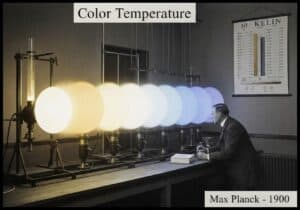
Otto cycle engine in a 1900 mechanical workshop, thermodynamics application.

(설명을 위한 생성된 이미지입니다)

The thermal efficiency ([latex]\eta_{th}[/latex]) of an ideal Otto cycle is a function of the compression ratio ([latex]r[/latex]) and the specific heat ratio ([latex]\gamma[/latex]) of the working fluid. The formula is [latex]\eta_{th} = 1 – \frac{1}{r^{\gamma-1}}[/latex]. This equation shows that efficiency increases with the compression ratio, providing a fundamental principle for engine design and performance optimization.

The derivation of the Otto cycle thermal efficiency formula begins with the general definition of thermal efficiency for any heat engine: [latex]\eta_{th} = \frac{W_{net}}{Q_{in}} = 1 – \frac{Q_{out}}{Q_{in}}[/latex], where [latex]W_{net}[/latex] is the net work output, [latex]Q_{in}[/latex] is the heat added, and [latex]Q_{out}[/latex] is the heat rejected. For the Otto cycle, heat is added at constant volume (process 2-3) and rejected at constant volume (process 4-1). Therefore, [latex]Q_{in} = m c_v (T_3 – T_2)[/latex] and [latex]Q_{out} = m c_v (T_4 – T_1)[/latex], where [latex]m[/latex] is the mass of the working fluid, [latex]c_v[/latex] is the specific heat at constant volume, and [latex]T[/latex] represents the temperature at the numbered states of the cycle.

이들을 효율 방정식에 대입하면 [latex]eta_{th} = 1 – frac{T_4 – T_1}{T_3 – T_2}[/latex]가 됩니다. 이를 부피로 단순화하기 위해 등엔트로피 과정의 관계식(1-2 및 3-4)을 사용합니다. 등엔트로피 과정의 경우 [latex]TV^{gamma-1} = text{상수}[/latex]입니다. 따라서 [latex]frac{T_2}{T_1} = (frac{V_1}{V_2})^{gamma-1} = r^{gamma-1}[/latex]이고 [latex]frac{T_3}{T_4} = (frac{V_4}{V_3})^{gamma-1} = r^{gamma-1}[/latex]입니다. 이는 [latex]frac{T_2}{T_1} = frac{T_3}{T_4}[/latex] 또는 [latex]frac{T_4}{T_1} = frac{T_3}{T_2}[/latex]를 의미합니다. 효율 방정식을 [latex]eta_{th} = 1 – frac{T_1(T_4/T_1 – 1)}{T_2(T_3/T_2 – 1)}[/latex]로 재배열하고 온도 비율 등식을 대입하면 괄호 안의 항이 상쇄됩니다. 따라서 [latex]eta_{th} = 1 – frac{T_1}{T_2}[/latex]가 됩니다. 마지막으로, 등엔트로피 관계식 [latex]frac{T_1}{T_2} = (frac{V_2}{V_1})^{gamma-1} = frac{1}{r^{gamma-1}}[/latex]을 사용하면 최종 공식 [latex]eta_{th} = 1 – frac{1}{r^{gamma-1}}[/latex]에 도달합니다.

UNESCO Nomenclature: 2212
열역학

유형

공식

분열

기초적인

용법

널리 사용됨

전구체

응용 프로그램

  • 엔진 설계 및 최적화
  • 다양한 연료의 성능 비교
  • 고압축 엔진의 개발
  • 터보차징 및 슈퍼차징 분석
  • 자동차 공학 교육

특허:

NA

잠재적 혁신 아이디어

  • software for simulating engine performance with variable specific heat ratios
  • materials science research for components that withstand higher compression ratios
  • dynamic fuel blending systems to optimize gamma for different operating conditions
  • ai-driven engine control units that adjust parameters to maximize real-time efficiency
  • development of engines using monatomic gases (e.g., argon) with higher gamma for specialized applications
  • educational virtual reality labs for demonstrating 열역학적 원칙
  • advanced sensor technology to measure in-cylinder conditions and validate efficiency models
  • optimization algorithms for engine design based on the efficiency formula
  • coatings for piston heads and cylinder walls to approximate adiabatic conditions
  • research into non-ideal gas effects at extreme pressures and temperatures
관련 용어: 열효율, 압축비, 비열비, 오토 사이클, 열역학, 엔진 성능, 등엔트로피 과정, 이상 기체 법칙열기관, 자동차 공학.

역사적 맥락

오토 사이클 열효율

1900
1900
1900
1900
1900
1902
1902
1900
1900
1900
1900
1900
1900-12-14
1902
1904

(날짜를 알 수 없거나 관련이 없는 경우, 예를 들어 "유체역학"의 경우, 주목할 만한 등장 시기를 대략적으로 추정하여 제공합니다.)

10년차 기념일

고화질 이미지 및 다운로드는 등록된 회원에게만 100% 무료로 제공됩니다.

> 로그인 <