How can one distinguish between a product ready for market and a mere concept? Understanding the distinction between a Minimum Marketable Product (MMP) and a 最小実行可能製品 (MVP) is fundamental. This knowledge can significantly influence your approach to product development and its lifecycle management.
- The Minimum Viable Product (MVP) is all about testing business ideas with little work and money. It’s simple but works, letting early users give important feedback. Big names like Spotify and Airbnb used the MVP way to try their concepts fast. They changed their plans based on what real users said.
- The Minimum Marketable Product (MMP), however, builds on what the MVP proves works. It uses user suggestions and extra features. A great example is the first iPhone in 2007 by Apple. It was made to meet what customers wanted and to stand out in the market right away.
What implications do these two approaches have from project initiation to achieving market success? Recognizing their significance can accelerate market entry, enhance user engagement, and cultivate brand loyalty. This exploration clarifies how MMP and MVP influence the pathway to product success.
Understanding Minimum Viable Product (MVP)
What is MVP: an MVP is the simplest form of a product that still attracts early users. Take a food delivery app with just enough features to order and track food. It’s all about doing more with less, fast, to see if a product idea will work, without spending too much.
Do read our detailed article on MVP:

Minimum Marketable Product (MMP) vs Minimum Viable Product (MVP)
In product development, MMP and MVP are both key. But, they have different goals. Knowing how they differ helps make a strategy that leads to success. It reduces risks and helps a product do well in the market.
Key Differences Between MMP and MVP
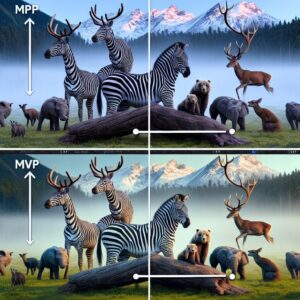
MVP refers to the creation of a basic product aimed at learning and validating concepts. This could be a prototype designed to gauge consumer interest in the product idea. On the other hand, MMP represents a more comprehensive offering, prepared for market entry. It is constructed to fulfill user requirements and facilitate rapid deployment with the essential features.
MVPs serve primarily as testing tools for assessing market demand. MMPs, in contrast, present a more polished solution. They provide an excellent ユーザーエクスペリエンス alongside an intuitive interface. The goal of MMPs is to deliver a valuable product swiftly, avoiding unnecessary complexities.
From MVP to MMP
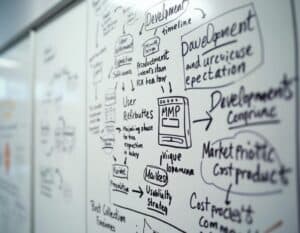
MVP から MMP への移行には、綿密な準備が必要です。
MVP の開発には通常 3 ~ 4 か月かかります。 使いやすさこのフェーズは、ユーザーの期待を理解し、それに応じて製品を改良することを中心に展開します。
テストが完了したら、MMP の作成に進むことができます。
The rest of this article is reserved for members
To limit scraping bots (currently 40,000 hits per day!),
we had to restrict access to full articles and tools to registered members only.
to access all the rest.
よくある質問
What is an MMP?
An MMP, or Minimum Marketable Product, includes user feedback to make a product ready for sale. It aims at a great user experience and being strong in the market.
How does an MMP differ from an MVP?
MMP is the next step from an MVP, focusing more on the user and full market entry. It adds features making the product complete and competitive.
Why is the concept of MMP important in product strategy?
MMP is crucial as it pushes beyond just proving an idea to delivering a complete, sellable product. This leads to happier users and a better chance at success.
What are the steps to transition from an MVP to an MMP?
Moving from MVP to MMP means collecting lots of feedback, choosing features wisely, refining design, and testing thoroughly. It ensures the product is ready for the market.
用語集
Minimum Marketable Product (MMP): 最小限の機能セットを備え、初期採用者に価値を提供し、将来の開発のためのフィードバックを可能にすると同時に、市場参入に必要な時間とリソースを最小限に抑える製品。
Minimum Viable Product (MVP): 初期ユーザーのニーズを満たし、今後の開発のためのフィードバックを収集するために必要な基本機能のみを搭載した製品の基本バージョン。最小限のリソースと時間投資で顧客ニーズに関する仮説を検証することを目的としている。
User experience (UX): the overall satisfaction and perception of a user when interacting with a product, system, or service, encompassing usability, accessibility, design, and emotional response throughout the entire interaction process.