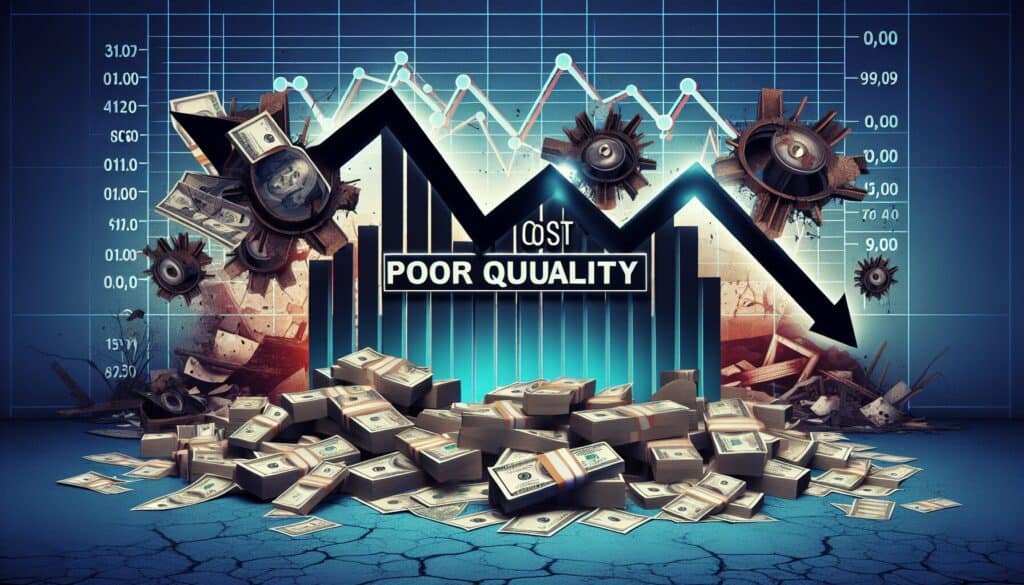
Cost of Poor Quality (COPQ) is a method widely utilized across various sectors such as manufacturing, healthcare, software development, and service industries to systematically evaluate the costs associated with subpar quality. This methodology can be particularly effective during the early phases of product development, where teams are engaged in design and prototyping; by quantifying quality-related costs, stakeholders can make informed decisions about design modifications or resource allocation. For instance, in the automotive industry, COPQ can help manufacturers identify and reduce high rework rates or warranty claims, ultimately enhancing product reliability and customer satisfaction. Participants typically include cross-functional teams consisting of quality assurance, engineering, production, and finance professionals who collaborate to gather relevant data and analyze cost components. Implementation may require training personnel on gathering and interpreting quality metrics, thereby promoting a culture of continuous improvement. Organizations benefit financially by not only reducing the costs associated with defects but also improving process efficiency, which can lead to enhanced profitability and market competitiveness. Deploying COPQ in conjunction with other methodologies, such as Six Sigma or Lean, can further strengthen quality improvement initiatives by providing quantifiable data that underscores the financial impacts of quality failures and successes, motivating leadership and driving strategic prioritization in improvement projects.